Installation guide
 Owner’s manual
 Error Codes



What is the advantage of a bottom mount fridge?
A bottom-mount refrigerator like the Frigidaire LFHB2751TF3 keeps the fresh-food section at eye level, so you reach everyday items with less bending. The freezer stays in the lower drawer, which helps many kitchens stay organized and makes daily access more comfortable.
Key advantages you will notice day to day
- Fresh foods are easier to see and grab because the refrigerator compartment is higher.
- Less bending for common tasks (milk, produce, leftovers), since the freezer is below.
- Wide shelves and door bins are typically easier to access at standing height.
- Freezer drawer storage can make it easier to separate baskets and frozen items.
- Better workflow when unloading groceries because most items go into the upper compartment.
How this design affects installation and use
Bottom-mount units need enough clearance for the doors to fully open so you can pull out drawers and freezer baskets. For LFHB2751TF3, follow the spacing and placement guidance in the LFHB2751TF3 installation guide and confirm clearances in the LFHB2751TF3 owner's manual.
Typical clearance guidance (common for this style)
| Area | Typical purpose | What to check |
|---|---|---|
| Sides/top | Air circulation | Leave the recommended gap |
| Rear | Plumbing and airflow | Space for water line and ventilation |
| Door swing | Drawer access | Doors must open fully |
Why it matters
We see fewer “daily annoyance” complaints when fresh food is at eye level because it reduces repeated bending and makes it easier to keep foods visible. That visibility also helps reduce door-open time, which supports steadier temperatures and efficiency.
Last updated: January 2026
Why is the bottom freezer refrigerator not popular?
Bottom-freezer refrigerators like the Frigidaire LFHB2751TF3 are often less popular because they typically cost more than basic top-freezer models and the freezer drawer can feel less convenient for people who access frozen foods frequently. Many shoppers still prefer the simplest layout and lowest upfront price.
Common reasons some shoppers avoid bottom-freezer designs
- Higher purchase price than many top-freezer refrigerators with similar capacity.
- Freezer access requires bending and pulling out a heavy drawer, especially when it is full.
- Organization can be “stacked”; items can get buried in baskets and lower bins.
- More moving parts (slides, baskets, door seals) can mean more maintenance over time.
- Kitchen fit concerns; door swing and clearance can matter, especially near walls.
What you gain with a bottom freezer (why many people still choose it)
Bottom-freezer models put fresh food at eye level, which is where most households spend the most time. That can make daily use feel easier, even if the freezer is less convenient.
| Feature | Bottom freezer (like LFHB2751TF3) | Top freezer |
|---|---|---|
| Fresh food access | Easier, less bending | More bending |
| Freezer access | Drawer, lower position | Eye-level freezer |
| Typical buyer priority | Fresh-food convenience | Lowest cost, simplicity |
Setup details that affect satisfaction
A bottom-freezer refrigerator performs best when it is installed correctly and has good airflow.
- Keep the toe grille unblocked for proper air circulation.
- Level the refrigerator so doors close tightly.
- If you are not connecting water, keep the ice maker switched off.
For model-specific installation checks and leveling guidance, use the LFHB2751TF3 installation guide.
Why it matters
Popularity often comes down to day-to-day habits. If you use the refrigerator section far more than the freezer, a bottom-freezer layout can feel like an upgrade. If you rely heavily on frozen foods, a top-freezer or side-by-side layout can feel faster and simpler.
Last updated: January 2026
Can the bottom freezer drawer be removed?
Yes. On the Frigidaire LFHB2751TF3 bottom-mount refrigerator, the bottom freezer drawer is designed to be removable for moving, cleaning, or door alignment. The process is straightforward: remove the drawer screws, then lift the drawer up and out (the drawer is heavy).
How to remove the freezer drawer (LFHB2751TF3)
Follow the steps in the LFHB2751TF3 installation guide and use caution when lifting.
- Unplug the refrigerator (or switch off power at the breaker) for safety.
- Open the freezer drawer fully.
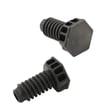
- Remove the 4 hex head drawer screws (one near each corner of the drawer front).
- Lift the drawer up to remove it.
- Set the drawer aside on a protected surface to avoid scratching the finish.
Reinstalling the freezer drawer
- Lower the drawer back into place.
- Reinstall the 4 hex head drawer screws.
- Tighten the screws evenly so the drawer front sits square.
Freezer basket removal (inside the drawer)
If you only need more access, you can remove the basket without removing the whole drawer. The LFHB2751TF3 owner’s manual shows the basket clip locations.
- Locate the basket clips in the rear corners.
- Pull the clips out to remove.
- Lift the basket up and out.
- Reinstall by placing the basket back and sliding the clips into the slots.
| Component | Removable? | Notes |
|---|---|---|
| Freezer drawer | Yes | Remove 4 hex head drawer screws, then lift up. |
| Lower freezer basket | Yes | Uses rear corner basket clips. |
| Freezer tilt wire shelf | No | Not designed to be removed. |
Why it matters
Removing the drawer (or just the basket) makes it easier to clean spills, clear ice buildup, access the lower hinge for door height adjustments, and safely move the refrigerator through doorways.
Last updated: January 2026
What is the most common problem with Frigidaire refrigerators?
Cooling complaints and ice maker or water dispenser problems are the most common issues we see on Frigidaire refrigerators, including model LFHB2751TF3. These symptoms usually trace back to airflow restrictions, door sealing or leveling problems, or water supply and filter issues.
Most common symptoms
- Refrigerator not cold enough or temperatures swing
- Freezer frost buildup or warm freezer
- Ice maker not making ice
- Water tastes or smells odd
- Doors do not close or seal smoothly
Quick checks we recommend first (LFHB2751TF3)
- Confirm doors close fully; level the refrigerator so doors self-close and align.
- Make sure vents inside the fresh food section and freezer are not blocked by food.
- For ice maker issues: verify the ice maker is turned on, the water valve is open, and the supply line is not kinked.
- If water flow is weak or ice production is slow, reseat or replace the water filter.
- Inspect door gaskets for gaps, tears, or hardened areas; clean and warm-shape minor waves.
Symptom-to-fix guide
| Symptom | Common cause | What to do first |
|---|---|---|
| Ice maker not making ice | Ice maker off, valve closed, kinked line, filter not seated/clogged | Turn on, open valve, straighten line, reseat/replace filter |
| Frost buildup | Door not sealing or not closing | Check gasket, level unit, reduce door-open time |
| Odd-tasting water | Water sat in lines | Flush 10 to 12 glasses of water |
| Door will not close | Not level, cabinet interference, overloaded bins | Level, reposition, reduce load |
Parts that often solve these problems
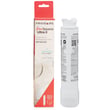
- Refrigerator filter assembly EPTWFU01 (restriction, taste/odor, slow ice fill)
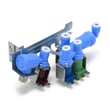
- Refrigerator water inlet valve assembly 242253002 (no water to dispenser or ice maker with good supply pressure)
- Refrigerator ice maker 243297613 (ice maker on and supplied with water but not cycling)
Why it matters
Fixing airflow, sealing, and water supply issues early helps keep safe food temperatures, reduces frost buildup, and prevents the compressor from running longer than necessary.
For model-specific operating steps and “before you call” troubleshooting, use the LFHB2751TF3 owner’s manual.
Last updated: January 2026