 Owner’s manual
 Error Codes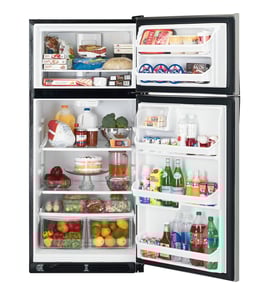



Which is better, top mount or bottom mount refrigerator?
A “better” choice depends on how you use your refrigerator. A top-mount like the GE GTH17JBC2RWW typically costs less and is simple and efficient, while a bottom-mount puts fresh food at eye level for easier daily access and often offers more drawer-style organization.
| Feature | Top-mount (freezer on top) | Bottom-mount (freezer on bottom) |
|---|---|---|
| Fresh food access | Lower shelves require more bending | Most-used items are at eye level |
| Freezer access | Easy to reach | More bending, but often better baskets |
| Cost and complexity | Usually lower, simpler design | Usually higher, more complex |
| Organization | Traditional shelves and bins | Often more drawers and dividers |
| Best for | Budget, simplicity, smaller kitchens | Frequent fresh-food use, meal prep |
- You want a reliable, straightforward layout with fewer features to maintain.
- You use the freezer often and want it at a comfortable height.
- You prefer a lower purchase price and typically lower repair complexity.
- You have limited kitchen space and want a classic footprint.
- You are replacing an older top-mount and want a similar feel.
- You use fresh food more than frozen and want it at eye level.
- You like wide drawers for produce, deli items, and meal-prep containers.
- You want a freezer with pull-out baskets for better visibility.
- You are willing to pay more for convenience and organization.
Choosing the right configuration reduces door-open time and “search time,” which helps temperature stability and can reduce wear on cooling components over the long run. For model-specific use and care tips for the GE GTH17JBC2RWW, follow the guidance in the GTH17JBC2RWW owner’s manual.
Last updated: January 2026
What is a fridge with freezer on top called?
A fridge with the freezer on top is called a top-freezer refrigerator (also commonly called a top-mount refrigerator). Your GE GTH17JBC2RWW is this classic style, with the freezer compartment above the fresh-food compartment.
- Top-freezer refrigerator
- Top-mount refrigerator
- Freezer-on-top refrigerator
- Two-door, side-swing top-freezer (describes the door style)
Check these quick identifiers:
- Freezer compartment is physically above the refrigerator section
- Two separate doors (one for freezer, one for fresh food)
- Doors typically swing open from the side (not a pull-out freezer drawer)
For model-specific diagrams and compartment details, use the GTH17JBC2RWW owner's manual.
| Style | Freezer location | Typical door layout | Best for |
|---|---|---|---|
| Top-freezer (top-mount) | Top | Two side-swing doors | Simple layout, good capacity for the footprint |
| Bottom-freezer | Bottom | Upper door + lower drawer | Easier access to fresh food |
| Side-by-side | Left side | Two tall doors | Narrow door swing, organized freezer |
| French door | Bottom | Two upper doors + lower drawer | Wide shelves, fresh-food access |
Knowing the refrigerator style helps us match the right GE parts and troubleshooting steps for airflow, defrost, and door sealing. For example, top-freezer models commonly use an evaporator fan to move cold air down into the fresh-food section.
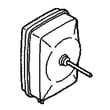
If you are diagnosing cooling or airflow issues, a common related part is the refrigerator evaporator fan motor WR60X31522.
Last updated: January 2026
What is the most common problem with a GE refrigerator?
Cooling problems are the most common issue we see with GE refrigerators, including the GE GTH17JBC2RWW. In many cases, the root cause is restricted airflow (dirty coils, failed fan) or a defrost problem that lets frost block the evaporator, so temperatures rise.
Start with the items that fail most often and are easiest to check:
- Dirty condenser coils (heat cannot release, so cooling drops)
- Evaporator fan not running (little or no cold air circulation)
- Frost buildup from a defrost failure (airflow blocked at the evaporator)
- Door gasket leak (warm air enters, moisture creates frost)
- Compressor start components failing (compressor struggles to start)
If you suspect a fan issue on this model, the refrigerator evaporator fan motor WR60X31522 is a common cooling-related part.
These steps solve a lot of “not cold enough” complaints without parts replacement:
- Confirm controls are set correctly; allow 24 hours after any adjustment
- Make sure vents inside the fresh food section are not blocked by food packages
- Clean condenser coils and verify the condenser area has good airflow
- Listen for the evaporator fan when the freezer door switch is held closed
- Inspect door gaskets for gaps, tears, or areas that do not seal
For model-specific operating and temperature guidance, use the GTH17JBC2RWW owner’s manual.
| Symptom | Most likely cause | What to check next |
|---|---|---|
| Freezer cold, fridge warm | Airflow problem | Evaporator fan operation, blocked vents |
| Frost on back freezer wall | Defrost problem | Defrost heater circuit, heavy ice buildup |
| Both sections warm | Heat removal or compressor issue | Coils, condenser airflow, start components |
| Moisture or sweating around doors | Seal problem | Gasket fit, door alignment |
Cooling issues can quickly lead to food spoilage and can overwork the compressor. Catching airflow, gasket, or defrost problems early often prevents more expensive repairs later.
Last updated: January 2026





