


How to measure for a replacement built-in oven?
To measure for a replacement built-in oven, we measure the existing cabinet cutout (not just the old oven) for width, height, and depth, then match those cutout dimensions to the new oven’s required cutout specs. For a GE built-in microwave like model CSB913P2N2S1, accurate cutout measurements prevent fit, ventilation, and door-clearance problems.
What to measure (in this order)
- Cutout width: measure left-to-right at the front and back of the opening.
- Cutout height: measure top-to-bottom on the left and right sides.
- Cutout depth: measure from the front cabinet face to the back wall.
- Front clearance: confirm the door can open fully without hitting adjacent cabinets or handles.
- Power location: note where the outlet or junction box sits so the cord does not get pinched.
Quick measurement checklist
| Measurement | How to take it | What to watch for |
|---|---|---|
| Width | Tape measure across opening | Out-of-square cabinets (front vs back) |
| Height | Both sides of opening | Trim pieces reducing usable height |
| Depth | Face frame to back wall | Outlet, ducting, or protrusions |
| Clearance | Door swing area | Nearby drawers, knobs, or walls |
Fit tips that prevent common surprises
- Measure in at least two places for each dimension; use the smallest number as your “true” opening.
- If you are replacing an older unit, do not assume the old appliance was installed correctly; verify the cabinet opening.
- Plan for ventilation space required by the new unit; built-in appliances often need specific airflow gaps.
- If your opening is tight, confirm whether the new unit needs a trim kit or ships with trim.
Why it matters
A built-in oven or built-in microwave that is even slightly oversized can bind in the opening, overheat from restricted airflow, or sit proud of the cabinetry. Measuring the cutout first keeps your installation clean and safe.
Related part note (for door-fit symptoms)
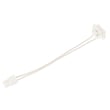
If you are replacing because the door will not close or the unit will not run with the door shut, the issue is often the door interlock system, not the cabinet size. For this model, common related parts include the microwave door interlock switch WB24X25397.
Last updated: January 2026
What are the disadvantages of a microwave oven combo?
A microwave oven combo (like the GE CSB913P2N2S1 built-in microwave combo style) saves space and adds cooking modes, but the main disadvantages are higher purchase cost, more complex repairs, and the fact that one failure can take out multiple cooking functions at once.
Common disadvantages to plan for
- Higher upfront cost than buying a basic microwave and a separate wall oven.
- More complicated troubleshooting and repairs because controls, sensors, and heating components are integrated.
- More downtime risk: if a key component fails, you can lose microwave heating and convection or baking features together.
- Learning curve: combo units often have more modes (convection, sensor cook, speed cook), which can be less intuitive.
- Fit and installation constraints: cabinet cutout size, electrical supply, and ventilation clearances can limit replacement options.
Repair complexity: what typically makes combos harder
Combo units often share control and safety circuits. For example, a door-latch or interlock issue can stop operation even when the microwave “looks fine.” Parts that commonly affect operation include:
- Microwave primary interlock switch WB24X10047
- Microwave door interlock switch WB24X25397
- Power control board asm WB27X33402
| Issue you notice | What it can affect in a combo | Typical next step |
|---|---|---|
| Unit will not start | Microwave and oven modes may both be disabled | Check door closure and interlock system |
| Runs but does not heat | Microwave heating function | Diagnose high-voltage system (service recommended) |
| Random resets or dead display | All functions | Check power supply, wiring, control board |
Performance tradeoffs (real-world)
A combo can be excellent for everyday cooking, but some tasks may not match a dedicated appliance. For example, browning and crisping can vary by mode and cookware, and capacity can feel tighter than a full-size wall oven.
Why it matters
With a combo, you are buying convenience and space savings, but you are also concentrating more functions into one appliance. That makes correct diagnosis, correct parts, and correct installation fit more important than with separate units.
Last updated: January 2026
Are double ovens being phased out?
No. Double ovens are not being phased out; they are still widely sold because many households want two independent cooking cavities for entertaining and holiday meals. What is changing is demand: more shoppers are choosing space-saving wall ovens, speed ovens, and combination microwave-oven designs.
What’s driving the shift (and what isn’t)
Double ovens remain a mainstream option, but kitchen design trends are pushing more variety in oven configurations.
- Smaller kitchens and open layouts favor fewer built-in cutouts
- Combination appliances (speed oven, steam assist, convection microwave) reduce the need for two full ovens
- Smart features and precision cooking are becoming bigger decision factors than “single vs. double”
- Many buyers still prefer a true double oven for simultaneous baking and roasting
- Builders and remodelers often choose what fits standard cabinet sizes and budgets
Double oven vs. alternatives (quick comparison)
| Option | Best for | Tradeoffs |
|---|---|---|
| Double wall oven | Frequent multi-dish cooking | Higher cost, more cabinet space |
| Single wall oven + microwave | Most everyday cooking | Less flexibility for two large dishes |
| Speed oven (microwave + convection) | Fast cooking and reheating | Smaller cavity than a full oven |
| Steam or steam-assist oven | Bread, vegetables, moisture control | Learning curve, added cost |
How this relates to your GE CSB913P2N2S1
Your GE CSB913P2N2S1 is a built-in microwave, which is often paired with a single wall oven as a “two-appliance stack” to save space while keeping flexibility. If your built-in microwave is part of that setup, keeping key door-safety and heating components in good shape helps the whole kitchen plan work as intended.
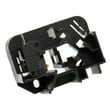
- If the door does not close or latch consistently, check the latch body asm right WB10X33309
- If the microwave will not run with the door closed, a door switch such as the microwave door interlock switch WB24X25397 is a common fix
- If heating is weak or inconsistent, the microwave magnetron WB26X32629 is one of the core heating components
Why it matters
Choosing between a double oven and a single-oven setup is mostly about cabinet space, cooking habits, and how often you need two full-size cavities at the same time. Many kitchens get similar flexibility by pairing a wall oven with a built-in microwave or speed oven.
Last updated: January 2026
Are built-in and built-under ovens the same?
No. “Built-in” and “built-under” describe two different installation styles: built-in ovens mount in a tall cabinet or wall at a higher height, while built-under ovens are designed to install under a countertop. GE model CSB913P2N2S1 is a built-in style appliance, not a built-under unit.
What “built-in” means
A built-in oven (or oven-microwave combo) is made to fit a wall or tall-cabinet cutout with specific mounting points and airflow requirements.
- Installs in a wall or tall cabinet opening
- Controls and door are positioned higher for easier access
- Uses a cabinet cutout and trim/mounting method intended for wall installation
What “built-under” means
A built-under (under-counter) oven is engineered to fit below a countertop, often with different venting and support requirements.
- Installs under the counter, typically above a toe-kick
- Lower working height, more bending to load food
- Cabinet cutout, ventilation, and mounting can differ from wall units
Quick comparison
| Feature | Built-in oven | Built-under oven |
|---|---|---|
| Typical location | Wall or tall cabinet | Under countertop |
| Common use | Wall oven or combo unit | Under-counter oven |
| Fit requirements | Wall cutout and mounting | Under-counter cutout and support |
Why it matters
Choosing the wrong installation type can create fit and ventilation problems, and it can prevent the appliance from mounting securely. For CSB913P2N2S1, plan for a built-in wall-style cutout and mounting.
If you are troubleshooting door-related operation (for example, the unit will not start when the door is shut), the door interlock system is a common area to inspect, including the microwave door interlock switch WB24X25397.
Last updated: January 2026