Error Codes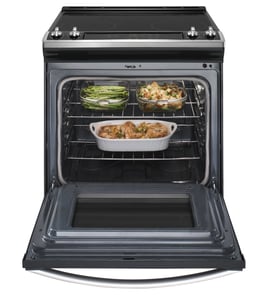



How to find Kenmore Range model number?
For your Kenmore electric range, the model number is printed on a rating label attached to the appliance. On model 91193402990, you will typically find that label in the oven door jamb (open the oven door and look around the frame) or behind the storage drawer at the bottom.
Where to look first (fastest checks)
- Open the oven door and check the door jamb and front frame
- Pull out the bottom storage drawer and look on the frame behind it
- Check the back panel near the power cord area
- Look along the side frame just inside the cooktop edge
What the label looks like
Most Kenmore ranges use a paper or foil rating label that includes:
- Model number (example: 91193402990)
- Serial number
- Electrical ratings (volts/amps)
- Sometimes a manufacturing date code
Tips to avoid mix-ups
- Write the model number exactly as shown; include all digits
- If the label is worn, use a flashlight and take a close-up photo
- Use the model number to match parts like a control switch, drip pan, or heating element
| Location | How to access it | Why it’s common |
|---|---|---|
| Oven door jamb | Open oven door | Easy to see, protected area |
| Behind storage drawer | Slide drawer out | Common on freestanding ranges |
| Back panel | Move range forward | Often includes full rating info |
Why it matters
We use the model number to ensure the replacement part fits your exact range configuration (burner style, wiring, and oven components). For example, parts like the range drip pan WB31T10011 can vary by model even when they look similar.
Last updated: February 2026
What does F90 mean on a Kenmore stove?
On the Kenmore 91193402990 electric range, the F90 error code means the oven door lock system is not operating correctly, most often after a self-clean cycle when the control cannot unlock the door. The fix is usually restoring power to reset the control, then checking the latch, wiring, and related components.
What to do first (safe reset steps)
- Turn the oven off and let it cool completely.
- If the door is locked, wait 30 to 60 minutes after the cycle ends; heat can keep the lock engaged.
- Reset power: switch the range breaker off for 1 minute, then back on.
- Try a normal Bake cycle for 2 to 3 minutes, then cancel; listen for the lock motor movement.
- If the door remains locked or F90 returns, stop using self-clean until the lock issue is repaired.
What usually causes F90
F90 is typically triggered when the control does not see the door lock switch change state as expected.
Common causes include:
- Door lock motor or latch mechanism sticking
- Loose, burned, or broken wiring at the lock circuit
- Failed control switch contacts in the lock circuit
- Heat-related damage after self-clean
Parts that are often involved
We match troubleshooting to the most common failure points on electric ranges: power connections, wiring, and temperature feedback.
| Symptom with F90 | Most likely area to inspect | Example part on this model page |
|---|---|---|
| Code appears after self-clean, door stays locked | Door lock/latch circuit and wiring | Terminal block 330031 (power connection check) |
| Oven heats poorly or behaves erratically with codes | Temperature sensing circuit | Wall oven temperature sensor WB23X5340 |
Why it matters
When the door lock system does not confirm “locked” or “unlocked” correctly, the control can disable heating or keep the door locked for safety. Fixing the lock circuit prevents repeat lockouts and helps the oven run normally after high-heat cycles.
Last updated: February 2026
How do you reset a Kenmore electric stove?
To reset your Kenmore electric range model 91193402990, we recommend doing a hard power reset: shut off power at the breaker (or unplug the range), wait 60 seconds, then restore power. This clears many control glitches and restores normal heating.
Quick reset steps (safe and effective)
- Turn all surface element knobs to OFF.
- If the range is plugged in, unplug it; if it is hardwired, switch the range breaker OFF.
- Wait 60 seconds (we use a full minute to let the control fully discharge).
- Restore power (plug back in or switch breaker ON).
- Test Bake and one surface burner to confirm operation.
If the reset does not fix it
A reset helps with temporary electronic issues; it will not fix a failed heating part or wiring problem. Check these common causes:
- No heat in oven: a failed bake or broil circuit, or a sensor issue.
- One burner not heating: a bad infinite switch or a poor connection at the element.
- Intermittent power: a loose power cord connection or terminal block issue.
- Burner stuck on high or won’t regulate: the surface element control switch is often the cause.
Parts that commonly solve “no heat” or “burner won’t work” symptoms
| Symptom | What to check | Example part for this model |
|---|---|---|
| Burner won’t heat or won’t regulate | Surface element control switch | Range surface element control switch, 1,250-watt WB24T10022 |
| Burner cycles incorrectly | Surface element control switch | Range surface element control switch WB24T10027 |
| Oven temperature is inaccurate | Oven temperature sensor | Wall oven temperature sensor WB23X5340 |
| Range seems dead or power is intermittent | Terminal connections | Terminal block 330031 |
Why it matters
A proper reset is the fastest way to rule out a control lockup before you spend time testing voltage, switches, or heating elements. If symptoms return after a reset, focusing on the specific circuit (surface element, oven sensor, or power connection) speeds up the repair.
Last updated: February 2026
What was the size of the Kenmore 91193402990 oven?
The Kenmore 91193402990 is a 30-inch electric freestanding range; that “30-inch” describes the standard range width class, not the oven cavity capacity. For exact oven capacity (cubic feet) and the full exterior dimensions, we use the model’s specification details; when you are measuring for fit, plan around typical 30-inch range dimensions.
Typical size you can plan around
Most 30-inch freestanding electric ranges (including Kenmore models in this class) fit these common ranges:
- Width: about 29 7/8 in. to 30 in.
- Height to cooktop: about 36 in. (often adjustable with leveling legs)
- Overall height to backguard: commonly 46 in. to 48 in.
- Depth (front to back): about 25 in. to 28 in. (not including the door handle)
Quick reference table (typical 30-inch range)
| Measurement | Typical range | What changes it |
|---|---|---|
| Width | 29 7/8 in. to 30 in. | Side panels, trim |
| Height | 36 in. to 48 in. | Leveling legs, backguard |
| Depth | 25 in. to 28 in. | Door style, handle |
How to measure your range correctly
To avoid a tight fit in the cutout or against cabinets, we recommend:
- Measure width at the widest point (often the cooktop edge)
- Measure height in two places (left and right) in case the floor is uneven
- Measure depth with the door closed, then add clearance for the handle
- Confirm you have room to pull the range forward for service and cleaning
- If you are replacing a part while measuring, unplug power first and keep the range stable
Why it matters
A 30-inch range can still vary by an inch or two in height and depth, and that affects cabinet clearance, anti-tip bracket alignment, and whether the oven door opens fully without hitting nearby drawers.
If you are trying to match parts while you measure, common fit-related items for this model include the range oven rack WB48T10011 and the oven door gasket WB02T10027.
Last updated: February 2026
Why is my Kenmore electric range not heating?
If your Kenmore 91193402990 electric range is not heating, the most common causes are a failed bake or broil element, a bad oven temperature sensor, or a power supply problem (one leg of 240V missing). Start by confirming the oven functions you are testing (bake vs. broil) and checking for visible element damage.
Quick checks first (no tools)
- Make sure you selected Bake (not just convection fan or light) and set a temperature.
- Verify the range is getting full power; electric ranges need 240V for heating (a partial power loss can leave lights and clock working).
- Look for obvious damage: blisters, cracks, or burned spots on the bake or broil element.
- Try Broil; if broil heats but bake does not, the bake circuit is the likely issue.
- Try Bake; if bake heats but broil does not, the broil circuit is the likely issue.
Parts that commonly cause “no heat” on this model
On the Kenmore 91193402990, these parts are common fixes when the oven will not heat:
| Symptom | Most likely cause | What to check next |
|---|---|---|
| No bake heat (broil works) | Bake element | Inspect element; test for continuity if you have a meter |
| No broil heat (bake works) | Broil element | Inspect element; test for continuity |
| Temps are way off or heating is erratic | Temperature sensor | Check sensor resistance and wiring |
| Oven dead for heating but controls work | Power supply or wiring | Check breaker, terminal block, and wire connections |
Helpful parts from our list:
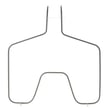
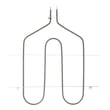
- Replace a failed broil element with the range broil element WB44T10009.
- If baking is the issue, the g.e. range bake element WB44T10010 is a common replacement.
- If temperature regulation is the problem, check the wall oven temperature sensor WB23X5340.
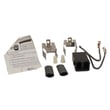
- If you see heat damage at the power connection, inspect the terminal block 330031.
Why it matters
An electric oven can appear to “work” (display, light, clock) even when it cannot heat properly. Identifying whether the failure is in the bake circuit, broil circuit, temperature sensing, or incoming power prevents replacing the wrong part and helps restore safe, consistent cooking temperatures.
Last updated: February 2026