 Error Codes


Are Maytag parts easy to get?
Yes. For your Maytag refrigerator model NNT218GA, replacement parts are typically easy to get because common service items and hardware are stocked and can be ordered online from the model’s parts list, then shipped directly to you.
Parts availability is best when you can match the exact model number and the exact part ID. On this model’s parts list, we commonly see in-stock items such as:
- Electrical start components (for no-cool or hard-start symptoms)
- Defrost system parts (for frost buildup and warm temperatures)
- Lighting parts (for interior light issues)
- Small hardware (screws, ties, trim)
If you already know what failed, ordering is usually straightforward.
Here are examples of parts that are often needed and are listed for this model:
| Symptom | Part type | Example part on this model |
|---|---|---|
| Fridge light not working when door opens | Door/light switch | Light switch W11384469 |
| Compressor won’t start or clicks | Start component | Refrigerator start relay 2154436 |
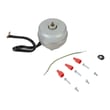
| Warm temps with fan noise issues | Fan motor | Refrigerator fan motor 833697 |
Use these checks before you buy:
- Match the model number exactly: NNT218GA
- Match the part ID exactly (letters and numbers)
- Compare the part name to what you are replacing (switch, relay, fan motor, etc.)
- Confirm the symptom fits the part (for example, a bad door switch can keep the light off)
- If you are unsure, look up the part by location on the parts diagram for this model
Ordering the correct Maytag part the first time reduces downtime, avoids repeat shipping, and helps prevent installing a component that does not match your refrigerator’s wiring, mounting, or defrost configuration.
Last updated: February 2026
What is the lifespan of a Maytag refrigerator?
Most Maytag refrigerators, including model NNT218GA, typically last 10 to 15 years. With consistent maintenance (good airflow, clean coils, stable temperatures), it’s common to reach the high end of that range and sometimes longer.
A refrigerator’s life is mostly driven by compressor run time, heat removal, and how hard the sealed system has to work.
- Dirty condenser area makes the compressor run hotter and longer
- Poor door sealing increases run time and frost buildup
- Overpacking blocks airflow and causes temperature swings
- Frequent power interruptions can stress start components
- Skipped defrost maintenance can lead to ice buildup and warm temps
These steps reduce wear on the compressor, fan motor, and defrost system.
- Vacuum dust from the condenser area regularly
- Keep door gaskets clean and ensure doors close fully
- Set stable temps (about 37°F fresh food, 0°F freezer)
- Leave space around vents inside the cabinet
- Fix puddles or icing quickly so the defrost drain stays clear
Helpful DIY: how to use your refrigerator efficiently
If your refrigerator is running constantly, warming up, or clicking, these parts are often involved.
| Symptom | Common area | Example part on this model page |
|---|---|---|
| Clicking, won’t start | Start components | Refrigerator start relay 2154436 |
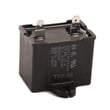
| Hums but struggles to start | Electrical assist | Refrigerator run capacitor WPW10662129 |
| Warm temps, poor airflow | Fan/air movement | Refrigerator fan motor 833697 |
| Frost buildup, warm freezer | Defrost control | Refrigerator timer WP4391974 |
When a refrigerator is forced to run longer to hold temperature, it accelerates wear on the compressor and cooling system. Basic upkeep and quick repairs usually cost less than the energy waste and food loss from poor cooling.
Last updated: February 2026
What are signs of a failing refrigerator compressor?
A failing compressor in your Maytag refrigerator model NNT218GA typically shows up as poor cooling, repeated clicking as it tries to start, or unusual buzzing and overheating near the back of the unit. Because the compressor drives the sealed refrigerant system, these symptoms often worsen quickly.
- Refrigerator and freezer temperatures rise even though the controls are set correctly
- Repeated clicking every few minutes (start attempt, then shutdown)
- Loud buzzing, rattling, grinding, or knocking from the compressor area
- Compressor shell feels very hot to the touch (more than “warm”) and runs for long periods
- Uneven cooling (some areas warm, others freezing) or new frost patterns after normal use
- Higher than normal electric usage because the unit runs longer to try to cool
These checks help separate a compressor problem from a start or airflow problem.
- Confirm the condenser area is clean and has airflow (dust buildup can mimic compressor trouble)
- Listen for the condenser fan and evaporator fan running when the compressor is running
- If you hear clicking but the compressor will not stay running, inspect the start components
- Check for a steady hum (running) versus hum-then-click (failed start)
| Symptom | More likely cause | Example part to check |
|---|---|---|
| Clicks repeatedly, won’t stay running | Start device or electrical start circuit | Refrigerator start relay 2154436 |
| Hums but struggles to start | Weak start/run support | Refrigerator run capacitor WPW10662129 |
| Runs but cooling is still poor | Airflow/heat rejection issue | Condenser blade WP12587601 |
A compressor that cannot start or cannot pump refrigerant correctly can lead to food spoilage and can also overwork electrical start components. Catching the symptoms early helps you decide whether a simple start-circuit repair is worth trying before sealed-system service.
Last updated: February 2026





