Owner’s manual
 Error Codes


How many cubic feet is Kenmore freezer Model 25323424101?
The exact cubic-foot capacity for Kenmore upright freezer model 25323424101 is listed on the model’s specification section in the 25323424101 owner's manual. Most Kenmore upright freezers in the 253-series are commonly in the mid-to-high teens (about 15 to 18 cu. ft.) depending on the exact configuration.
How to find the exact capacity for model 25323424101
We recommend using the manual because it ties the capacity to your exact model and feature set.
- Open the 25323424101 owner's manual
- Look for sections labeled “Specifications”, “Product data”, or “Features at a glance”
- Check for a line that lists “Capacity” or “Total capacity (cu. ft.)”
- If the manual lists multiple similar models, match the full model number 25323424101
- Confirm the model/serial tag location (typically inside the cabinet on upright models) before ordering parts
Typical capacity range (what to expect)
If you are planning storage bins, baskets, or organizing food, this range is a practical planning guide.
| Upright freezer size class | Typical capacity | Best for |
|---|---|---|
| Medium upright | 12 to 14 cu. ft. | Smaller households, overflow storage |
| Large upright | 15 to 18 cu. ft. | Bulk shopping, family use |
| Extra-large upright | 19 to 21+ cu. ft. | High-volume storage |
Why it matters
Capacity affects how quickly the freezer recovers temperature after door openings, how full you can safely load shelves, and how you plan airflow around packages. Overpacking can restrict circulation and lead to warm spots or frost buildup.
Last updated: February 2026
Where is the model number on a Kenmore upright freezer?
On the Kenmore upright freezer model 25323424101, the model and serial number plate is typically located on the upper left wall inside the freezer compartment. This is the most common location for upright models and is the first place we check when ordering parts or looking up service information.
Where to look first (fast checklist)
- Open the freezer door and check the upper left interior wall
- Look for a rating plate with both model and serial numbers
- Use a flashlight; the label can be small or lightly printed
- Wipe frost or residue off the area so the numbers are readable
- Write the full model number exactly as shown (for example, 253.23424101)
What the label looks like
Most Kenmore upright freezer rating plates include:
- Model number (often starting with 253.)
- Serial number
- Electrical information (volts/amps)
- Manufacturing details
| What you need | Why we need it |
|---|---|
| Model number | Matches the correct parts diagrams and compatible parts |
| Serial number | Helps confirm production variation and correct replacement parts |
Why it matters
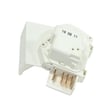
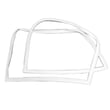
Kenmore freezers can have multiple versions that look similar. Using the exact model number helps us match the right components the first time, such as a defrost timer 5304518034 or a freezer door gasket 5304507201.
If you still cannot find it
Check these common alternate spots used on many upright freezers:
- Along the inside cabinet wall near the front opening
- Near the temperature control area inside the freezer
- Behind the lower front kick plate area (if your model has one)
For additional model-specific details and diagrams, use the 25323424101 owner's manual.
Last updated: February 2026
Is there a reset button on a Kenmore upright freezer?
Kenmore upright freezers like model 25323424101 typically do not have a single dedicated “reset” button. Most issues are cleared by restoring power (unplugging briefly) and then confirming the temperature control and any alarm features are set correctly per the 25323424101 owner's manual.
What you can reset (and what you cannot)
Many “reset” requests are really about restarting the control or silencing an alarm.
- Power reset: Unplug the freezer for 2 minutes, then plug it back in.
- Temperature control: Verify the control knob inside the cabinet is set correctly and allow several hours to stabilize.
- High-temp alarm: If your unit has an alarm, use the ALARM OFF button to silence the buzzer; the indicator can keep blinking until temperatures return to safe range.
- Alarm switch (some models): The high-temp alarm switch may be inside the freezer and can be set ON/OFF.
- No “factory reset” for cooling problems: If it will not cool after a power reset, the issue is usually a component or airflow problem.
Quick troubleshooting checklist after a reset
Use this sequence to avoid chasing the wrong problem.
- Confirm the freezer is on a grounded outlet (no extension cord).
- Make sure the temperature control is not set too warm; wait several hours between adjustments.
- Check for heavy frost on the back wall (points to a defrost problem).
- Listen for the evaporator fan; no airflow often means a fan or ice blockage.
- If the alarm returns, treat it as a temperature problem, not a control problem.
Common parts related to “won’t cool” or “frosting up”
If symptoms persist after a power reset, these model-compatible parts are common suspects:
| Symptom | Likely system | Example model part |
|---|---|---|
| Heavy frost, warm temps | Defrost system | Defrost timer 5304518034 |
| Heavy frost, intermittent thawing | Defrost system | Thermostat 297216600 |
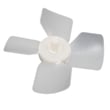
| Frost buildup, poor airflow | Air movement | Blade 5308000010 |
Why it matters
A power reset can clear a temporary control or alarm condition, but it cannot fix a failed defrost component, blocked airflow, or sealed-system issue. Setting the control correctly and allowing time to stabilize prevents unnecessary part replacement.
Last updated: February 2026
Where are the condenser coils on a Kenmore upright freezer?
On the Kenmore 25323424101 upright freezer, the condenser coils are in the warm (non-freezer) section of the cabinet where heat is released, not on the evaporator inside the frozen compartment. Access is typically from the rear lower area or within the outer cabinet panels; confirm the exact access method in the 25323424101 owner's manual.
What you will usually see on this model type
Most Kenmore upright freezers use a sealed refrigeration system where:
- Evaporator coil is inside the freezer compartment (this is the cold coil that frosts up)
- Condenser coil is outside the cold space (this is the hot coil that sheds heat)
- Airflow around the cabinet helps the condenser get rid of heat efficiently
How to locate the condenser coils safely
- Unplug the freezer.
- Pull the unit straight out to get working room.
- Look for a coil assembly:
- behind a lower rear cover, or
- routed through the outer cabinet walls (you will not see an exposed coil in that design)
Quick location guide
| Coil type | What it does | Where you find it |
|---|---|---|
| Evaporator | Absorbs heat, makes cold | Inside the freezer compartment, behind an interior panel |
| Condenser | Releases heat to room air | Rear lower area or within the outer cabinet (warm side) |
Why it matters
Knowing where the condenser is helps with cooling performance and energy use. The manual calls out the need for adequate air circulation around the refrigerating system, which directly affects how well the condenser can dump heat.
When to suspect a condenser-side problem
- Freezer runs almost constantly but temperatures are still high
- Cabinet sides feel unusually hot for long periods
- You hear the compressor running but cooling is weak
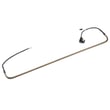
If you are troubleshooting poor cooling, checking the defrost system parts can also be relevant, such as the defrost timer 5304518034 and freezer defrost heater 5304496687.
Last updated: February 2026
Why is my Kenmore upright freezer not freezing?
If your Kenmore upright freezer 25323424101 is running but not freezing, the most common causes are incorrect temperature control settings, poor airflow from installation or loading, or a failure in the sealed system or defrost system. Start with the temperature control and door sealing checks in the 25323424101 owner's manual.
Quick checks we recommend first
- Confirm the temperature control is set colder; turn the knob toward COLDEST and wait several hours for temperatures to stabilize.
- Make sure the freezer is level so the door closes and seals correctly (a misaligned door can cause warm air leaks).
- Avoid overloading; distribute packages evenly and do not add unfrozen food until the freezer has run about 4 hours after startup.
- Check for heavy frost buildup (about 1/4 to 1/2 inch); excessive frost can reduce cooling.
- Verify there is enough space around the cabinet for air circulation, especially in hot areas.
What the symptoms usually point to
| What you notice | Most likely area | What to do next |
|---|---|---|
| Runs constantly, still warm | Air leak, airflow, or sealed system | Check door seal and leveling; then evaluate compressor performance |
| Heavy frost on back wall/inside | Defrost system issue | Inspect defrost components; consider defrost timer 5304518034, freezer defrost heater 5304496687, and thermostat 297216600 |
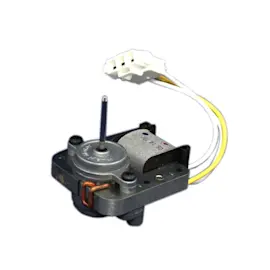
| Warm top, colder bottom (or uneven temps) | Air circulation issue | Check for blocked vents and evaporator fan issues; inspect blade 5308000010 and fan motor operation |
Defrost and drainage issues that can mimic “not freezing”
If frost is building up quickly, cooling can drop because air cannot move across the evaporator properly. Follow the defrost guidance in the manual; on upright models with a drain, remove the internal drain plug and route water out through the drain tube. If the drain path is damaged or leaking, the hose 5304512272 (freezer drain tube) is a common related part.
Why it matters
A freezer that is not freezing can be a simple control or door-seal problem, but it can also signal a defrost failure or compressor issue. Catching airflow and frost problems early helps prevent food loss and reduces strain on the compressor.
Last updated: February 2026