What is the average lifespan of an air compressor?
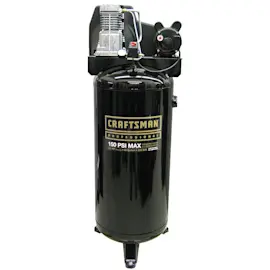
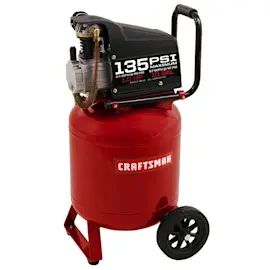
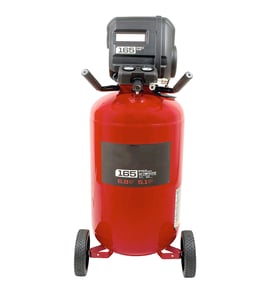
Most homeowner and DIY air compressors like the Craftsman 919167210 typically last about 5 to 10 years with normal use and basic maintenance; heavier-duty shop units often run 10 to 20 years when kept clean, leak-free, and not overheated.
What affects lifespan the most
- Duty cycle and run time: frequent long runs shorten motor and pump life.
- Heat and ventilation: high operating temps accelerate wear.
- Moisture management: not draining the tank promotes internal corrosion.
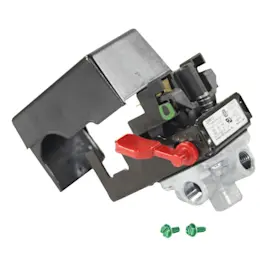
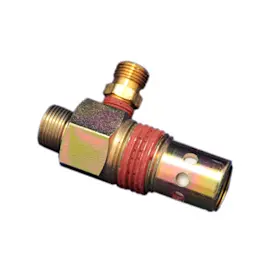
- Air leaks: constant cycling wears the pressure switch, check valve, and pump.
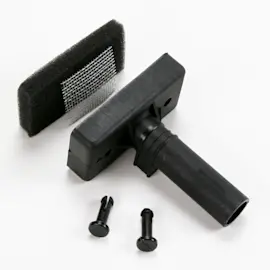
- Intake filtration: clogged filters increase pump load and heat.
- Storage conditions: humidity and temperature swings increase rust risk.
Typical lifespan ranges (quick guide)
| Compressor type | Typical lifespan | Best fit for |
|---|---|---|
| Small portable (DIY) | 5 to 10 years | brad nailers, inflators, light air tools |
| Mid-size shop (belt drive) | 8 to 15 years | regular tool use, moderate duty cycles |
| Industrial rotary screw | 10 to 20 years | continuous production, high CFM demand |
Maintenance habits that extend life
- Drain the tank after use (or daily in humid conditions).
- Fix leaks promptly at fittings, regulator, hose, and tank drain.
- Keep the intake clean and replace/clean the air filter on schedule.
- Avoid overheating: give cool-down time and keep vents clear.
- Verify cut-in/cut-out behavior: rapid cycling points to leaks or control issues.
Why it matters
Air compressors usually fail early from heat, moisture, and constant cycling, not just age. A few routine checks can prevent pump wear, pressure switch problems, and tank corrosion.
Helpful troubleshooting and repair guides
- If it struggles to power on, use air compressor won't start.
- If it runs but never reaches pressure, use air compressor won't build tank pressure.
- If you suspect internal pump wear, use how to rebuild an air compressor pump.
Last updated: February 2026
Is a 150 PSI air compressor good for car tires?
Yes. A 150 PSI air compressor is a good choice for inflating car tires because most passenger vehicles typically run around 30 to 40 PSI, so 150 PSI provides plenty of pressure capacity; what matters just as much is the compressor’s airflow (CFM) and duty cycle for how fast it fills.
What “150 PSI” really tells you
PSI is the maximum pressure the compressor can reach in the tank or at the outlet. For car tires, you rarely need more than 50 PSI, so a 150 PSI Craftsman air compressor like model 919167210 has ample headroom.
Typical tire pressure targets
| Vehicle type | Common cold tire pressure range | 150 PSI suitable? |
|---|---|---|
| Passenger car | 30 to 40 PSI | Yes |
| Crossover/SUV | 32 to 45 PSI | Yes |
| Light truck (some) | 45 to 65 PSI | Yes (slower at higher PSI) |
What affects inflation speed (and why it matters)
Even with a 150 PSI rating, fill time depends on airflow and restrictions in the system.
- CFM at 90 PSI: Higher CFM usually inflates faster.
- Tank size: A larger tank gives a stronger initial burst before the pump cycles.
- Regulator setting: Set the outlet pressure above your target tire PSI so air flows steadily.
- Hose and chuck leaks: Small leaks can make inflation feel slow.
- Duty cycle and heat: Long continuous runs can overheat smaller compressors.
Best practices for inflating tires with an air compressor
- Check the vehicle’s door-jamb sticker for the correct cold PSI.
- Start with the tank charged, then set the regulator slightly above your target.
- Use a reliable tire gauge; built-in gauges can be less precise.
- Add air in short bursts and recheck pressure to avoid overshooting.
- Drain tank moisture after use to help prevent internal rust.
When 150 PSI is not the whole story
If you plan to run air tools (impact wrench, die grinder, paint spray), PSI alone is not enough; you’ll want to match the tool’s CFM requirement to the compressor’s output. For tire inflation and general garage use, 150 PSI is typically more than adequate.
For more troubleshooting and performance tips, use our DIY guide: air compressor common questions.
Last updated: February 2026
What is the most common cause of air compressor failure?
The most common cause of air compressor failure on a Craftsman 919167210 is poor maintenance that leads to overheating and accelerated wear. Dirty intake filtration, restricted cooling airflow, and small air leaks force the pump and motor to run hotter and longer, which shortens the life of key components.
Most common failure patterns we see
- Overheating from restricted airflow (blocked shrouds, dust buildup, poor ventilation)
- Clogged or neglected intake filtration that increases pump load
- Air leaks at fittings, drain valve, regulator, or hose connections that increase run time
- Moisture left in the tank that promotes internal corrosion and valve issues
- Electrical stress (weak outlet, long/light extension cord, failing pressure switch or capacitor)
Quick checks you can do first
- Listen and look while it runs: excessive heat, slow build, or frequent cycling points to airflow restriction or leaks.
- Check for leaks: spray soapy water on fittings and watch for bubbles.
- Confirm the tank drain works: drain condensation after use; water in the tank is a long-term killer.
- Verify power supply: plug directly into a properly rated outlet; avoid undersized extension cords.
Common causes and what they usually look like
| Symptom | Likely cause | What to check next |
|---|---|---|
| Runs but won’t build pressure | Leak, worn pump valves, bad check valve | Leak test; inspect check valve and pump condition |
| Won’t start or hums | Power issue, pressure switch, capacitor, stuck pump | Outlet/cord; switch operation; tank pressure at restart |
| Safety valve pops | Overpressure control issue, restriction, faulty valve | Pressure switch cut-out behavior; valve condition |
| Pressure gauge inaccurate | Gauge failure or blockage | Compare to a known-good gauge; inspect gauge port |
Why it matters
Heat and run time are the fastest ways to wear out an air compressor pump and motor. Keeping airflow clear, fixing leaks quickly, and draining the tank reduces cycling, lowers operating temperature, and prevents corrosion that can turn a small issue into a major repair.
Helpful DIY troubleshooting
- Use our guide for air compressor won't start when the motor won’t run or only hums.
- If it runs but won’t reach cut-out pressure, follow air compressor won't build tank pressure.
- For hissing or constant cycling, use air compressor air leaks.
Last updated: February 2026
What company makes Craftsman air compressors?
Craftsman is a brand name, so Craftsman air compressors (including model 919167210) have been built by different original equipment manufacturers over the years. The maker depends on the model and production run; the most reliable way to identify it is by checking the data plate for an OEM name or manufacturing code.
How to identify who made your Craftsman 919167210
Look for a label or stamped plate on the air tank or frame (often near the motor/pump area). Use these quick checks:
- Find the data plate and write down every line (model, serial, date code).
- Look for an OEM name (sometimes listed as “MFG”, “Manufactured by”, or a company name).
- Check for a code or prefix that can indicate the production source.
- Note whether the unit is oil-free or oil-lubricated; that helps narrow down common pump designs.
- Match what you see to the diagrams and repair content in our DIY library, starting with air compressor common questions.
Common OEMs you may see associated with Craftsman compressors
Different Craftsman compressors have been sourced from different manufacturers. Here are common names customers run into when researching older and newer units:
| What you see on the label or in research | What it usually means for you |
|---|---|
| Craftsman only (no OEM listed) | Use the full model number and serial/date code to narrow parts and specs |
| DeVilbiss / DeVilbiss Air Power | Often tied to older Craftsman compressor designs |
| Campbell Hausfeld | Seen on some older Craftsman-sourced compressors |
| MAT Holdings / Alton Industries | Commonly referenced for many newer Craftsman air tools and compressors |
Why it matters
The OEM affects which pressure switch, check valve, regulator, pump parts, and gasket kits fit. Even when two units look similar, small differences in the pump head, unloader line, or tank fittings can change the correct replacement part.
If you are troubleshooting instead of identifying the OEM
If the goal is repair, start with the symptom and test the common failure points:
- Won’t start: power supply, pressure switch, motor overload
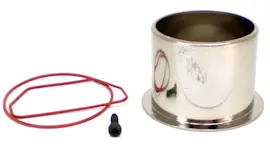
- Won’t build pressure: intake filter, reed valves, head gasket
- Leaks: fittings, drain valve, check valve, regulator
Use these guides to narrow it down:
Last updated: February 2026
Is it worth it to repair a compressor?
Yes; repairing your Craftsman air compressor model 919167210 is worth it when the failure is limited to a common service item (pressure switch, check valve, regulator, gauge, safety valve, or a leaking fitting) and the tank is in good condition. If the pump is badly worn or failures keep repeating, replacement is the better value.
Quick decision checklist
- Repair makes sense when it still builds pressure, but has control, leak, or adjustment issues.
- Repair makes sense when the fix is one part plus basic labor.
- Replace makes sense when it won’t build tank pressure after basic checks.
- Replace makes sense when it’s noisy, slow, and runs hot (common internal wear signs).
- Replace makes sense when the tank condition is questionable (do not keep using a compromised tank).
Common “worth repairing” problems (and what they point to)
| Symptom | Most likely area | Typical effort |
|---|---|---|
| Won’t start | Power supply, pressure switch, motor start components | Low to medium |
| Won’t start with a full tank | Check valve, unloader circuit | Medium |
| Won’t build tank pressure | Intake/filter, reed valves, piston seal, major leak | Medium to high |
| Can’t adjust output pressure | Regulator, downstream leak | Low to medium |
| Gauge isn’t working | Tank gauge, blockage, vibration damage | Low |
Best next step: troubleshoot by symptom
Use our step-by-step DIY symptom guide to narrow the failure before buying parts: air compressor won't start.
Cost and value: a practical way to decide
Compare these three numbers before spending money:
- Parts cost (what you need to replace)
- Your time or labor cost (diagnosis plus repair)
- Replacement cost for a similar-capacity compressor
A repair that totals under 30% to 50% of replacement cost is usually the smart move when the compressor otherwise performs well.
Why it matters
A small control part (like a pressure switch or check valve) can stop the entire compressor even when the pump and motor are still good. Fixing the right part restores safe cut-in and cut-out operation and helps prevent overheating.
Related repair help: how to replace an air compressor pressure switch.
Last updated: February 2026