Installation guide
 Owner’s manual
 Error Codes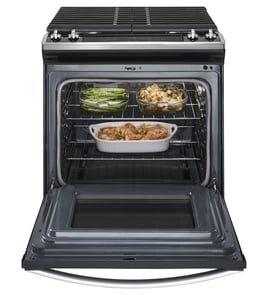



How to find Whirlpool gas range model number?
On your Whirlpool WFG510S0AB0 30-inch gas freestanding range, the model number is on the model/serial rating plate located on the oven frame behind the top left side of the oven door. Open the oven door and look along the front frame area for the plate; it lists the model and serial information.
Where to look on model WFG510S0AB0
- Open the oven door fully.
- Look at the oven frame (the front frame around the oven opening).
- Focus on the top left area behind the door.
- Find the model/serial rating plate (a label or metal plate).
- Write down the model number and serial number exactly as shown.
Quick location guide
| What you need | Where it is | What it’s used for |
|---|---|---|
| Model number | Oven frame, behind top left side of oven door | Matching the correct Whirlpool parts and diagrams |
| Serial number | Same rating plate | Identifying production details for service and compatibility |
| Gas type info | Same rating plate | Confirming Natural gas vs LP conversion requirements |
Why it matters
We use the model number to match the correct parts for your exact Whirlpool range configuration. Even small model variations can change which items fit, such as an oven temperature sensor, door hinge, or control components.
Helpful tips before ordering parts
- Copy the model number character-for-character (letters and numbers).
- Take a clear photo of the rating plate for reference.
- If the label is hard to read, wipe it gently with a damp cloth and dry it.
- Use the model number when checking fit for parts like the range oven temperature sensor WPW10181986.
For more diagrams and identification details, use the WFG510S0AB0 installation guide.
Last updated: February 2026
What are the most common stove parts to replace?
On the Whirlpool WFG510S0AB0 30-inch gas freestanding range, the most commonly replaced parts are the ones that see the most heat, movement, and daily handling: burner components, igniters, knobs, door sealing parts, and oven temperature-sensing parts. These repairs typically restore normal ignition, steady baking temperatures, and safe oven operation.
Most common replacement parts (and what they fix)
- Ignition and lighting issues: Range oven igniter WP8054129 (weak or no ignition for bake or broil)
- Temperature problems: Range oven temperature sensor WPW10181986 (oven too hot, too cool, or inconsistent)
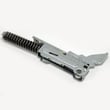
- Loose or sagging door: range oven door hinges (door won’t close evenly, heat leaks)
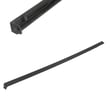
- Heat loss and longer cook times: door gasket (worn seal lets heat escape)
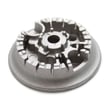
- Everyday wear items: burner head, burner control knob, oven rack, oven light bulb
Quick symptom-to-part guide
| Symptom | Most likely part area | What you’ll notice |
|---|---|---|
| Oven won’t heat or takes too long to preheat | Igniter | No glow, weak glow, or delayed ignition |
| Oven temperature is inaccurate | Temperature sensor | Overbaking, underbaking, wide temp swings |
| Door doesn’t shut tight | Door hinges or gasket | Gaps at corners, heat escaping |
| Burner flame is uneven | Burner head/cap area | Yellow tips, uneven flame pattern |
| Knob slips or won’t turn smoothly | Control knob | Cracked hub, loose fit |
Why these parts fail most often
- High heat cycles fatigue igniters and sensors over time
- Spills and boil-overs clog burner ports and burner heads
- Frequent door opening stresses hinges and compresses the gasket
- Daily turning wears knob hubs and valve stems
Safety and install notes that matter
For this Whirlpool range, the installation instructions emphasize keeping the anti-tip bracket installed and engaged whenever the range is moved. For any bake or broil burner service, follow the step-by-step access and reassembly guidance in the WFG510S0AB0 installation guide.
Why it matters
Replacing the right wear part first prevents repeat failures, improves baking accuracy, and helps your range ignite reliably. It also reduces heat loss at the oven door, which can shorten cook times and improve results.
Last updated: February 2026
What is the lifespan of a Whirlpool stove?
Most Whirlpool gas ranges, including model WFG510S0AB0, typically last 15 years with normal household use and basic care; consistent cleaning, correct installation, and fixing small problems early are what most often determine whether you reach or exceed that mark.
What affects lifespan the most
- Heat and grease buildup on burner heads, igniters, and the oven cavity
- Door seal condition (a leaking gasket makes the oven work harder)
- Ignition reliability (slow lighting can stress components)
- Control use habits (avoiding slamming knobs and oven door)
- Proper installation and clearances to prevent heat damage to surrounding cabinets (see the WFG510S0AB0 installation guide)
Quick care checklist (high impact, low effort)
- Keep burner caps seated correctly and clean the burner ports.
- Wipe spills promptly to reduce corrosion and odors.
- Avoid using foil in ways that block airflow.
- If the oven temperature seems off, test and calibrate before overusing high heat.
- Replace wear items when symptoms start, not after failure.
Common “end-of-life” symptoms and likely fixes
| Symptom | What it often points to | Example part for this model |
|---|---|---|
| Oven bakes unevenly or runs hot/cold | Temperature sensing issue | Range oven temperature sensor WPW10181986 |
| Oven takes too long to heat or won’t ignite | Weak igniter | Range oven igniter WP8054129 |
| Door won’t close tightly, heat leaks | Worn door seal | Door gasket (inspect for gaps/tears) |
Why it matters
A range that is struggling to ignite or hold temperature usually uses more gas, cooks less evenly, and puts extra stress on the electronic control and gas valve. Addressing ignition and temperature issues early is the simplest way to extend the service life of a Whirlpool freestanding range.
Last updated: February 2026
Why is my Whirlpool gas oven not getting hot?
If your Whirlpool WFG510S0AB0 gas oven is not getting hot, the most common causes are a closed gas shutoff valve, a power/ignition issue (no spark), or a weak igniter that cannot open the gas safety valve. Use the checks in the WFG510S0AB0 installation guide to confirm gas and power, then test heat.
Quick checks (fastest fixes first)
- Make sure the gas supply line shutoff valve is fully open.
- Confirm the range is plugged into a grounded 3-prong outlet and the breaker is not tripped.
- Set BAKE and watch for ignition: you should hear sparking and then see the burner light.
- After turning the oven on, allow about 5 minutes and check for heat.
- Press CANCEL to stop the cycle before inspecting anything.
What to do based on what you observe
| What you notice | Likely cause | What we recommend |
|---|---|---|
| No spark/ignition sound when BAKE starts | No power to ignition system or control issue | Verify outlet and breaker; then follow the electrical checks in the guide |
| Spark happens but burner does not light | Gas supply off or ignition component weak | Confirm shutoff valve open; inspect igniter wiring and connections |
| Burner lights but oven stays cool | Burner not staying lit or heat not distributing | Check flame pattern and burner area for blockage; service if flame is abnormal |
Parts that commonly fix “won’t heat” symptoms
If basic gas and power checks are good, these parts are frequent culprits on gas ranges:
- Range oven igniter WP8054129 (weak igniter can prevent the gas safety valve from opening)
- Range oven temperature sensor WPW10181986 (can cause incorrect temperature control)
Why it matters
A gas oven that will not heat is often a gas supply or ignition problem. Confirming gas shutoff position, proper electrical supply, and normal ignition behavior prevents unnecessary part replacement and helps you restore safe, reliable baking.
Last updated: February 2026