Installation guide
 Owner’s manual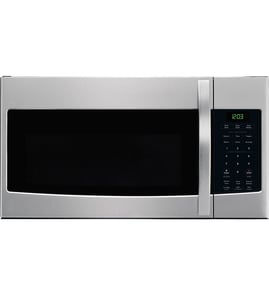



What is the cost of LG microwave PCB board?
For the LG LMV1680WW microwave/hood combo, the PCB board price depends on the exact board type (main control board, display board, or keypad/control panel) and the revision used in your unit. Use the part number lookup in the LMV1680WW owner's manual to match the correct board before pricing.
How to identify the correct PCB board
We see multiple “PCB board” descriptions used for microwaves, so matching by model and function prevents ordering the wrong part.
- Check the model tag to confirm LMV1680WW.
- Note the symptom: dead display, no heat, no keypad response, random beeping, etc.
- Remove power, then inspect the control area for a sticker with a board number.
- Compare the board number to the parts list for your model.
- If the microwave counts down but does not cook, confirm the door is closing firmly first (a door switch issue can mimic a control problem).
Typical price ranges (what most customers see)
PCB pricing varies widely by microwave type and whether the board is new, rebuilt, or discontinued.
| PCB type (common names) | What it controls | Typical price range (USD) |
|---|---|---|
| Main control board (electronic control) | Cooking logic, relays, power output commands | $80 to $250 |
| Display/clock board | Time display, indicators | $50 to $180 |
| Keypad/control panel assembly | Button inputs, sometimes includes overlay | $60 to $220 |
When it might not be the PCB
Before buying a board for an LG over-the-range microwave, we rule out a few common, lower-cost failures.
- If the unit is completely dead: check the outlet and consider a blown microwave fuse 3B74133Q.
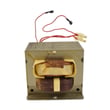
- If it runs but does not heat: the issue is often in the high-voltage circuit (magnetron, capacitor, diode, transformer).
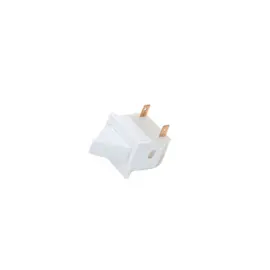
- If it only works with the door held a certain way: a door interlock switch can be the cause.
Why it matters
Microwaves contain high-voltage components; replacing the wrong electronic control can waste time and money, and some “no heat” symptoms are caused by door interlocks or high-voltage parts instead of the PCB.
Last updated: February 2026
What are common problems with LG microwaves?
Common problems we see with LG microwaves like model LMV1680WW include no heat, arcing (sparks), a dead display or sudden shutoff, a turntable that will not rotate, and door-latch issues that prevent cooking. Many symptoms start with simple causes (door not fully closed, wrong cookware) before a part failure.
Most common symptoms and what they usually point to
- Not heating: often a high-voltage component issue (magnetron, capacitor, transformer, or related wiring)
- Runs but does not cook: door not firmly closed or a timer function selected instead of a cook cycle (see the LMV1680WW owner's manual)
- Arcing or burning smell: metal in the cavity, running empty, or rack not seated correctly on its supports (see never do these things with a microwave)
- Shuts off after starting: airflow restriction, door switch problem, or an electrical protection issue
- Turntable not spinning: coupler or tray support problem, or the tray is not seated correctly
Quick checks we recommend before replacing parts
- Confirm the door closes firmly and the latch area is clean.
- Remove any metal (foil, twist ties, metal-trim dishes) and never run the microwave empty.
- If arcing happened, inspect the cavity for burn marks and address them before continued use.
- Verify the outlet is properly grounded and the cord is not pinched or crushed (see the LMV1680WW installation guide).
- If the unit is completely dead, check the home breaker first.
Parts that commonly relate to these problems (LMV1680WW)
| Symptom | Common part involved | Example part for this model |
|---|---|---|
| No heat | Magnetron | Microwave magnetron 2B71165R |
| Dead/no power | Fuse | Microwave fuse 3B74133Q |
| Starts then stops, or will not run with door closed | Door interlock switch | Microwave door interlock switch 6600W1K001R |
| Turntable not turning | Turntable motor coupler | Microwave turntable motor coupler 4370W1A006B |
Why it matters
Microwave/hood combos use door safety interlocks and high-voltage components; continuing to use a unit that arcs, has a damaged door, or has unreliable door latching can create unsafe operation. The manual also stresses not defeating safety interlocks and not operating the microwave if the door, hinges, or latches are damaged.
Last updated: February 2026
What are the parts of a microwave?
A microwave like the LG LMV1680WW is built from a cooking cavity and door system, a control panel, and a high-voltage heating circuit (magnetron and related components), plus a turntable system and, on over-the-range models, a vent fan and grease filters. See the LMV1680WW owner's manual for your exact layout and specs.
Main microwave parts (what they do)
- Control panel and control board: runs cook times, power levels, and sensor functions.
- Door and interlock switches: confirm the door is closed so the unit can run safely.
- Cooking cavity: the metal box where food sits and microwave energy is contained.
- Turntable system: rotates food for more even heating (tray, support, coupler, motor).
- High-voltage heating circuit: creates microwave energy (magnetron, capacitor, transformer, diode).
- Ventilation system (microwave/hood combo): moves air through the hood fan and uses grease filters.
- Cooktop light and internal light: illuminate the cooktop and cavity.
Common LMV1680WW components you may replace
These are examples of parts we commonly see replaced on this model:
| System | Example part | What you’ll notice when it fails |
|---|---|---|
| Heating | Microwave magnetron 2B71165R | Runs but does not heat, or heats weakly |
| Power protection | Microwave fuse 3B74133Q | Microwave is completely dead or goes dead when starting |
| Door safety | Microwave door interlock switch 6600W1K001R | Won’t start, stops when door is moved, or blows fuse |
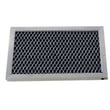
| Venting | Microwave grease filter 5230W1A012E | Grease buildup, reduced airflow, odors |
Why it matters
Knowing which “system” a symptom belongs to speeds up troubleshooting. For example, “runs but won’t heat” usually points to the high-voltage heating circuit, while “won’t start” often points to the door interlock switches or fuse.
Quick safety and install notes
- Unplug the microwave before any inspection or service.
- Over-the-range units use a mounting plate and venting setup; follow the LMV1680WW installation guide if you’re adjusting venting or removing the unit.
- High-voltage components can retain a dangerous charge; we recommend a qualified technician for internal electrical repairs.
Last updated: February 2026