Installation guide
 Owner’s manual
 Error Codes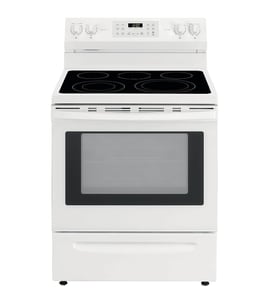

How do I clear the error code on my KitchenAid oven?
On your KitchenAid KDSS907SSS04 range, you can usually clear an error code by pressing OFF to clear the display; if the message returns, reset power at the breaker for 1 minute and recheck. Use the steps in the KDSS907SSS04 owner's manual for model-specific display messages.
Quick steps to clear the code
- Press OFF once to clear the message on the display.
- Wait 10 seconds; see if the code stays cleared.
- If it comes back, turn the range OFF, then switch the circuit breaker OFF for 1 minute, then back ON.
- If the code returns immediately after power is restored, stop using self-clean or high-heat cooking until you identify the cause.
What the display message usually means
Many KitchenAid range control messages fall into two buckets: a simple “clear and continue” message, or a repeating fault that points to a control, keypad, sensor, or wiring issue.
| What you see | What to do first | Next step if it returns |
|---|---|---|
| Letter + number code | Press OFF to clear | Power reset; then troubleshoot likely cause |
| “SET CLOCK” | Clear display, then set clock | Check for recent power interruption |
Common causes when the code keeps coming back
- Moisture or residue on the touch panel causing a “stuck key” condition
- Loose connection at the oven sensor or control
- Failing oven temperature sensor (often causes temperature-related faults)
- Overheating condition that trips protection (cool down fully, then retry)
- Wiring damage or a poor harness connection
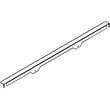
If you suspect a temperature-sensing issue, the oven sensor WP8274149 is a common part involved in temperature feedback to the electronic control.
Why it matters
Clearing the code gets you cooking again, but a repeating error code is the range’s way of preventing unsafe temperatures or incorrect baking performance. Addressing the root cause helps protect the electronic control and improves temperature accuracy.
Last updated: January 2026
How old is my KitchenAid oven by serial number?
You can estimate the age of your KitchenAid range model KDSS907SSS04 by reading the serial number from the model and serial tag, then decoding the built date using KitchenAid’s serial format (year code plus day-of-year). Use the KDSS907SSS04 installation guide to locate the tag.
Where to find the serial number on KDSS907SSS04
On this model, the model and serial number plate is located on the right-hand side oven door trim.
- Open the oven door
- Look along the right-side door trim/frame area
- Write down the model number and serial number exactly
- Take a clear photo for reference before ordering parts
How KitchenAid serial numbers are typically decoded
Most KitchenAid (Whirlpool-built) serial numbers encode the manufacture date using a year code and a day-of-year number.
- The serial usually starts with letters and numbers
- A year code (often a letter) identifies the production year
- A 3-digit day-of-year (001 to 365, or 366 in leap years) identifies the day it was built
- Remaining digits identify the production sequence
Quick decode checklist
- Find the 3-digit day-of-year group (001 to 365)
- Identify the year code character near the beginning of the serial
- Convert day-of-year to a calendar date using the year
| Serial piece | What it tells you | Example value |
|---|---|---|
| Year code | Production year | (letter code) |
| Day-of-year | Day built within that year | 120 |
| Sequence | Build order | 1234 |
Why it matters
Knowing the manufacture date helps us match the correct revision of parts for KDSS907SSS04, especially for temperature-related repairs such as a failing sensor or heating issue (for example, the wall oven temperature sensor WPW10131825).
Last updated: January 2026
What is the life expectancy of a KitchenAid range?
A KitchenAid range typically lasts 13 to 15 years with normal household use and basic maintenance. For the KitchenAid KDSS907SSS04 dual-fuel slide-in convection range, keeping burners clean, avoiding excessive self-clean cycles, and fixing heating issues early helps you reach that expected lifespan.
Typical lifespan and what affects it
Most ranges land in a similar life range, but these factors move the needle:
- Cooking frequency and heat load (daily high-heat use shortens life)
- Self-clean usage (high heat stresses wiring, sensors, and door-lock parts)
- Ventilation and cooling airflow (blocked airflow can overheat controls)
- Cleaning habits (spills left to bake on can damage finishes and components)
- Timely part replacement (a weak element or sensor can cause bigger failures)
Quick reference: what usually wears first
| Component area | Common symptom | Example part for KDSS907SSS04 |
|---|---|---|
| Oven heating | Slow preheat, uneven baking | Bake element WPW10207398 |
| Temperature sensing | Oven runs hot/cold, temp swings | Wall oven temperature sensor WPW10131825 |
| Safety temperature limit | Oven shuts down or overheats | Range high-limit thermostat |
| Self-clean locking | Door won’t lock/unlock | Range oven door lock assembly |
Maintenance steps that extend range life
- Wipe up oven spills after the oven cools to prevent baked-on carbon
- Keep burner heads and grates clean so flames stay even and blue
- Use self-clean only when needed; choose shorter cycles when possible
- Verify oven temperature with an oven thermometer if baking seems off
- If you smell overheating or see error behavior, stop using the oven and inspect
Why it matters
A range that is heating accurately and cooling properly puts less stress on expensive components like the touch controls, sensors, and wiring. Small fixes (like replacing a failing element or sensor) often prevent repeat overheating and premature control failures.
For model-specific operating and care guidance, follow the KDSS907SSS04 owner’s manual.
Last updated: January 2026