Owner’s manual
 Error Codes


What are the most commonly replaced parts in a refrigerator?
In a GE PSS26MSTDSS side-by-side refrigerator, the most commonly replaced parts are the ones tied to cooling performance, defrosting, and water and ice dispensing: water filters, water valves, fans, defrost components, sensors, and light bulbs. These parts wear from normal use and mineral buildup.
Most common replacement parts (and what they do)
- Water filter: improves taste and helps protect the dispenser system; see GE refrigerator water filter MWFP.
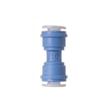
- Water inlet valve: controls water flow to the dispenser and ice maker; see refrigerator water valve WR57X33326.
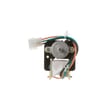
- Evaporator fan motor: circulates cold air through the compartments; see rca refrigerator evaporator fan motor WR60X10185.
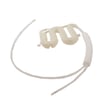
- Defrost heater: melts frost off the evaporator to keep airflow strong; see refrigerator defrost heater WR51X10055.
- Defrost thermostat (bi-metal): helps control the defrost cycle temperature; see refrigerator defrost bi-metal thermostat WR50X10069.
- Temperature sensor (thermistor): reports temperature to the control system; see GE profile refrigerator temperature sensor WR55X10025.
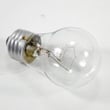
- Light bulb: restores interior lighting; see GE appliance light bulb, 40-watt 40A15.
Quick symptom-to-part guide
| Symptom | Most likely part area | Example part on this model |
|---|---|---|
| Ice tastes bad or water flow slows | Filtration | MWFP water filter |
| No water at dispenser, no ice fill | Water supply control | WR57X33326 water valve |
| Fridge warm but freezer cold (or weak airflow) | Air circulation | WR60X10185 evaporator fan motor |
| Frost buildup, warm temps, fan noise changes | Defrost system | WR51X10055 heater, WR50X10069 thermostat |
| Temps swing or seem inaccurate | Sensing/control input | WR55X10025 temperature sensor |
| Interior light out | Lighting | 40A15 bulb |
Why these parts get replaced so often
- Filters clog from sediment and scale.
- Valves and reservoirs can restrict from mineral buildup.
- Fan motors wear from continuous run time.
- Defrost parts fail and allow frost to choke airflow.
- Sensors drift and cause temperature control issues.
Before you order a part
- Confirm the symptom is consistent (not just after frequent door openings).
- Check for obvious airflow blockage (overpacked shelves, blocked vents).
- Use the troubleshooting section in the PSS26MSTDSS owner's manual to match symptoms to likely causes.
You can order replacement parts for your GE PSS26MSTDSS from the parts list for this model, or search by model number on Sears PartsDirect.
Last updated: February 2026
What is the most common problem with a GE refrigerator?
The most common problem we see with GE refrigerators like model PSS26MSTDSS is poor cooling (fresh food too warm, freezer not holding temperature). In many cases, the root cause is restricted airflow or heat not being removed efficiently, which makes the compressor run longer.
Quick checks that fix many cooling complaints
- Make sure air vents inside the refrigerator and freezer are not blocked by food packages.
- Confirm the doors fully close and seal; a door held open can also slow ice freezing.
- Clean dust and pet hair from the condenser area (dirty coils raise temperatures).
- Set temperatures back to normal settings after any power outage or cleaning.
- If the unit has an icemaker, verify the water supply is connected and turned on (a disconnected supply can cause buzzing and can damage the valve if left on).
Common causes and the parts that often solve them
If basic airflow and cleaning do not restore normal temperatures, these are frequent culprits on side-by-side designs:
| Symptom you notice | Likely system involved | Example part on this model page |
|---|---|---|
| Temps drift, food spoils, readings seem “off” | Temperature sensing | GE profile refrigerator temperature sensor WR55X10025 |
| Frost buildup, warm fridge section, poor airflow | Defrost system | Refrigerator defrost heater WR51X10055 or refrigerator defrost bi-metal thermostat WR50X10069 |
| Freezer cold but fridge warm, weak air movement | Evaporator airflow | Rca refrigerator evaporator fan motor WR60X10185 or fan chiller WR17X13035 |
| Slow water dispense, small or hollow ice | Water filtration | GE refrigerator water filter MWFP |
Why it matters
Poor cooling is more than an inconvenience; it can lead to food spoilage and can overwork the sealed system (compressor, condenser, evaporator). Catching airflow, defrost, or sensor issues early helps the refrigerator maintain stable temperatures with less run time.
Where to confirm settings and safety steps
We follow the safety guidance in the PSS26MSTDSS owner’s manual, including unplugging the refrigerator before cleaning or repairs and remembering that setting controls to 0 (Off) does not remove power to the light circuit.
You can order the right replacement parts for your PSS26MSTDSS from the parts list for this model, or search by model number on Sears PartsDirect.
Last updated: February 2026
Where is the defrost drain on a GE side by side refrigerator?
On the GE PSS26MSTDSS side-by-side refrigerator, the defrost drain is in the freezer compartment on the interior back wall, typically centered just above the spot where the freezer floor slopes up into the back wall. It drains meltwater from the evaporator during defrost.
How to find it (quick locator steps)
- Unplug the refrigerator for safety.
- Open the freezer and remove the lower basket/shelf for a clear view.
- Look at the back wall near the bottom center.
- Find the point where the freezer floor angles upward into the rear wall.
- The drain opening is usually just above that slope, behind or below the evaporator cover area.
What you’ll see and what it does
The defrost drain is a small hole or channel that routes water to a drain pan under the refrigerator. When it clogs, water can back up and freeze on the freezer floor.
| Symptom | What it often means | What to check first |
|---|---|---|
| Sheet of ice on freezer bottom | Drain is blocked or frozen | Drain hole and drain trough |
| Water on kitchen floor | Overflow or leak path from drain system | Drain pan area and drain tube |
| Musty odor | Standing water in drain path | Drain tube and pan cleanliness |
Clearing a clogged or frozen defrost drain
- Melt the ice around the drain opening with warm (not boiling) water.
- Flush the drain with warm water using a turkey baster or squeeze bottle.
- If water does not flow freely, clear the tube with a flexible plastic line (not metal).
- Clean any debris in the drain trough.
- Recheck after a few hours for new water or ice buildup.
Why it matters
A clear defrost drain prevents ice buildup, protects food storage space, and helps your GE refrigerator maintain proper airflow and temperature stability.
For diagrams and access steps specific to your unit, use the PSS26MSTDSS owner's manual.
Last updated: February 2026