Installation guide
 Owner’s manual


Can a Maytag washer wash a king size comforter?
Yes. Your Maytag MVWC500VW0 washer can wash a king size comforter as long as it fits loosely in the basket and can move freely during agitation. Use the Bulky (or large items) cycle and match water level and temperature to the comforter’s care label.
A comforter cleans best when water and detergent can circulate through it.
- Place the comforter evenly in the tub; do not wrap it tightly around the agitator
- Avoid overloading; the comforter should not be packed down
- Select the highest appropriate load size or water level for the item
- Use the warmest water safe for the fabric; follow the care label
- Close the lid; this washer will not agitate or spin with the lid open
For cycle names and control details specific to this washer, follow the MVWC500VW0 owner's manual.
Use this as a practical starting point, then adjust based on the comforter’s care label.
| Comforter type | Cycle to start with | Water level | Notes |
|---|---|---|---|
| Down or down-alternative | Bulky/large items | High | May need extra dry time after washing |
| Thick quilted | Bulky/large items | High | Heavier when wet; balance carefully |
| Lightweight blanket | Normal or Bulky | Medium to high | Typically spins out more easily |
Bulky bedding traps air and water, which makes it harder to balance. When the load is balanced and not overloaded, the washer runs quieter, spins more effectively, and reduces vibration.
- Pause the cycle and redistribute the comforter evenly around the basket
- Wash the comforter by itself (remove any extra items)
- Confirm the washer is level on a solid floor (carpet installation is not recommended)
- If symptoms continue, use how to troubleshoot Maytag centennial washer problems for common top-load washer checks
Last updated: January 2026
What is the average lifespan of a Maytag Centennial washer?
A Maytag Centennial washer like model MVWC500VW0 typically lasts 10 to 14 years with normal household use. Consistent care (balanced loads, correct detergent, and periodic cleaning) helps you reach the high end of that range and reduce wear on the drive system and suspension.
Most top-load Maytag Centennial washers land in this range, but real-world life depends on how hard the washer works and how well it is maintained.
- Load size and balance: Overloading and chronic out-of-balance loads shorten component life.
- Installation and leveling: A washer that is not level vibrates more and stresses the suspension.
- Water quality and detergent use: Too much detergent can cause buildup and extra strain during agitation and drain.
- Usage frequency: Multiple loads per day wears parts faster than a few loads per week.
- Early symptom response: Fixing small issues early prevents secondary damage.
Use these habits to reduce common wear points on a VMW-style top-load washer.
- Keep loads evenly distributed around the basket.
- Avoid washing heavy single items alone (add towels to balance).
- Periodically inspect for slow draining or unusual noises.
- If the washer will sit unused, turn off water supply and unplug as outlined in the MVWC500VW0 owner's manual.
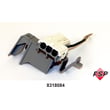
- If the washer will not spin because the lid is not registering closed, check the washer lid switch assembly WP8318084.
| Symptom | Often related to | What you may notice |
|---|---|---|
| Agitator moves poorly | Agitator dogs | Clicking, weak agitation |
| Won’t spin or stops mid-cycle | Lid switch system | No spin with lid closed |
| Won’t drain or drains slowly | Drain pump or blockage | Water left in tub |
| Excessive vibration | Suspension components | Banging, walking |
A washer near the end of its typical lifespan can still run well, but small problems (vibration, slow drain, weak agitation) tend to snowball into bigger repairs. Staying ahead of maintenance and early symptoms is the simplest way to extend the service life of your MVWC500VW0.
Last updated: January 2026
What is the most common problem with a Maytag washer?
For the Maytag MVWC500VW0 washer, the most common service issues we see are “won’t spin” or “won’t drain.” Many times the root cause is a lid not fully closing (or a failed lid switch), a drain restriction, or an out-of-balance load that prevents a normal spin.
- Washer won’t spin: lid not closed, failed lid switch, drive system problem
- Washer won’t drain: clogged drain hose, blocked pump, excessive suds
- Noisy or banging: unbalanced load, washer not level, suspension issue
- Leaking: loose fill hoses, worn hose washers, inlet debris
- Seems underfilled: water level is lower than expected but can be normal on this design
Use these steps before replacing parts; they match common causes called out in the troubleshooting guidance in the MVWC500VW0 owner’s manual.
- Confirm the lid is fully closed; this washer will not agitate or spin with the lid open.
- Check the drain hose for clogs and make sure the hose end is no higher than 96 in. (244 cm) above the floor.
- Reduce suds (too much detergent can slow or stop draining).
- Balance the load and level the washer; an unlevel cabinet can cause noise and poor spinning.
- Verify both water faucets are on and inlet hoses are not kinked.
If the basic checks do not resolve it, these are frequent repair parts for this model:
| Symptom | Common suspect | Example part for MVWC500VW0 |
|---|---|---|
| Won’t spin/agitate | Lid switch not sensing closed lid | Washer lid switch assembly WP8318084 |
| Won’t drain | Pump jammed or failing | Washer drain pump WP3363394 |
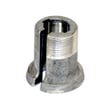
| Poor agitation | Worn agitator dogs | Agitator dog 80040 |
A washer that can’t drain or spin leaves clothes soaking wet and can strain the drive system. Fixing the simple causes first (lid closure, drain height, suds, leveling) prevents unnecessary part replacement and repeat failures.
Last updated: January 2026