Owner’s manual
 Error Codes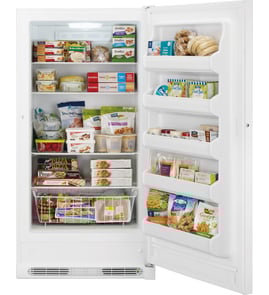

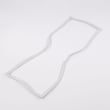
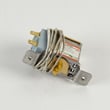
Where is the model number on a Kenmore upright freezer?
On a Kenmore upright freezer like model 25520602, the model and serial number are printed on the appliance’s rating label. Common locations include the inside wall or ceiling of the freezer compartment, the side or back of the cabinet, or behind the lower kick plate.
Quick places to check first
- Inside the freezer compartment on a side wall (near the front opening)
- Inside the freezer compartment on the ceiling (common on uprights)
- Back exterior panel of the cabinet
- Side exterior panel of the cabinet
- Behind or just above the lower kick plate (front bottom)
How to find it fast (2-minute method)
- Open the door and scan the upper interior walls and ceiling with a flashlight.
- Check the lower front area for a removable kick plate or grille.
- If you still do not see it, pull the freezer forward and look on the back panel.
What the label looks like and what to write down
The label typically lists both a model number and a serial number. For this series, the manual shows model numbers like 255.20602 (often printed with a dot) which corresponds to 25520602.
| You may see it printed as | Use this when ordering parts | Why it matters |
|---|---|---|
| 255.20602 | 25520602 | Matches the parts list and diagrams |
| Serial number (varies) | Serial number (copy exactly) | Helps confirm production details for some parts |
Why it matters
Using the exact model number ensures we match the correct Kenmore freezer parts (for example, door hardware, leveling legs, or temperature control components) and avoid look-alike parts that do not fit.
For model-specific identification details and product record info, check the owner's manual.
Last updated: February 2026
How do I know if my compressor is bad in my Kenmore freezer?
If your Kenmore 25520602 upright freezer is not freezing and you never hear the compressor start and stop normally, the compressor or its start components are likely at fault. We confirm the basics first (power, airflow, temperature setting), then check for classic compressor symptoms.
Quick signs the compressor (or start system) is failing
- Freezer is warm but the interior fan runs and lights work
- Compressor is very hot and repeatedly clicks on and off (start attempt, then overload)
- You hear a steady hum followed by a click every few minutes
- The freezer runs constantly but still will not reach temperature
- Breaker trips when the compressor tries to start
What to check first (fast, no tools)
Use these checks before assuming the sealed system is bad:
- Temperature control setting: Make sure the control is not set to OFF; OFF stops cooling but does not shut off power (see the owner's manual).
- Give it time: After a first start or major change, cooling can take up to 24 hours to stabilize.
- Door seal and loading: A door not sealing or an overpacked cabinet can mimic cooling failure.
- Airflow: Keep vents and shelves clear so cold air can circulate.
Simple diagnostic flow (what the symptoms usually mean)
| What you observe | Most likely cause | What we do next |
|---|---|---|
| Clicks every few minutes, compressor hot | Start relay/overload issue or locked compressor | Test start components first; then evaluate compressor |
| Compressor runs but freezer stays warm | Sealed system issue (compressor weak, restriction, leak) | Professional sealed-system diagnosis |
| No sound at all, no cooling | Control, power, or wiring issue | Verify outlet power and control setting |
Why it matters
A “bad compressor” diagnosis is expensive and often confused with a failed start relay or control problem. Confirming the temperature control setting and normal 24-hour cool-down behavior helps avoid replacing the wrong parts.
Related DIY help: how to replace a freezer compressor start relay
Last updated: February 2026
How to clean coils on Kenmore upright freezer?
To clean the coils on your Kenmore 25520602 upright freezer, unplug the freezer first, then gently remove dust and lint from the condenser coil area using a coil brush and vacuum. Keeping coils clean helps the compressor run cooler and improves cooling efficiency (and energy use). See the owner's manual for cleaning and safety steps.
Safety first
- Unplug the freezer before any cleaning to prevent electric shock.
- Avoid damaging any refrigerant tubing while moving or cleaning the freezer.
- Do not use harsh chemicals, abrasives, ammonia, or bleach on freezer surfaces.
- Keep water and cleaning solutions away from electrical components.
Step-by-step: cleaning the condenser coils
- Empty what you need to access the back or bottom area (depending on where your coil is located).
- Pull the freezer straight out far enough to work safely; keep it upright.
- Locate the condenser coil and fan area (commonly behind a lower rear cover or underneath).
- Brush first, vacuum second:
- Use a soft coil brush to loosen packed dust.
- Vacuum the debris as you go (crevice tool helps).
- Clean the floor area under and behind the freezer so dust does not get pulled back in.
- Restore power and confirm the freezer is running normally.
How often to clean the coils
| Home environment | Typical coil cleaning interval | Why |
|---|---|---|
| Pets, heavy dust, laundry nearby | Every 3 months | Hair and lint insulate coils quickly |
| Average home | Every 6 months | Prevents efficiency loss |
| Very clean, low traffic area | Every 12 months | Still worth routine maintenance |
Why it matters
Dirty condenser coils trap heat; that makes the compressor run longer, can raise cabinet temperatures, and increases energy consumption. Clean coils help your Kenmore freezer maintain stable temperatures and reduce wear on cooling components.
Related maintenance you can do at the same time
- Wipe the interior with a baking soda and warm water solution (then rinse and dry).
- Clean door gaskets every three months to maintain a good seal.
- Confirm the cabinet is level using the front leveling legs.
Last updated: February 2026
What causes an upright freezer to stop freezing?
If your Kenmore 25520602 upright freezer stops freezing, the most common causes are a temperature control set to OFF, a power problem at the outlet or breaker, poor door sealing, or heavy frost buildup restricting airflow. Start with the quick checks in the owner's manual.
Quick checks (fastest fixes first)
- Make sure the temperature control knob is not set to OFF (OFF stops cooling but does not shut off power).
- Confirm the freezer is plugged into a dedicated, properly grounded outlet.
- Check the home circuit breaker or fuse for a tripped condition.
- Reduce door openings and verify the door closes fully.
- Inspect the door gasket area for gaps, food packages, or shelves preventing closure.
- If you recently added warm food, allow time for temperatures to pull back down (up to 24 hours for a full cool-down from warm).
Frost buildup and airflow problems
Frost that builds up on the freezer walls can reduce cooling performance. For best efficiency, we recommend defrosting when frost reaches about 1/8 inch thick.
| What you see | What it usually means | What to do |
|---|---|---|
| Thick frost on walls | Airflow restriction, door not sealing, frequent openings | Defrost and check door seal habits |
| Freezer runs a lot but still warm | Heat load, door leaks, frost restriction | Limit openings, check gasket, defrost |
| No sound or no cooling at all | Control set to OFF or power issue | Recheck knob setting, outlet, breaker |
Safe defrosting steps (important)
- Unplug the freezer and remove food.
- Leave the door open; a bowl of warm water inside can speed defrosting.
- Wipe out meltwater and dry the interior before restarting.
- Do not use sharp or metallic tools to remove ice; puncturing refrigerant tubing can create a serious hazard.
Why it matters
A freezer that is not freezing is often a simple control, power, or door-seal issue. Catching it early prevents food loss and helps avoid strain on the sealed system and compressor.
Last updated: February 2026