Owner’s manual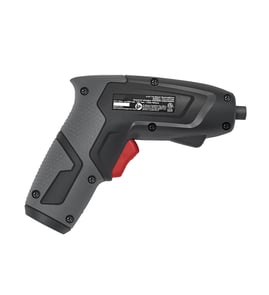

What is a good torque for a cordless screwdriver?
A good torque setting depends on the screw size and material, not a single number. On the Craftsman 315117790 7.2V cordless screwdriver, we recommend using the 24-position clutch to start low and increase only until the screw seats without stripping; use LO speed when you need more torque.
Recommended torque settings for model 315117790
This model uses a clutch ring with 24 torque positions. Use these ranges as a practical starting point (then fine-tune):
- 1 to 4: small screws (light duty)
- 5 to 9: screws into soft material
- 10 to 14: screws into soft and hard materials
- 15 to 19: hardwood
- 20 to 24: large screws and light drilling
For the exact control locations and operating details (clutch ring, LO/HI switch, forward/reverse), use the owner's manual.
Quick “what to use when” guide
| Task | Speed setting | Clutch range to start with | Goal |
|---|---|---|---|
| Assemble furniture, cabinet hardware | HI | 1 to 9 | Seat screw without cam-out |
| General driving into wood studs | LO | 10 to 19 | Drive flush without stripping |
| Large screws, pilot-hole drilling | HI for drilling; LO for driving | 20 to 24 | Avoid stalling and overheating |
How to dial in the right torque (no guesswork)
- Start at a low clutch number and drive a test screw.
- If the clutch slips before the screw is seated, increase 1 to 2 clicks and try again.
- Stop increasing once the screw seats consistently.
- Use LO speed when the tool bogs down; LO gives more torque and control.
- If you strip the head or the hole, back the clutch down and pre-drill a pilot hole.
Why it matters
Using the lowest effective torque helps prevent stripped screw heads, damaged workpieces, and premature wear on the clutch and gear train. It also reduces wrist twist if the bit binds.
Last updated: February 2026
What is a power screw driver called?
A power screwdriver is most commonly called an electric screwdriver or cordless screwdriver. Some models, including the Craftsman 315117790, are also described as a drill/driver because they can drive screws and handle light drilling with 1/4-inch hex-shank bits (up to 1/4 inch max). See the owner's manual for the exact feature set.
Common names you will see
- Electric screwdriver
- Cordless screwdriver
- Power screwdriver
- Drill/driver (often written as drill driver)
- Screw gun (more common for drywall-style tools)
How to tell what to call your Craftsman 315117790
This model has features that overlap categories, so the name depends on how you use it:
| If you use it for... | The common name | Why |
|---|---|---|
| Driving and removing screws | Cordless screwdriver | Forward/reverse switch and clutch control torque |
| Light drilling with hex-shank bits | Drill/driver | Two-speed gear train supports drilling at HI speed |
| Tight spaces or different grips | Stick/pistol screwdriver | Converts between stick and pistol configurations |
Why it matters
Using the right term helps you buy the right accessories and set expectations. For example, the Craftsman 315117790 uses 1/4-inch hex-shank bits for drilling and has a 24-position clutch, so it is built for controlled screwdriving and light drilling rather than heavy-duty drilling.
Quick tips for matching the name to the job
- Use HI speed for drilling holes; use LO speed for driving screws.
- Adjust the torque adjustment ring to reduce cam-out and stripped screw heads.
- Use the LED worklight when working in cabinets or low-light areas.
- For drilling, stick with 1/4-inch hex-shank drill bits and keep the bit size within the tool’s 1/4-inch maximum.
Last updated: February 2026
Who makes the best electrical screwdrivers?
For live electrical work, the best electrical screwdrivers are insulated, VDE-rated hand tools from brands known for consistent safety and tip durability. Your Craftsman 315117790 is a 7.2-volt cordless screwdriver for driving fasteners; it is not a substitute for insulated electrician screwdrivers used around energized circuits (see the 315117790 operator's manual).
What to buy for electrical work (the short list)
When you mean “electrical screwdriver,” most electricians mean insulated drivers for terminals and panels.
- Choose insulated, VDE-rated (typically 1,000V) screwdrivers for electrical panels and terminals
- Pick hardened tips that fit fasteners precisely (Phillips, slotted, square, Torx)
- Use a dedicated #2 Phillips and a cabinet-tip slotted driver for most work
- Consider a slim-shank insulated set for tight terminal blocks
- Replace drivers with chipped insulation or worn tips
How this differs from your Craftsman 315117790 cordless screwdriver
Your Craftsman 315117790 is designed for driving screws with a clutch and two-speed gearing, plus forward/reverse and an LED worklight. It accepts 1/4-inch hex bits and uses a charger on 120V, 60 Hz household power.
| Tool type | Best for | Key features to look for |
|---|---|---|
| Insulated electrician screwdriver (hand tool) | Working near electrical components | VDE insulation, precise tip fit, durable handle |
| Cordless screwdriver (like Craftsman 315117790) | Assembly, light fastening, general DIY | Clutch settings, forward/reverse, 1/4-inch hex bits |
Quick safety and selection checks
- De-energize circuits whenever possible before driving terminal screws
- Match the driver tip to the screw head to prevent cam-out and stripped screws
- Use the clutch on the 315117790 to avoid over-tightening small screws
- Store bits in the built-in bit storage so you always have the right size available
Why it matters
Using the right tool reduces stripped fasteners, improves torque control, and helps protect you when working around electrical components. A cordless screwdriver speeds up assembly, while insulated hand drivers are the right choice for electrical safety tasks.
Last updated: February 2026
Where can I buy Craftsman replacement parts?
You can buy replacement parts for your Craftsman cordless screwdriver model 315117790 through Sears PartsDirect using the model-based parts list and diagrams in the 315117790 owner's manual. This helps you match the correct part number to your tool before you order.
Best way to make sure you get the right part
- Confirm the model number on the plate attached to the motor housing (it should read 315117790).
- Use the exploded view and parts list to identify the exact part name and part number.
- Match the part number exactly when ordering (even small differences can mean a different fit).
- If your tool needs service-level repair, follow the service guidance in the manual and use identical replacement parts.
Common parts and accessories you may need
The manual for Craftsman 315117790 lists items such as a charger and screwdriver bits, and it notes the tool uses 1/4-inch hex shank drill bits (maximum drill size 1/4 inch).
| Item type | What to match before buying | Why it matters |
|---|---|---|
| Charger | Part number from the parts list | Wrong charger can damage the battery/tool |
| Bits | 1/4-inch hex shank, correct bit style | Ensures proper fit and reduces stripping |
| Internal repair parts | Exact part number and location in diagram | Prevents rework and repeat failures |
Why it matters
Power tool parts are model-specific. Using the correct 315117790 parts list reduces ordering mistakes and helps keep performance and safety consistent with the original design.
Last updated: February 2026
Is it worth getting an electric screwdriver?
Yes, an electric screwdriver is worth it when you do repetitive screw-driving because it saves time and reduces hand fatigue. For the Craftsman 315117790 cordless screwdriver, features like a 24-position clutch, forward/reverse, LED worklight, and two-speed gearing make it especially useful for controlled driving and light-duty drilling (details in the owner's manual).
When an electric screwdriver is the right choice
It pays off most when you want consistent results without overdriving screws.
- Assembling furniture, cabinets, and shelving
- Installing switch plates, outlet covers, and light fixtures (power off first)
- Hanging blinds, curtain rods, and door hardware
- Driving lots of small to medium screws where wrist strain adds up
- Occasional light-duty drilling (when the bit and material are appropriate)
What you get with the Craftsman 315117790
This model is designed for control and convenience, not heavy construction.
| Feature | What it helps with | Why it matters |
|---|---|---|
| 24-position clutch (torque adjustment ring) | Prevents stripping screws | Better control on soft wood and small fasteners |
| Two-speed gear train (LO/HI) | Matches speed to task | LO for driving, HI for light drilling |
| Forward/reverse rocker switch | Backing out screws | Faster corrections and removal |
| LED worklight | Seeing the screw head | Fewer cam-outs and damaged heads |
| Stick/pistol conversion | Tight spots vs. leverage | Better access and comfort |
Tips to decide before you buy
- Choose an electric screwdriver if you drive screws weekly or do multi-hour projects.
- Choose a drill/driver if you regularly drill larger holes or drive long fasteners.
- Keep a manual screwdriver for delicate work where you want maximum feel.
Why it matters
Using the right torque and speed helps prevent stripped screw heads, damaged materials, and premature bit wear. The adjustable clutch and two-speed setup on the 315117790 are built to make that easier and more repeatable.
Last updated: February 2026