Owner’s manual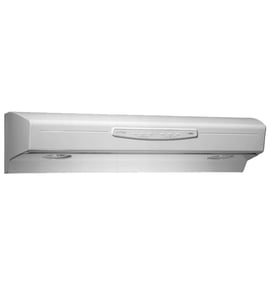


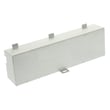
Can I install a range vent myself?
Yes, many homeowners can install the GE JV348L2SS range hood themselves if they are comfortable with basic carpentry and electrical safety. The job typically involves choosing a venting option (ducted or recirculating), preparing the cabinet or wall openings, mounting the hood, and connecting wiring and ductwork per the JV348L2SS owner’s manual.
What you need to plan before you start
- Turn off power at the service panel and prevent it from being switched back on while you work.
- Confirm your venting method: outside top exhaust, outside rear exhaust, or recirculating (ductless).
- Verify duct size and path; this hood mates with standard 3-1/4" x 10" rectangular ducting or 7" round ducting (use a transition if needed).
- Confirm mounting height; the bottom edge of the cabinet needs to be 30 inches or more above the cooking surface.
- Make sure the hood is properly grounded.
DIY vs. hiring a pro (quick comparison)
| Task | DIY-friendly? | When to hire a pro |
|---|---|---|
| Replacing an existing hood with same duct path | Often | If wiring is damaged or ducting is unsafe |
| Cutting new duct openings through wall/cabinet | Sometimes | If you need to cut through exterior wall, masonry, or complex framing |
| Electrical connection (hardwire or cord kit) | Sometimes | If you are not confident working with household wiring |
| New duct run to exterior | Sometimes | If the run is long, has many turns, or needs roof/wall cap work |
Installation steps (high level)
- Choose the vent option and only knock out the openings required for that setup.
- Mark and drill mounting locations; start the mounting screws partway into the keyhole slot locations.
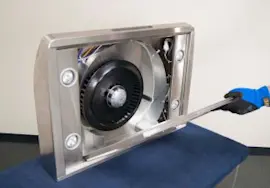
- Lift and hang the hood, then slide it back and tighten screws (do not push on the fan blade).
- Connect wiring through the wiring knockout; confirm grounding.
- For ducted installs, attach ductwork and seal joints.
Why it matters
Correct venting and mounting height help the hood move air effectively and reduce grease buildup. Following the specified ducting and grounding requirements also helps prevent nuisance problems like weak airflow, vibration, or electrical issues.
Last updated: February 2026
What are the disadvantages of recirculating hoods?
Recirculating (ductless) operation on the GE JV348L2SS range hood is convenient when you cannot vent outdoors, but it removes odors less effectively than ducted venting and requires ongoing filter replacement. It also does not exhaust heat and moisture outside, so the kitchen can feel warmer and more humid.
Key disadvantages to expect
- Odor control depends on a disposable charcoal filter; it cannot be cleaned and must be replaced.
- More humidity and heat stay in the room because air is not exhausted outdoors.
- Performance drops as filters load up; airflow can feel weaker over time.
- Ongoing maintenance cost for charcoal filters (and regular cleaning of the metal grease filter).
- Grease can build up faster on cabinets and nearby surfaces if filters are neglected.
Filter maintenance (what this model requires)
For JV348L2SS, the manual calls out two different filters with different care:
| Filter type | What it does | Cleaning | Typical replacement interval |
|---|---|---|---|
| Metal grease filter | Captures grease | Washable (soak in hot water and detergent; dry before reinstalling) | Replace only if damaged or no longer cleans well |
| Charcoal filter (recirculating only) | Helps reduce smoke and odors | Not washable | Replace about every 6 to 12 months (based on use) |
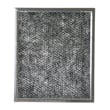
For the correct parts, use the model-specified filters: filtr grease WB2X8391 and hotpoint range hood charcoal filter kit WB02X10700.
Why it matters
A ductless hood can keep you compliant with a no-duct kitchen layout, but the tradeoff is that you are filtering and returning air to the room. If you cook frequently (high heat, frying, strong spices), staying on top of filter care is what keeps the hood effective.
Helpful reference
- Filter handling, recirculating setup notes, and care steps are covered in the JV348L2SS owner’s manual.
Last updated: February 2026
What's the best CFM for a range hood?
For a GE JV348L2SS range hood, the “best” CFM is the lowest airflow that still clears smoke and odors for your cooking style; most homes do well in the 150 to 250 CFM range, while many codes and basic ventilation needs start around 100 CFM minimum. Confirm your exact hood rating and venting setup in the JV348L2SS owner’s manual.
How we size CFM for real kitchens
Use these practical rules to pick the right airflow without creating noise or draft issues:
- Light cooking (simmering, occasional frying): 150 to 250 CFM
- Frequent frying, wok cooking, lots of smoke: 250 to 400 CFM
- Very high heat or heavy grease cooking: 400+ CFM (often needs make-up air planning)
- Bigger is not always better: higher CFM can increase noise and can pull air down chimneys or water-heater vents in tighter homes
- Ducting matters as much as CFM: long runs and too many elbows reduce real airflow at the hood
Ducting and installation details that affect performance (JV348L2SS)
Your JV348L2SS is designed to vent outdoors and can vent vertically or horizontally. The manual also calls out common duct sizes and limits that directly impact how much air you actually move.
| Item | What works best | Why it matters |
|---|---|---|
| Duct route | Short, straight, few elbows | Less restriction, more real airflow |
| Duct size | Use the designed connection sizes; avoid undersizing | Undersized duct increases noise and reduces CFM |
| Damper | Must swing freely | Prevents backdraft and restriction |
Why it matters
Right-sizing CFM helps your range hood remove heat, moisture, smoke, and grease efficiently while staying quieter and avoiding negative-pressure problems. Good ducting and clean filters often improve performance more than simply choosing a higher CFM.
Quick maintenance tip (helps any CFM)
- Clean the grease filter regularly so airflow stays strong.
- If your fan seems weak or intermittent, use our troubleshooting steps in range hood fan not pulling much air.
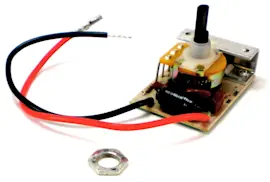
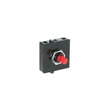
- If the fan only works on certain settings, a worn switch such as the range hood fan switch WB24X10129 is a common fix.
Last updated: February 2026