


Is it worth repairing an ice maker?
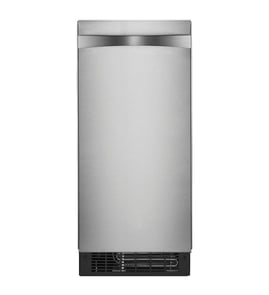
Yes, repairing your KitchenAid KUID308HPS01 freestanding ice maker is usually worth it when the problem is isolated (like a water valve, pump, or sensor) and the unit is otherwise in good shape; replacement makes more sense when sealed-system parts or multiple major components are failing.
- Repair if the unit is under about 7 years old and this is the first major issue.
- Repair if the symptom points to a single service part (water fill, recirculation, drain, temperature sensing).
- Replace if you have repeated breakdowns, heavy corrosion, or frequent leaks.
- Replace if the repair involves sealed-system work (compressor, evaporator, refrigerant circuit).
- Repair if you can confirm good airflow and clean condenser area, and the unit still cools.
These are typical “high-impact” fixes that can restore ice production without replacing the whole unit:
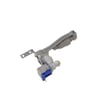
- Water fill problems: valve W10897719
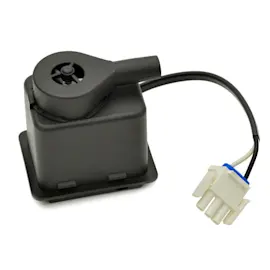
- Poor water circulation over the evaporator plate: pump-recircu W11542867
- Wonky temperature sensing or harvest timing: thermistor WPW10511923
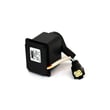
- Noisy or overheating condenser area: refrigerator condenser fan motor W11613295
Sealed-system repairs tend to be the tipping point because labor and complexity are higher.
| Situation | Usually best choice | Why |
|---|---|---|
| One failed sensor, valve, or pump | Repair | Targeted fix, lower parts cost |
| Intermittent issues plus leaks/noise | Replace | Multiple problems stack up |
| Sealed-system failure suspected | Replace | High labor, specialized tools |
| Cosmetic-only issue | Repair | Panel or finish parts can refresh the unit |
A freestanding ice maker is a system: water fill, circulation, freezing, harvest, and drain all have to work together. Fixing the one failed link (like a valve or recirculation pump) often brings the whole machine back to normal; sealed-system failures usually do not.
For symptom-based guidance before you buy parts, use our freestanding ice maker troubleshooting steps to narrow the cause.
Last updated: February 2026
What are the parts of the ice maker machine?
A KitchenAid freestanding ice maker like model KUID308HPS01 is built from a sealed refrigeration system (to freeze water), a water and circulation system (to move water over the freezing surface), and electrical controls (to time and monitor the cycle). Together, these parts turn water into harvestable ice and keep production consistent.
- Refrigeration system: removes heat so ice can form (compressor, condenser coil, drier tube, refrigerant valve)
- Water system: fills, recirculates, and drains water (inlet valve, recirculation pump, drain pump)
- Airflow system: moves air across the condenser to shed heat (condenser fan motor)
- Controls and sensing: runs the cycle and protects the unit (electronic control, thermistor, switches)
Here are examples of key components listed for this model:
| System | Example part (from this model) | What it affects |
|---|---|---|
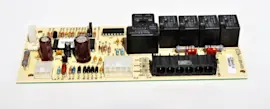
| Controls | Control-elek W11034363 | Cycle timing, ice making logic, power distribution |
| Sensing | Thermistor WPW10511923 | Temperature feedback for freeze and harvest decisions |
| Water fill | Valve W10897719 | Water entering the reservoir or sump |
| Water movement | Pump-recircu W11542867 | Water flow over the evaporator plate/grid |
| Drain | Pump, reservoir drain W11542868 | Draining during cleaning or normal operation |
| Heat rejection | Refrigerator condenser fan motor W11613295 | Cooling the condenser for efficient freezing |
When you know which system a symptom belongs to, troubleshooting gets faster. For example, “runs but no ice” often points to water fill, recirculation, or temperature sensing, while “hot cabinet sides” or poor production can point to condenser airflow.
- No water entering: inlet valve, supply line, control
- Thin or hollow cubes: recirculation pump, restricted water flow, condenser airflow
- Unit runs but no ice: thermistor, control, refrigeration performance
- Water leaking: valve, drain path, pump connections
For step-by-step diagnosis by symptom, use our freestanding ice maker troubleshooting guide.
Last updated: February 2026
Why is my KitchenAid ice maker not producing ice?
If your KitchenAid KUID308HPS01 freestanding ice maker isn’t producing ice, the most common causes are no water supply, a blocked or failed water inlet valve, a circulation or drain problem, or a temperature/control issue. We recommend checking water flow first, then moving to the valve, pumps, and sensors.
- Confirm the unit is powered on and not in a cleaning or standby mode.
- Verify the shutoff valve to the ice maker is fully open.
- Make sure the water line is not kinked, pinched, or frozen.
- Empty the bin and confirm nothing is blocking the ice drop area.
- Unplug the unit for 5 minutes, then restore power to reset the control.
- Water fill issue: If you hear no fill sound or the reservoir stays low, suspect the inlet valve.
- Recirculation issue: If water is present but not moving over the evaporator, suspect the recirculation pump.
- Drain issue: If the reservoir overfills, won’t drain, or the unit stops mid-cycle, suspect the drain pump.
- Temperature sensing/control: If the unit runs but never freezes a slab, suspect the thermistor or control.
| Symptom you notice | Likely area | Part to consider |
|---|---|---|
| No water entering unit | Water inlet | Valve W10897719 |
| Water present but not circulating | Water circulation | Pump-recircu W11542867 |
| Water won’t drain or unit stops with water issues | Drain system | Pump, reservoir drain W11542868 |
| Erratic temps, short cycling, or poor freeze | Temperature sensing | Thermistor WPW10511923 |
| Dead display or inconsistent operation | Controls | Control-elek W11034363 |
An ice maker needs the right water fill, steady recirculation over the evaporator, proper draining, and accurate temperature feedback to complete the freeze and harvest cycle. One weak link can stop ice production even if the unit still powers on.
For step-by-step troubleshooting, use freestanding ice maker troubleshooting.
Last updated: February 2026
How much does it cost to replace the ice maker in a KitchenAid refrigerator?
If you mean a KitchenAid refrigerator ice maker module, the part is commonly in the $150 to $300 range, plus labor. For KitchenAid model KUID308HPS01, this is a freestanding ice maker, so “replace the ice maker” usually means replacing a failed component such as the evaporator or control board.
Because KUID308HPS01 is not a refrigerator, pricing depends on what failed in the freestanding ice maker system.
- Refrigerator: usually a single ice maker assembly/module
- Freestanding ice maker (KUID308HPS01): multiple major components can stop ice production
- Best approach: diagnose the symptom first, then price the specific part
These are examples of components that can make it seem like the entire unit “needs a new ice maker.”
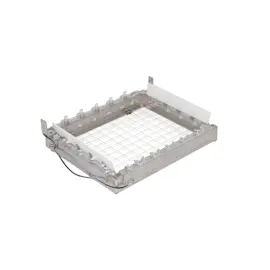
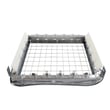
- Ice maker evaporator WPW10218037
- Control-elek W11034363
- Pump, reservoir drain W11542868
- Valve W10897719
These ranges help you budget; your exact total depends on which component you replace and whether you hire service.
| Repair scenario | What you replace | Typical part-only cost |
|---|---|---|
| Refrigerator ice maker module | Ice maker assembly | $150 to $300 |
| Freestanding unit not making ice | Control board or sensor | $150 to $350 |
| Freestanding unit runs but no ice | Pump or valve | $80 to $250 |
| Freestanding cooling issue | Evaporator or sealed-system part | $300 to $600 |
- Confirm the unit has power and the on/off switch is on.
- Verify the water supply valve is fully open; check for a kinked line.
- Note the symptom: runs but no ice, very little ice, leaking, or not running.
- Listen for pump and fan operation; unusual noise often points to a motor or pump.
- Look for water leaks near the valve, reservoir, or drain area.
A freestanding ice maker like KitchenAid KUID308HPS01 can look “dead” from one failed component. Targeting the correct part keeps the repair cost controlled.
For symptom-based guidance, use ice maker runs but no ice.
Last updated: February 2026