Owner’s manual

What is the average lifespan of an air compressor?
Most consumer air compressors like the Craftsman 921153100 typically last 5 to 10 years with normal DIY use and consistent maintenance; heavier use and skipped maintenance shorten life. Following the duty-cycle limit and the maintenance schedule in the owner's manual is the most reliable way to maximize service life.
Typical lifespan by compressor type
Lifespan depends more on compressor design and workload than brand name.
| Compressor type | Typical lifespan | Best fit for |
|---|---|---|
| Small consumer/DIY (portable) | 5 to 10 years | Home projects, intermittent tools |
| Prosumer/shop (belt drive) | 10 to 15 years | Frequent use, small shop |
| Industrial (rotary screw) | 10 to 20 years | Continuous duty, production work |
What matters most for the Craftsman 921153100
This model is rated for a 50% duty cycle, meaning you should not run it more than 30 minutes per hour. Exceeding that run time overheats the pump and motor and is one of the fastest ways to shorten compressor life.
Maintenance habits that extend lifespan
We recommend building these into your routine:
- Drain the tank after each use (or daily) to reduce internal corrosion.
- Check oil level before each use; keep oil at the correct level in the sight glass.
- Change pump oil after the first 10 hours, then about every 100 hours (typical schedule).
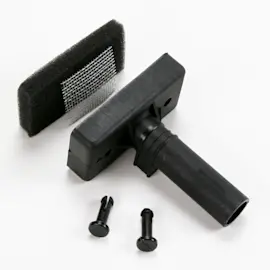
- Keep the air intake filter clean; check it daily, especially in dusty or humid areas.
- Inspect for air leaks at fittings, regulator, and drain valve; fix leaks early.
- Give it airflow; keep at least 12 inches of clearance around the unit.
Quick “replace vs. repair” guide
Use this as a practical decision check.
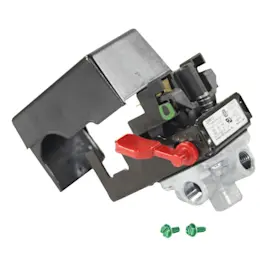
- Repair is usually worth it: leaking fittings, worn pressure switch, dirty filter, minor valve issues.
- Replacement is usually smarter: repeated overheating from over-duty use, severe pump wear, or a tank that will not hold pressure after basic leak checks.
Why it matters
A compressor can keep running while slowly losing performance (longer fill times, more cycling, more heat). Staying within the duty cycle, draining moisture, and keeping oil and filtration in spec protects the pump, motor, and tank so you get the full expected lifespan.
Last updated: February 2026
What does 4.0 SCFM at 90 PSI mean?
On a Craftsman air compressor like model 921153100, “SCFM at 90 PSI” tells you how much air the compressor can deliver while maintaining 90 PSI at the outlet. It is the key number for matching the compressor to air tools that list a required CFM/SCFM at 90 PSI (many tools are rated at 90 PSI).
What SCFM and 90 PSI are actually telling you
- SCFM (standard cubic feet per minute) is airflow measured under standardized conditions so you can compare compressors more fairly.
- 90 PSI is the pressure level at which that airflow was measured.
- Higher SCFM at 90 PSI generally means the compressor can run more demanding pneumatic tools (or run them longer) without pressure dropping.
How this applies to Craftsman 921153100 specifically
In the owner's manual, the 921153100 is listed at 2.4 SCFM @ 90 PSI, with a 95 PSI cut-in and 125 PSI cut-out. That means it refills the tank when pressure drops to about 95 PSI and stops around 125 PSI; your usable tool pressure is controlled by the regulator.
Quick reference table
| Spec term | What it means | Why you care |
|---|---|---|
| SCFM @ 90 PSI | Airflow available at 90 PSI | Helps you size the compressor to your tool |
| Cut-in pressure | Pressure where the motor restarts | Affects how often it cycles |
| Cut-out pressure | Pressure where the motor stops | Sets the top of the tank pressure range |
How to use the rating to choose tools
- Find your tool’s air requirement (often shown as CFM/SCFM at 90 PSI).
- Plan for a cushion; choose a compressor with SCFM at 90 PSI higher than the tool’s requirement.
- For continuous-use tools (sandblasters, DA sanders, grinders), SCFM matters more than tank size.
- For short-burst tools (brad nailers, inflators), tank size and recovery time matter more.
Why it matters
If your tool needs more SCFM at 90 PSI than the compressor can supply, pressure drops, the motor runs constantly, and tool performance suffers (slow cycling, weak impact, uneven spray).
Last updated: February 2026
What are the 4 types of compressors?
The 4 common compressor types are reciprocating (piston), rotary screw, centrifugal, and axial. Your Craftsman 921153100 is a reciprocating-style air compressor (a piston pump), which is the most common design for powering air tools in home and light shop use; see the owner's manual for model-specific details and safety guidance.
The 4 compressor types (and what they’re best for)
- Reciprocating (piston): Uses a piston and cylinder to compress air; common for portable and small shop compressors.
- Rotary screw: Uses two meshing screws; designed for steady, high-duty-cycle air supply.
- Centrifugal: Uses a high-speed impeller; common in large industrial plants.
- Axial: Uses multiple rotor/stator stages; typically found in very high-flow applications.
Quick comparison
| Type | Compressor class | Typical use case | Strength | Tradeoff |
|---|---|---|---|---|
| Reciprocating (piston) | Positive displacement | DIY, garage, intermittent air tools | Simple, strong pressure | Louder, more vibration |
| Rotary screw | Positive displacement | Shops, continuous air demand | Smooth, efficient | Higher cost, more complex |
| Centrifugal | Dynamic | Industrial systems | High flow | Best at large scale |
| Axial | Dynamic | Specialized high-flow systems | Very high flow potential | Complex, not typical for shops |
Why it matters when you’re troubleshooting
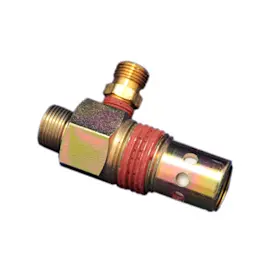
Knowing the compressor type helps you focus on the right components and symptoms. For example, piston compressors commonly involve checks around the intake filter, reed valves, tank check valve, pressure switch, and routine tank draining.
Common next steps for a piston-style unit like the 921153100
- Drain the tank after each use to reduce internal corrosion risk.
- Keep the unit in a clean, dry, well-ventilated area with clearance around it.
- Check the air intake/filter area regularly for debris.
- If it will not start, follow a symptom-based diagnostic like air compressor won't start.
- If it will not build pressure, use a guide like air compressor won't build tank pressure.
Last updated: February 2026
Is a 20 gallon air compressor big enough for air tools?
No for this model: the Craftsman 921153100 is a 3-gallon air compressor, so it is best for light, intermittent air-tool use (inflation, blow gun, brad/finish nailers) rather than continuous, high-CFM tools like sanders or most paint sprayers. For exact operating and safety guidance, use the owner's manual.
What a 20-gallon compressor can usually handle
Tank size helps reduce how often the pump cycles, but CFM at 90 PSI is what determines whether most air tools will run well.
- Works well for intermittent tools: brad/finish nailers, staplers, blow gun, tire inflation
- Can work with pauses: some impact wrenches and ratchets (short bursts)
- Struggles with continuous demand: DA sanders, grinders, many spray guns
- If the tool outpaces the compressor, pressure drops and the motor runs nearly nonstop
- Always set the regulator to the tool’s recommended PSI range
How to match a compressor to your air tools
Use this quick check before buying or pairing tools.
| Tool type | Air demand pattern | Typical fit for 20-gallon | Typical fit for 3-gallon (921153100) |
|---|---|---|---|
| Nailers/staplers | Short bursts | Good | Good |
| Blow gun/inflation | Light, intermittent | Good | Good (keep PSI modest) |
| Impact wrench | Bursty, higher demand | Sometimes (with recovery time) | Limited (short bursts only) |
| Sander/grinder | Continuous, high CFM | Often not enough | Not recommended |
| Paint spraying | Often continuous | Often not enough | Not recommended |
Model-specific tips for Craftsman 921153100
The manual calls out safe setup and operating practices that matter when you’re trying to run air tools reliably.
- Adjust the regulator to the PSI needed for your application (stay within the tool maker’s PSI guidance)
- Drain the tank daily or after each use to reduce moisture in the air line
- If you see repeated breaker or fuse trips, check items like the check valve and follow the troubleshooting steps
- Do not modify factory pressure settings
- Use hearing and eye protection when draining the tank
For step-by-step troubleshooting when the compressor cannot keep up, see air compressor won't build tank pressure.
Why it matters
If the compressor’s air output is lower than the tool’s air consumption rate, you get pressure drop, weak tool performance, and excessive cycling that accelerates wear on the pump, motor, and pressure switch.
Last updated: February 2026