Installation guide
 Owner’s manual




What's the average lifespan of a Maytag washer?
Most Maytag washers, including the Maytag MHW6000XG1, typically last 10 to 13 years with normal household use and basic maintenance. Keeping the washer level, using the right detergent amount, and fixing leaks or vibration early are the biggest factors in reaching the high end of that range.
What affects washer lifespan the most
- Load size and balance: frequent overloading shortens bearing, suspension, and motor life.
- Installation and leveling: an unlevel washer increases vibration and wear.
- Water quality and temperature: hard water and very hot cycles can accelerate scale and seal wear.
- Drain and pump health: slow draining forces longer run times and extra strain.
- Door seal care (front-load): residue and mold can damage the bellow and cause leaks.
Maintenance habits that help you reach 10 to 13 years
- Level the washer and keep all four feet firmly on the floor (recheck after moving).
- Replace fill hoses about every 5 years, and inspect for bulges, cracks, or leaks.
- Leave the door slightly open between loads so the drum and seal can dry.
- Run a monthly cleaning cycle (or a hot wash with a washer cleaner) to reduce odor and buildup.
- Use HE detergent and avoid over-sudsing, which can lead to longer cycles and residue.
Quick reference: typical lifespan by washer type
| Washer type | Typical lifespan | Notes |
|---|---|---|
| Front-load washer (like MHW6000XG1) | 10 to 13 years | Seal, bearings, and suspension wear are common limiters |
| Top-load washer | 10 to 14 years | Agitator and transmission style can affect longevity |
Why it matters
A washer that is out of level or running with small leaks often gets louder and less efficient long before it fails. Addressing vibration, hose condition, and door-seal cleanliness early helps prevent bigger repairs and extends the service life.
For model-specific care and setup details (including leveling guidance and hose recommendations), follow the MHW6000XG1 installation guide.
Last updated: January 2026
What is the capacity of Maytag MHW6000XG1?
The Maytag MHW6000XG1 washer has a 4.3 cu. ft. capacity, which is a full-size front-load capacity suited for everyday family loads, including towels, jeans, and mixed fabrics. For cycle-specific load guidance, use the MHW6000XG1 owner's manual.
What 4.3 cu. ft. means for real-world loads
A 4.3 cu. ft. Maytag front-load washer typically handles:
- A full mixed load of everyday clothing
- Several bath towels in one load (avoid packing the drum tight)
- Bulky items like a comforter depending on fill level and fabric type
- Heavier items (jeans, sweatshirts) with room for tumbling
Best loading practices (to get the full capacity)
To use the capacity effectively and protect key components like the door boot and suspension:
- Load loosely; items should tumble, not be compressed
- Keep the top of the load below the top of the drum
- Wash bulky items one at a time when possible (blankets, comforters)
- Use HE detergent and measure carefully to reduce oversudsing
- If the washer vibrates or walks, re-level the feet per the MHW6000XG1 installation guide
Quick reference table
| Item type | Typical fit in 4.3 cu. ft. front-load washer | Tip |
|---|---|---|
| Mixed clothes | Full everyday load | Do not pack tight |
| Towels | Medium to large towel load | Balance the load |
| Bulky bedding | Often fits, depending on thickness | Use Bulky/Sheets cycle if available |
| Jeans/heavy cotton | Moderate load | Leave space for tumbling |
Why it matters
Capacity affects cleaning and spin performance. Overloading reduces tumbling action, can leave detergent residue, and increases vibration, which adds stress to parts like shock absorbers and the washer bellow.
Last updated: January 2026
How do I reset the lid lock on a Maytag washer?
On the Maytag MHW6000XG1 washer, a “lid lock” reset is really a door lock reset (this is a front-load model). We reset it by doing a simple power reset first, then checking for a drain or door-latch issue that is keeping the control from unlocking.
Quick reset steps (most common)
- Press Pause/Cancel once to stop the cycle.
- Unplug the washer (or switch the breaker off) for 1 minute.
- Restore power and wait 30 seconds.
- Close the door firmly and start a Rinse/Drain and Spin type cycle.
If the door unlocks after the reset, the control likely cleared a temporary glitch.
If the door still will not unlock
A front-load washer will keep the door locked if it thinks water is still in the tub or the latch is not sensing “closed.”
- Make sure the cycle is fully canceled and the washer has stopped.
- Run a Drain/Spin cycle to remove any standing water.
- Check that the door boot is not folded into the latch area.
- Inspect the latch strike area for detergent buildup or a small item (sock) blocking closure.
- If the washer is rocking or out of level, level it; excessive vibration can cause door-lock faults.
Parts that commonly relate to door-lock problems
| Symptom | Common cause | What to check |
|---|---|---|
| Door won’t lock to start | Latch not sensing closed | Door alignment, boot interference |
| Door won’t unlock at end | Water not fully drained | Drain/spin, pump/filter restriction |
| Intermittent lock errors | Vibration or loose connections | Leveling, wiring at lock/control |
If you suspect the lock itself is failing on this model, the replacement is the washer door lock WPW10306374.
Why it matters
Resetting clears control glitches, but a door that stays locked is usually protecting you from opening the washer with water in the tub or with the drum still moving. Fixing the underlying drain, alignment, or lock issue prevents repeat lockouts.
Helpful references
- Use the MHW6000XG1 owner's manual for the correct cycle-cancel steps and door-lock behavior for this exact washer.
- If you’re seeing an error code, compare it to a Maytag front-load code list such as Maytag maxima front load washer error codes to narrow the cause.
Last updated: January 2026
What is the most common problem with a Maytag washer?
For the Maytag MHW6000XG1 washer, the most common customer-reported problems are not draining or not spinning, which are usually tied to a drain restriction (hose or pump path), an out-of-balance condition, or a door-lock or control issue that prevents high-speed spin. Use the MHW6000XG1 owner’s manual to match symptoms to the correct checks.
Most common symptoms and what they usually point to
- Washer won’t drain or drains slowly: kinked/clogged drain hose, restriction in the tub-to-pump path, or a pump issue
- Washer won’t spin or stops before final spin: load imbalance, leveling/installation problem, door lock not engaging, or motor/control fault
- Leaking at the door: torn or mis-seated door boot (bellow) or clamp issue
- Excessive vibration or walking: washer not level, shipping/installation setup issue, worn suspension/shocks
- Error codes on the display: a specific system fault (drain, door lock, motor, or control)
Quick checks we recommend first (fast, no parts guessing)
- Confirm installation basics: the washer must be level to reduce vibration and spin problems.
- Check hoses for kinks and leaks: inlet hoses and drain hose routing matter.
- Inspect for drain restrictions: coins, lint, and small items commonly block the drain path.
- Run a smaller, balanced load: one heavy item can prevent proper spin.
- Look for an error code: use a Maytag front load error code reference to narrow the cause.
Parts that commonly relate to these problems on MHW6000XG1
| Symptom | Common area | Example part for this model |
|---|---|---|
| Door-area leak | Door boot and clamps | Washer bellow W11106747 |
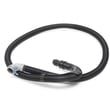
| Won’t drain / slow drain | Tub-to-pump drain path | Hose WPW10467168 |
| Excessive vibration | Suspension | Washer shock absorber W11415987 |
Why it matters
Drain and spin problems often share the same root cause: if the washer cannot drain correctly, it typically will not go into a full-speed spin. Installation also plays a big role; the installation instructions call out leveling to reduce excess noise and vibration.
Helpful DIY reference
If you’re seeing a code, use Maytag maxima front load washer error codes to identify the most likely checks before replacing parts.
Last updated: January 2026