Installation guide
 Owner’s manual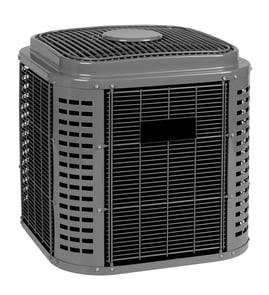




How many square feet is a 4 ton Carrier AC unit?
A 4-ton Carrier central air conditioner is typically sized to cool about 2,000 to 2,500 square feet under average conditions. For your Carrier 38TKB042 condensing unit, the exact coverage depends on your home’s insulation, ceiling height, windows, and local climate; use the load-sizing guidance in the 38TKB042 installation guide to confirm.
A “4-ton” rating describes cooling capacity (about 48,000 BTU/hr), not a guaranteed square-foot number. These factors shift the real-world coverage most:
- Ceiling height (taller ceilings increase the air volume to cool)
- Insulation and air sealing (attic, walls, duct leakage)
- Sun exposure and window area (west-facing glass adds heat load)
- Climate and humidity (hotter, more humid areas need more capacity)
- Duct design and airflow (restricted airflow reduces delivered cooling)
Use this table to sanity-check expectations before you confirm with a proper load calculation:
| Home conditions | Typical 4-ton coverage | What you’ll notice if mismatched |
|---|---|---|
| Well-insulated, shaded, tight ducts | 2,300 to 2,700 sq ft | Longer, steady run times; even temps |
| Average insulation, typical windows | 2,000 to 2,500 sq ft | Normal cycling; stable humidity |
| Poor insulation, lots of sun, leaky ducts | 1,600 to 2,100 sq ft | Struggles on hot days; uneven rooms |
Oversizing can cause short cycling and weaker humidity control; undersizing can run constantly and still miss the thermostat setpoint. Correct sizing protects the compressor, improves comfort, and helps control energy costs.
For the Carrier 38TKB series, installation details like clearances, line-set sizing/length, and electrical/control wiring directly impact how well the system performs. We recommend following the setup requirements and diagrams in the 38TKB042 installation guide during installation or when troubleshooting comfort issues.
Last updated: February 2026
How to know the tonnage of a Carrier AC unit?
For Carrier model 38TKB042, the easiest way to identify tonnage is to read the unit rating plate on the service panel; the “042” in the model number typically indicates about 42,000 BTU/hr, which equals 3.5 tons (12,000 BTU/hr per ton). Confirm the exact capacity on the rating plate for your specific unit.
The installation instructions for this condensing unit direct you to locate the rating plate on the unit service panel; it lists the key data needed to match the unit to the job.
- Turn off power at the disconnect before opening the service panel
- Find the rating plate on the service panel
- Look for cooling capacity (BTU/hr) or a model size code
- Record the model number, series letter, and serial number for parts matching
For diagrams and where Carrier expects you to find the rating plate, use the installation guide.
Most central AC sizing uses 12,000 BTU/hr per ton.
| Capacity (BTU/hr) | Nominal tons |
|---|---|
| 24,000 | 2.0 |
| 30,000 | 2.5 |
| 36,000 | 3.0 |
| 42,000 | 3.5 |
| 48,000 | 4.0 |
| 60,000 | 5.0 |
On many Carrier outdoor units, the two or three digits in the model number (for example, 024, 036, 042, 060) commonly align with thousands of BTU/hr.
- 024 ≈ 24,000 BTU/hr (2 tons)
- 036 ≈ 36,000 BTU/hr (3 tons)
- 042 ≈ 42,000 BTU/hr (3.5 tons)
- 060 ≈ 60,000 BTU/hr (5 tons)
Correct tonnage affects comfort, humidity control, energy use, and whether your indoor coil and refrigerant piping are properly matched. The rating plate is the best reference when ordering parts or verifying system compatibility.
Last updated: February 2026
What is the average price for a 3.5-ton AC unit?
A typical installed price for a 3.5-ton central AC system is about $5,000 to $9,000, with many installs landing near the middle of that range. Your Carrier 38TKB042 is a 42,000 BTU class outdoor condensing unit (commonly treated as 3.5 tons), and total cost depends heavily on the indoor coil, refrigerant line work, and electrical.
- Efficiency level (SEER/SEER2) and whether you are replacing just the outdoor unit or a matched system
- Ductwork condition (reuse vs. repairs vs. replacement)
- Refrigerant line set work (reuse, flush, or replace; long-line applications cost more)
- Electrical upgrades (disconnect, whip, breaker, wiring)
- Pad, leveling, and clearances needed for airflow and service access
- Labor complexity (tight access, rooftop installs, crane needs)
Your installation instructions include guidance that can change labor and materials, such as refrigerant connection sizing and clearance requirements. Use the installation guide to confirm the correct piping approach and service clearances before quoting or scheduling work.
| System size | Cooling capacity | What it means for pricing |
|---|---|---|
| 3.5 ton | ~42,000 BTU/hr | Mid-to-upper range equipment and labor; line set and electrical often add cost |
A “3.5-ton AC unit price” is rarely just the condenser price. The biggest swings come from compatibility (matched indoor coil/air handler), refrigerant piping requirements, and job-site conditions. Getting those right protects compressor life, efficiency, and comfort.
If troubleshooting shows a failed electrical or airflow component, these are common outdoor-unit repair parts for this model family:
Last updated: February 2026
What is the most common part to fail on an AC unit?
The most common part to fail on an AC unit is the run capacitor because heat and electrical stress wear it out over time, causing hard starts, humming, or a no-start condition. For your Carrier 38TKB042 condensing unit, routine maintenance steps in the 38TKB042 owner's manual help prevent repeat failures.
- Run capacitor: weak or failed start/run for the compressor or condenser fan
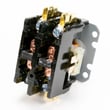
- Contactor: worn or pitted contacts that stop high-voltage power from reaching the unit
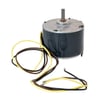
- Condenser fan motor: overheating, noisy operation, or a fan blade that will not spin
- Dirty coils or blocked airflow: higher operating temperatures that shorten component life
- Loose wiring or damaged connections: intermittent cooling or complete shutdown
Disconnect power to both the indoor and outdoor units before removing any panels. Then:
- Check and replace or clean the indoor air filter every 3 to 4 weeks
- Keep the outdoor unit clear; maintain about 12 inches of clearance from tall grass, shrubs, and debris
- Avoid rapid cycling; wait at least 5 minutes after the compressor shuts off before changing thermostat settings
- Watch for early symptoms: hard starting, frequent short cycling, or a fan that struggles to spin
- Use safe electrical testing practices if you troubleshoot with a meter
| Symptom | Likely failed area | Example part available for this model |
|---|---|---|
| Outdoor unit will not pull in (no click) | Switching power | Contactor (part number HN51KB024) |
| Fan will not run or runs hot/noisy | Air movement | Central air conditioner condenser fan motor HC39GE237 |
Most “common failures” are driven by heat buildup and electrical stress. Keeping airflow unrestricted and avoiding rapid cycling reduces strain on the compressor and fan motor, which improves reliability and helps prevent expensive damage.
Last updated: February 2026