Owner’s manual
 Error Codes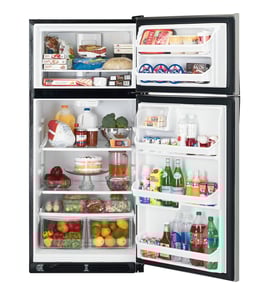



What is a top mount fridge freezer?
A top-mount (top-freezer) refrigerator is a classic layout where the freezer compartment is on top and the fresh food (refrigerator) compartment is below. Your GE GTE18GSHBRSS uses this configuration, which keeps everyday refrigerated items at a comfortable reach while placing frozen storage above.
How a top-mount refrigerator is laid out
In a top-mount design, the two compartments are stacked vertically:
- Top section: freezer compartment (frozen foods, ice storage)
- Bottom section: fresh food compartment (produce, dairy, beverages)
- Separate doors: one for freezer, one for fresh food
- Shared cooling system: cold air is managed between compartments using vents and controls
For feature details on your specific model (shelves, drawers, temperature control, and ice maker options), use the GTE18GSHBRSS owner's manual.
What you can expect from this style (pros and tradeoffs)
Top-mount refrigerators are popular because they are simple and efficient, but the layout is different from bottom-freezer or French door models.
| Feature | Top-mount (top-freezer) | What it means for you |
|---|---|---|
| Freezer location | Top | Frozen items are at eye level for many users |
| Fresh food location | Bottom | You bend more often for produce and drinks |
| Door design | Two doors | Helps reduce cold-air loss vs. single-door designs |
| Common add-ons | Optional ice maker | Many models accept an accessory ice maker kit |
Model-specific notes for GE GTE18GSHBRSS
This GE top-freezer platform commonly supports an optional automatic ice maker (depending on how your unit was originally equipped). If you are adding or replacing the ice maker, the GE refrigerator ice maker kit WR30X10093 is a model-matched option listed for GTE18GSHBRSS.
Why it matters
Knowing you have a top-mount (top-freezer) refrigerator helps when you are comparing capacity, planning kitchen clearance, and ordering the right parts like door gaskets, shelves, or an ice maker kit.
Last updated: January 2026
Can I use a generic water filter in my GE refrigerator?
Using a generic water filter in your GE GTE18GSHBRSS refrigerator is not recommended; GE advises using GE Appliances-branded filters for best filtration performance and proper fit. After installing a new filter, flush the system and reset the filter status as described in the GTE18GSHBRSS owner's manual.
What to do after you install a new filter
- Flush water through the dispenser to remove air from the system (the manual notes this can take about 5 minutes).
- Expect possible temporary discoloration during the initial flush; it clears after the first minutes of dispensing.
- Reset the filter status by pressing and holding the Filter Change button for about 3 seconds.
- Confirm the indicator returns to “Good” (green) after the reset.
Why we steer you away from generic filters
Generic filters can vary in fit, flow rate, and filtration media. On a refrigerator like the GE GTE18GSHBRSS, those differences can lead to issues that feel like “low water pressure” or “slow dispensing,” even when the water supply is fine.
Common symptoms that point to a filter issue
- Slow water dispensing at the door
- Ice maker fills slowly or makes small cubes
- New filter leaks at the housing
- Filter will not fully seat or “snap” into place
Quick comparison: GE-branded vs generic
| Feature | GE Appliances-branded filter | Generic filter |
|---|---|---|
| Fit in the filter housing | Designed for the housing | Can be inconsistent |
| Initial flushing behavior | Matches manual instructions | Can vary |
| Indicator reset process | Works as intended | May still reset, but performance can vary |
Why it matters
Your water filter affects water taste, ice quality, and water flow to components like the inlet valve and ice maker. Using the recommended filter and flushing it correctly helps prevent nuisance problems and keeps the filtration system working as designed.
For step-by-step filter guidance, use how to replace the water filter in a GE refrigerator.
Last updated: January 2026
What is the most common problem with GE profile refrigerators?
The most common issue we see with GE Profile refrigerators is a cooling problem: the fresh food section gets warm, the freezer temperature drifts, or temperatures swing. On your GE GTE18GSHBRSS top-mount refrigerator, start by confirming airflow is not blocked and the freezer is cold enough for normal operation (including ice making). See the GTE18GSHBRSS owner's manual for model-specific checks.
Quick checks that solve many “not cooling” complaints
- Make sure air vents in the freezer and fresh food section are not blocked by food packages.
- Keep food covered; uncovered containers add moisture that can increase frost buildup and reduce airflow.
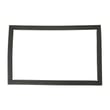
- Confirm the doors close fully and seals are making contact all the way around.
- Listen for the evaporator fan; if it is not running, cooling performance drops fast.
- If you have an ice maker, remember it will not make ice unless the refrigerator is connected to water and the ice maker is turned on.
Common GE refrigerator problems (and what they usually point to)
| Symptom | Most common cause | What to check first |
|---|---|---|
| Refrigerator warm, freezer OK | Airflow restriction or evaporator fan issue | Frost buildup, blocked vents, fan noise |
| Freezer warm too | Sealed system or compressor-side issue | Condenser area airflow, fan operation |
| Strange noises | Fan blade hitting ice or worn fan motor | Ice buildup, fan blade clearance |
| Ice maker not working | Freezer not cold enough or water not connected | Freezer at 15°F or colder, water supply on |
| Water leaking | Drain issue or water line/valve issue | Drain pan area, water line connections |
Parts that commonly relate to these symptoms on GTE18GSHBRSS
If your troubleshooting points to a failed component, these are common matches for cooling and ice issues:
- Refrigerator evaporator fan WR60X31522 (warm refrigerator, weak airflow)
- Refrigerator defrost heater WR09X21107 (heavy frost on back freezer panel)
- Refrigerator water inlet valve WR57X39965 (ice maker not filling, water supply issues)
Why it matters
Cooling problems can look minor at first, but poor airflow and frost buildup can quickly lead to unsafe food temperatures and extra strain on the compressor. Catching the root cause early usually prevents bigger repairs.
Last updated: January 2026