Installation guide
 Owner’s manual


Is GE profile considered high end?
Yes. GE Profile is GE’s premium tier, positioned above standard GE models; it typically adds upgraded design, quieter operation, and more advanced wash and dry features. For your GE dishwasher model GHDF360R10SS, the exact feature set is listed in the GHDF360R10SS owner’s manual.
GE Profile models are generally built to deliver a more refined experience than entry-level dishwashers. Common “premium” differences include:
- Quieter sound ratings (better insulation and motor design)
- More wash options and sensor-based cycles
- Better drying performance when used with rinse aid
- More durable finishes and upgraded controls
- Convenience features (rack flexibility, targeted spray zones, etc.)
The fastest way to validate what your specific dishwasher includes is to compare the control panel options and care guidance in the manual.
- Match the cycle names and option buttons to the manual’s cycle chart
- Follow the recommended detergent and rinse agent guidance for best results
- Use the water temperature check procedure (GE typically targets 120°F to 150°F incoming water for effective cleaning)
- Review cleaning instructions for the door panel and control panel
If you’re troubleshooting features that seem “missing” (for example, a cycle option not responding), check for stored fault codes using the GE electronic dishwasher error codes reference.
| Line | Typical positioning | What you usually get |
|---|---|---|
| GE | Core, value-focused | Essential cycles and features |
| GE Profile | Premium | More features, quieter operation, upgraded design |
Knowing the line helps set expectations for performance and parts selection. Premium models often use different control components, racks, and seals, so confirming features in the manual helps us match the right replacement parts and troubleshooting steps.
Last updated: January 2026
What is the average lifespan of a GE dishwasher?
A GE dishwasher typically lasts 10 to 12 years. With consistent cleaning and correct detergent use, many units reach the low-to-mid teens; heavy daily use, hard water, and neglected maintenance commonly shorten service life.
- Water quality: hard water scale builds up on the heating system and internal passages.
- Maintenance habits: cleaning the tub, spray arms, and filters prevents strain on the pump.
- Loading and use: overloading can cause poor washing and extra wear.
- Detergent and rinse aid choices: using dishwasher-approved products helps prevent residue and dispenser issues.
- Cold-weather storage: freezing conditions can damage water lines and valves if not winterized.
For GE GHDF360R10SS care and operating guidance, follow the GHDF360R10SS owner’s manual.
| Dishwasher use pattern | Typical lifespan | What usually ends it first |
|---|---|---|
| Light use (few loads/week) | 12 to 15 years | Door seals, racks, minor leaks |
| Average use (1 load/day) | 10 to 12 years | Drain/circulation pump wear, heating issues |
| Heavy use (2+ loads/day) | 8 to 10 years | Pump and motor, leaks, control problems |
- Clean the interior regularly and wipe the control panel with a lightly damp cloth, then dry.
- Keep sharp items positioned so they do not damage the door seal.
- Use only dishwasher detergents and rinse agents intended for automatic dishwashers.
- If you see leaking at the door, inspect and replace the door seal when worn.
- If the dishwasher will sit in an unheated area in winter, have it winterized to prevent freeze damage.
If you are troubleshooting performance or error symptoms that can shorten lifespan, use GE dishwasher error codes.
Planning around a 10 to 12 year average helps you decide when a repair (like a pump, drain pump, or door seal) makes sense versus budgeting for replacement, especially if multiple issues appear close together.
Last updated: January 2026
What is the most common problem with GE dishwashers?
The most common problems we see with GE dishwashers like model GHDF360R10SS are draining issues (water left in the tub), not starting due to a door-latch or power interruption, and cleaning performance problems caused by loading, detergent, or filter-related restrictions. Use the GHDF360R10SS owner's manual troubleshooting charts to match symptoms to the right fix.
- Not draining: check the drain path for a clog (filter area, drain hose routing, air gap if installed).
- Won’t start or stops mid-cycle: confirm the door is fully latched; a power interruption can also trigger a drain and restart behavior.
- Poor cleaning: verify proper loading and that detergent is fresh and correct for automatic dishwashers.
- Leaking at the door: inspect the door seal for damage, debris, or misalignment.
- Beeping or flashing lights: often indicates a cycle interruption or reset condition.
| Symptom | Most likely cause | Good next step |
|---|---|---|
| Water remains in bottom | Clog in drain path or weak drain pump | Clean filter area; inspect hose and air gap; consider dishwasher drain pump WD26X10048 if pump is noisy or not pumping |
| Beeps every 15 seconds / START/RESET flashing | Cycle was canceled or power was interrupted | Let it finish draining (about 90 seconds), then restart the cycle per the manual |
| Dishes still dirty | Loading issue, low water flow, old detergent | Reload correctly; use fresh detergent; check filter condition |
| Water on floor near door | Door seal not sealing | Clean and inspect seal; replace if torn using dishwasher door seal WD08X10055 |
Drain and start problems are the most disruptive because they stop the cycle from completing and can leave standing water that causes odors. Cleaning issues usually build up over time and are often solved by correcting loading, detergent, and filter maintenance.
- The START/RESET light flashing can mean the cycle was interrupted; the dishwasher typically drains and then can restart.
- Use only automatic dishwasher detergents; the manual notes sudsing and performance issues when the wrong detergent is used.
Last updated: January 2026
Can a clogged drain cause an FTD error?
Yes. On the GE GHDF360R10SS dishwasher, an FTD (fail to drain) error commonly happens when water cannot leave the tub due to a clog in the drain path, such as the filter area, air gap, disposer connection, drain hose, or drain pump.
- Turn off power to the dishwasher at the breaker before inspecting under the unit.
- Check the sink drain and garbage disposer; if the sink drains slowly, the dishwasher often will not drain well.
- If you have an air gap, clean it; GE notes to check the air gap anytime the dishwasher is not draining well.
- Inspect the drain hose routing; a missing high drain loop or incorrect connection height can cause improper draining.
- Look for kinks, pinches, or a crushed section of hose behind the dishwasher.
Improper drain hose height and routing can mimic a “clog” because the pump cannot move water out efficiently.
| Drain setup item | What we look for | Why it matters |
|---|---|---|
| Drain hose elevation | Must not exceed 48 inches | Too high can prevent proper drain performance |
| Connection height | If connected lower than 18 inches, use an air gap | Helps prevent backup and drain problems |
| High drain loop | Use a high loop (commonly 32 inches minimum in the install guidance) | Reduces backflow and improves draining |
For the exact approved methods for your installation, follow the GHDF360R10SS installation guide.
If the drain path and hose routing are correct and the tub still will not pump out, a failed or jammed drain component is a common next step.
Common drain-related parts to consider:
- Dishwasher drain pump WD26X10048 (pump not running, noisy, or jammed)
- Dishwasher filter WD22X10077 (debris restricting water flow to the sump)
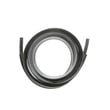
- Drain tube WD24X10045 (restricted, split, or leaking drain line section)
FTD is the dishwasher telling you it cannot remove water. Clearing the clog and confirming the correct air gap or high drain loop setup prevents standing water, odor, and repeat drain errors.
Last updated: January 2026