Installation guide
 Owner’s manual
 Error Codes


How much top clearance does a fridge need?
For Kenmore model 25362622018, we recommend 3/8 inch of clearance at the top (and 3/8 inch on the sides) for proper air circulation; allow 1 inch at the back. If your unit has exposed condenser coils/tubing on the back, plan for 3 inches at the top.
Recommended clearances for 25362622018
Use these minimum spacing guidelines during installation:
- Top: 3/8 inch (minimum)
- Sides: 3/8 inch (minimum)
- Rear: 1 inch (minimum)
- Top with exposed back coils/tubing: 3 inches (special case)
For the full installation requirements and positioning notes, follow the installation guide.
Quick reference table
| Location | Minimum clearance | Notes |
|---|---|---|
| Top | 3/8 inch | Standard installation clearance |
| Sides | 3/8 inch | Helps airflow and easier install |
| Back | 1 inch | Space for air circulation and connections |
| Top (exposed back coils/tubing) | 3 inches | Extra heat needs more venting space |
Why it matters
Adequate clearance helps the refrigerator shed heat efficiently. When airflow is restricted (especially at the back and toe grille area), cooling performance can drop and temperatures can become inconsistent.
Installation tips that prevent clearance problems
- Do not block the toe grille at the lower front; it is part of the airflow path.
- Keep the refrigerator away from direct sunlight and nearby heat sources.
- Make sure the floor is level and supports a fully loaded refrigerator.
- Leave room for plumbing and electrical connections so the cabinet can sit in its final position.
- If the hinge side is against a wall, allow extra space so the door can open wider.
Last updated: January 2026
What are the common problems with Kenmore Elite refrigerators?
Common Kenmore Elite refrigerator problems include warm temperatures, frost buildup, water or moisture inside the cabinet, doors that do not close smoothly, and unusual running or cycling. On Kenmore model 25362622018, many of these symptoms trace back to airflow, door sealing, or defrost-related issues outlined in the owner's manual.
Most common symptoms and what they usually mean
- Not cooling or warming up: restricted airflow, dirty condenser area, or a fan problem
- Excess frost or icing: defrost system issue or a door gasket leak
- Moisture on inside walls: hot/humid conditions, door left slightly open, or frequent door openings
- Door will not close: cabinet not level, food blocking the door, or worn door sealing surfaces
- No interior light: burned-out bulb or power supply issue
Quick checks we recommend first (no parts swapping)
- Confirm controls are set correctly; allow 24 hours for temperature changes to stabilize.
- Make sure doors close fully and gently; avoid overloading shelves and bins.
- Check that the refrigerator is level and stable on the floor.
- Reduce door openings; warm air intrusion makes the unit run longer.
- If the light is out, replace the bulb with the correct type for this model.
Parts that commonly solve these problems
| Symptom | Common fix | Example part for model 25362622018 |
|---|---|---|
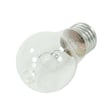
| Light not working | Replace bulb | Refrigerator light bulb 316538904 |
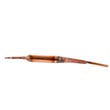
| Frost/icing, warm temps | Check defrost system | Refrigerator defrost bi-metal thermostat 5303918634 |
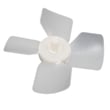
| Warm fridge/freezer, poor airflow | Inspect evaporator fan | Refrigerator evaporator fan blade 5308000010 |
Why it matters
Cooling complaints often start as simple airflow or door-seal problems; if ignored, the refrigerator can run too long, struggle to hold safe food temperatures, and develop moisture or frost issues.
Last updated: January 2026
What is the top part of a refrigerator called?
On the Kenmore 25362622018 top-mount refrigerator, the top compartment is the freezer. It is designed to keep foods frozen, and it also helps drive overall cooling by circulating cold air down into the fresh food section.
What you will typically find in the top freezer section
Most top-mount freezers include storage and airflow features that affect freezing performance:
- Freezer shelves or door bins for frozen foods
- Cold-air outlets that help move chilled air to the refrigerator compartment
- Space for ice trays or an optional ice maker (if equipped)
- A freezer temperature control (or shared control, depending on design)
- Door gasket sealing surfaces that keep warm air out
Freezer vs. refrigerator compartment (quick comparison)
| Compartment | Typical temperature range | Main purpose |
|---|---|---|
| Freezer (top) | 0°F to 5°F | Long-term frozen storage, ice making |
| Fresh food (bottom) | 34°F to 40°F | Short-term refrigerated storage |
Why it matters
When the freezer is too warm, the refrigerator section often warms up too because many top-mount designs rely on freezer cooling and airflow to chill the fresh food compartment. Keeping vents clear and doors sealing tightly helps both sections hold temperature.
Helpful model-specific tips from the manual
The Kenmore 25362622018 documentation emphasizes setup and airflow basics that support freezer performance:
- Allow installation clearances for proper air circulation (sides/top and back)
- Keep the refrigerator level so doors close tightly
- Avoid blocking cold air vents in the upper rear of the refrigerator compartment
For the exact control locations and operating guidance for your unit, use the owner's manual.
Last updated: January 2026