 Installation guide
 Owner’s manual
 Error Codes



Where do I find the model number on a GE dishwasher?
On a GE dishwasher like model PDW7880J10SS, the model number is printed on the tub wall just inside the door. Open the door and look along the inner tub wall area for the model and serial number label; it is meant to be easy to read when the door is open.
Check these common label locations first:
- Tub wall just inside the door opening (primary location)
- Left or right inner tub wall near the front edge
- Around the door frame area where the tub meets the door
- Near the latch area (still on the tub wall, not the outer panel)
Use the placement diagram and wording in the PDW7880J10SS owner's manual to confirm the exact spot for your unit.
The label typically includes both identifiers. Record them exactly as shown:
| Item to record | Example format | Why you need it |
|---|---|---|
| Model number | PDW7880J10SS | Ensures correct GE dishwasher parts lookup |
| Serial number | Letters and numbers | Helps match production details for service |
We use the model number to match the correct parts and diagrams for your exact GE dishwasher configuration. Even small model variations can change items like the control panel, pump and motor assembly, or rack components.
Last updated: February 2026
Can you buy replacement parts for a dishwasher?
Yes. For your GE PDW7880J10SS dishwasher, you can buy replacement parts such as filters, spray arms, drain components, door seals, and baskets to fix common problems like poor cleaning, leaks, or not draining. Use the PDW7880J10SS owner’s manual to match symptoms to the right repair.
- Dishwasher filter (helps prevent clogs and poor wash performance)
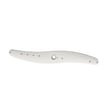
- Spray arm and spray bearing (restores water spray and cleaning)
- Drain pump and drain tube (fixes standing water and slow draining)
- Tub gasket (helps stop leaks around the tub opening)
- Silverware basket (restores loading capacity and keeps items contained)
| Problem you see | Likely part area | Example part for PDW7880J10SS |
|---|---|---|
| Dishes not getting clean | Wash circulation and spray | Dishwasher spray arm WD22X10047 |
| Dishwasher not draining | Drain path | Dishwasher drain pump WD26X10025 or drain tube WD24X10045 |
| Water leaking at the door | Door/tub sealing | Dishwasher tub gasket WD08X10018 |
| Food debris left in bottom | Filtration | Sump filter WD22X10077 |
| Silverware won’t stay put | Rack accessories | Dishwasher silverware basket WD28X24469 |
- Confirm the full model number: PDW7880J10SS.
- Identify the symptom (leak, no drain, poor cleaning, won’t start).
- Check for simple causes first (clogged filter, blocked spray arm holes, kinked drain hose).
- Compare the part name and part ID to your parts list before ordering.
- Follow safety steps: disconnect power before maintenance; turning the dishwasher off does not disconnect power.
Dishwashers are systems; one worn part (like a clogged filter or weak drain pump) can cause multiple symptoms. Replacing the correct part restores cleaning performance, prevents water damage from leaks, and helps the dishwasher run through a full cycle reliably.
Last updated: February 2026
Can I replace dishwasher parts myself?
Yes, you can replace some parts on your GE PDW7880J10SS dishwasher yourself, especially simple items like baskets, filters, and spray-arm hardware. For anything involving wiring, grounding, or major disassembly, we recommend following the PDW7880J10SS owner's manual and using a qualified technician.
Many dishwasher repairs are straightforward, but safety and leak prevention matter.
Good DIY candidates
- Cleaning or replacing a filter or screen
- Replacing a basket or small rack accessory
- Replacing a spray arm or spray-arm hardware
- Replacing a float assembly (if it is sticking)
- Replacing the toe panel after service access
Usually better for a technician
- Electrical troubleshooting (shock risk; power must be disconnected)
- Repairs involving grounding or supply wiring
- Major internal leaks you cannot quickly pinpoint
- Motor and pump assembly replacement if you are not experienced
The manual emphasizes disconnecting power before maintenance; turning the dishwasher off at the controls does not disconnect power.
- Turn off power at the breaker (not just the control panel)
- Shut off the water supply valve
- Protect the floor with towels or a shallow pan
- Take photos of wire and hose routing before removal
- Run a short test cycle afterward and check carefully for leaks
If your issue matches one of these, a part swap is often practical.
| Symptom | Common DIY check | Example part for this model |
|---|---|---|
| Not cleaning well | Clogged filter, spray arm not spinning | Dishwasher spray arm WD22X10047 |
| Not draining | Drain path, air gap, drain pump | Dishwasher drain pump WD26X10025 |
| Overfilling or odd water level | Float stuck or obstructed | Dishwasher float assembly WD12X10047 |
| Door leak | Door alignment, tub gasket condition | Dishwasher tub gasket WD08X10018 |
DIY repairs can save time and money, but a small mistake (like a loose clamp or misrouted drain line) can cause leaks. Using the correct procedure and doing a leak check after reassembly helps protect your cabinets and flooring.
Last updated: February 2026
How to remove the filter and spinner on GE dishwasher?
On the GE PDW7880J10SS dishwasher, we remove the lower spray arm (spinner) first, then lift out the filter screen(s) from the sump area so you can rinse away debris. This restores water flow and helps prevent poor cleaning and drain problems; follow the steps in the PDW7880J10SS owner’s manual.
- Turn off power at the breaker and let the unit cool.
- Pull out the lower rack.
- Remove the lower spray arm fastener (often a hub nut) and lift the spray arm straight up.
- Rinse the spray arm holes under warm water; clear clogs with a toothpick if needed.
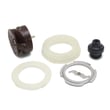
Helpful parts for this model (if something is cracked or won’t tighten):
After the spray arm is off, look in the sump area at the bottom of the tub.
- Lift out the coarse filter screen (and any secondary filter pieces) by releasing the plastic tabs or turning the filter as designed.
- Rinse filters under running water.
- Wipe the sump area clean; remove glass, labels, and food scraps.
- Reinstall filters fully seated before reinstalling the spray arm.
If you see heavy debris below the filter, inspect and clean the sump filter used on this model: sump filter WD22X10077.
- Hard water buildup: Soak the part in warm water with mild dish soap; scrub with a soft brush.
- Debris jam: Remove visible seeds, bones, or broken glass around the hub and sump.
- Cross-threaded or stripped fastener: Replace the hub nut if it won’t snug down.
- Spray arm wobble: Replace the spray bearing if the arm doesn’t spin smoothly.
| Symptom | Most common cause | What to do |
|---|---|---|
| Dishes not clean | Clogged filter or spray arm holes | Clean filter and spray arm; verify free spin |
| Grit on dishes | Filter not seated | Reinstall filter fully; confirm tabs/locks engage |
| Poor spray | Spray arm not spinning | Check hub nut, bearing, and obstructions |
A clogged filter or blocked spray arm reduces circulation pressure. That leads to dirty dishes, longer cycles, and can contribute to draining issues if debris reaches the pump.
Last updated: February 2026





