Owner’s manual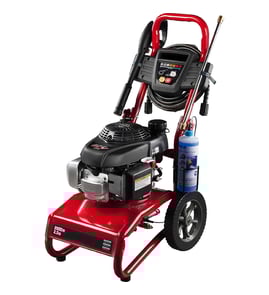



What are the most common issues with 580752340?
The most common issues we see on the Craftsman 580752340 gas pressure washer are no or low pressure, surging pressure, leaks at hose or pump connections, and engine starting or power problems. Most fixes start with checking the spray nozzle, water supply, and pump unloader operation; then replace worn seals or fittings as needed.
- No/low pressure: clogged or wrong spray tip, air in the inlet, worn pump valves, unloader stuck open
- Pressure surges (pulsing): partially clogged nozzle, restricted water supply, unloader valve issues
- Water leaking: worn O-ring at a connection, loose fitting, cracked hose
- Detergent not siphoning: incorrect nozzle selection, clogged injector path (if equipped)
- Engine won’t start or loses power: fuel quality, choke/throttle setting, dirty air filter, spark plug issues
- Confirm a strong garden-hose supply and fully open spigot.
- Inspect and clean the spray tip; a partially blocked tip is a top cause of low pressure.
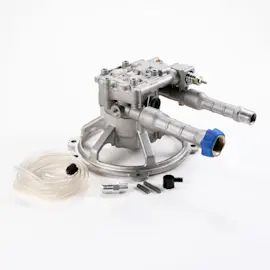
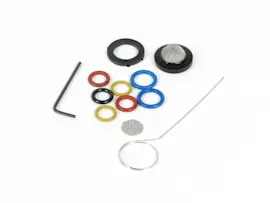
- Check connections for seepage; replace a flattened seal such as the o-ring 190584GS.
- If pressure pulses, focus on the unloader system and pump head condition.
- If the engine bogs under load, troubleshoot fuel and ignition basics before replacing pump parts.
| Symptom | Most likely cause | Typical fix |
|---|---|---|
| Low pressure | Clogged nozzle or low inlet flow | Clean/replace nozzle; verify water supply |
| Pulsing | Nozzle restriction or unloader issue | Clean nozzle; service unloader |
| Leaking at fittings | Worn seal | Replace O-ring; tighten fitting |
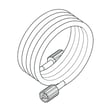
| Leaking hose | Split or damaged hose | Replace the hose 84006753 |
Running the 580752340 with restricted water flow or a clogged nozzle makes the pump work harder, which accelerates wear on the pump head, seals, and unloader components. Fixing the simple flow and sealing issues first prevents bigger pump repairs.
For pressure surging or no-pressure complaints tied to the unloader, follow how to replace a pressure washer unloader valve. For model-specific operating and maintenance steps (oil checks, startup/shutdown, storage), use the owner's manual.
Last updated: March 2026
What is a good PSI for a gas pressure washer?
For the Craftsman model 580752340 gas pressure washer, a good PSI is the amount that matches the surface you are cleaning; this unit is rated for up to 2,200 PSI, which fits most homeowner jobs like siding, patios, and vehicles. Use lower pressure and a wider spray pattern on delicate surfaces.
- 1,200 to 1,900 PSI: cars, outdoor furniture, grills, painted surfaces
- 2,000 to 2,700 PSI: decks, fences, most siding, general patio cleaning
- 2,800 to 4,000+ PSI: heavy concrete cleaning, stripping coatings (highest risk of damage)
The manual lists these key specifications for this model.
| Item | Typical homeowner range | Craftsman 580752340 spec |
|---|---|---|
| Max outlet pressure | 2,000 to 3,000 PSI | 2,200 PSI |
| Water supply temperature | Up to 100°F | Not to exceed 100°F |
| Minimum supply pressure at hose end | 20 PSI or higher | No less than 20 PSI |
- Start with the widest fan tip and increase intensity only if needed
- Keep the spray moving; do not dwell in one spot on wood or siding
- Maintain a steady water supply; low supply pressure reduces cleaning performance
- Purge air from the pump before you begin spraying at full pressure
- Replace a worn or leaking high-pressure hose instead of repairing it; a damaged hose can fail under pressure (see hose 84006753)
Using more PSI than the surface can handle can gouge wood, etch concrete, and force water behind siding. Using too little PSI wastes time and can make you compensate with unsafe, close-range spraying. Matching PSI and spray tip protects both the surface and the pump.
For the exact operating and safety guidance for this model, use the 580752340 owner's manual.
Last updated: January 2026
What kind of gas goes in a Craftsman 3000 PSI pressure washer?
For the Craftsman 580752340 gas pressure washer, we use clean, fresh unleaded gasoline (regular) with a minimum 87 octane (87 AKI). Avoid old fuel and keep the tank clean so the engine starts easily and runs smoothly; see the fuel guidance in the 580752340 owner's manual.
Use fuel that protects the carburetor and prevents hard-starting.
- Use unleaded gasoline, 87 octane (AKI) or higher
- Use fresh fuel (do not store fuel in the tank for long periods)
- Avoid stale gasoline (varnish buildup can cause no-start or surging)
- Avoid overfilling; leave room for fuel expansion
- Wipe up spills and keep fuel away from ignition sources
- Shut the engine off and let it cool.
- Move the pressure washer outdoors with good ventilation.
- Use a clean fuel can and a funnel to reduce dirt in the tank.
- Fill to the recommended level, then tighten the cap.
| Symptom | Often caused by | What to do first |
|---|---|---|
| Won’t start | Stale fuel, clogged carburetor passages | Drain old fuel, refill with fresh unleaded |
| Surges or loses power | Water in fuel, partially clogged jet | Replace fuel, check air filter and spark plug |
| Starts then dies | Fuel restriction, dirty tank | Inspect fuel flow and tank cleanliness |
Correct gasoline helps prevent carburetor deposits, reduces starting problems after storage, and keeps your Craftsman pressure washer delivering consistent pressure and flow.
Last updated: January 2026