Owner’s manual
 View engine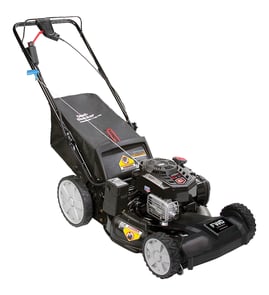




Should I use 87 or 91 gas for lawn mower?
For the Husqvarna 96145003500 gas walk-behind mower, we recommend regular unleaded gasoline with a minimum of 87 octane; 91 octane is not required for normal operation. Using fresh fuel matters more than using higher octane.
What the manual specifies for this model
In the fuel handling section of the 96145003500 operator’s manual, the guidance is:
- Use fresh, clean, regular unleaded gasoline
- Use a minimum of 87 octane
- Do not mix oil with gasoline
- Buy only what you can use within about 30 days to keep fuel fresh
87 vs 91 octane: what changes (and what does not)
Octane is mainly about resistance to knock, not “power.” For typical small mower engines like this one, higher octane usually does not provide a performance benefit.
| Fuel choice | OK to use? | What to expect |
|---|---|---|
| 87 octane (regular) | Yes (recommended) | Normal starting, power, and engine temps |
| 91 octane (premium) | Yes (not necessary) | Usually no noticeable improvement |
Fuel tips that prevent most mower problems
If your mower is hard to start, surges, or stalls, fuel age and storage are common causes. We recommend:
- Use fuel from a busy station (fresher turnover)
- Store gas in an approved container with the cap sealed
- Avoid keeping fuel longer than 30 days; use a stabilizer if you must store longer
- Keep the fuel cap area clean so debris does not enter the tank
- If storing the mower long-term, run it until the tank is empty (or treat fuel with stabilizer)
Why it matters
Using the correct fuel helps prevent carburetor varnish, poor starting, and rough running. For the Husqvarna 96145003500, meeting the 87-octane minimum and keeping fuel fresh is the best way to protect performance and engine life.
Last updated: January 2026
What are the most common issues with 96145003500?
The most common issues we see on the Husqvarna 96145003500 gas walk-behind mower involve poor cutting performance, drive or self-propel problems, and bagging or discharge troubles. These symptoms usually trace back to the blade and deck area, the drive control and transmission components, or worn wheels and hardware.
Common problems and what to check first
- Cuts unevenly or leaves strips: inspect the blade for damage and confirm the deck height is set evenly on both sides.
- Poor mulching or clumping: clean packed grass from the deck and verify the mulching plug is installed correctly.
- Self-propel does not pull: check the drive control cable for slack, and inspect the pulleys and transmission area for binding.
- Bag won’t fill or blows grass out: check the bag and frame fit, and make sure the discharge door closes and seals.
- Vibration: stop using the mower and inspect the blade and mounting hardware for looseness or damage.
Parts commonly involved on this model
These are model-matched parts that often relate to the symptoms above:
| Symptom | Likely area | Example model-matched part |
|---|---|---|
| Poor cut, vibration | Blade and deck | Blade.21.rea 586859604 |
| Weak self-propel | Drive system | Lawn mower drive control cable 582598601 |
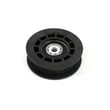
| Drive slipping/no pull | Pulleys | Lawn mower idler pulley 587973001 |
| Bagging/discharge issues | Rear discharge | Lawn mower discharge chute door 586138004 |
| Clumping while mulching | Mulch setup | Lawn mower mulching plug 586922701 |
Quick diagnostic steps (safe and effective)
- Turn the engine off, let it cool, and disconnect the spark plug wire.
- Tip the mower with the air filter and carburetor side up (typical for walk-behind mowers) to reduce fuel or oil leakage.
- Clear the deck; check for bent blade edges, heavy buildup, or a loose blade bolt.
- Squeeze the drive control bar and watch for cable movement and engagement at the transmission.
- Spin the wheels by hand; resistance, wobble, or grinding points to wheel or drive wear.
Why it matters
Catching blade, deck, and drive issues early prevents poor cut quality, reduces vibration-related wear, and helps the transmission and pulleys last longer.
For model-specific maintenance intervals, adjustments, and diagrams, use the 96145003500 owner’s manual.
Last updated: March 2026
What is the average lifespan of a lawn mower?
A gas walk-behind mower like the Husqvarna 96145003500 typically lasts 8 to 15 years with normal residential use and consistent maintenance. Following the service intervals and storage steps in the 96145003500 operator’s manual is the most reliable way to reach the high end of that range.
What most affects lifespan (and what we recommend)
A mower’s life is usually determined more by maintenance and operating conditions than by age alone.
- Change engine oil on schedule (including the first change after the initial break-in period)
- Keep the air filter clean so the engine runs cooler and cleaner
- Replace the spark plug at least yearly for easier starting and smoother running
- Keep the underside of the deck clean to prevent corrosion and poor cutting performance
- Avoid mowing wet grass and overloading the engine in tall, thick growth
Typical lifespan ranges by mower type
| Mower type | Typical lifespan | Notes |
|---|---|---|
| Gas walk-behind (like 96145003500) | 8 to 15 years | Best longevity with oil changes and clean airflow (filter, cooling fins) |
| Battery electric walk-behind | 5 to 7 years | Battery capacity loss is the usual limiter |
| Corded electric walk-behind | 7 to 12 years | Motor and switch wear are common end-of-life issues |
Signs it may be nearing end-of-life
If you see several of these at once, repairs can start to outweigh the value of the mower.
- Hard starting even after tune-up items (fresh fuel, new plug, clean filter)
- Persistent smoking or heavy oil consumption
- Excessive vibration (often tied to blade, blade adapter, or crankshaft damage)
- Drive system slipping or inconsistent self-propel performance
- Rust-through or structural deck damage
Why it matters
A well-maintained mower cuts cleaner, starts more reliably, and puts less strain on the engine and drive system. That directly reduces expensive failures and helps you get the full expected lifespan from your Husqvarna mower.
Last updated: January 2026