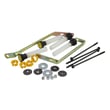
Installation guide
 Owner’s manual


What does F24 mean on a Kenmore washer?
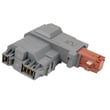
On the Kenmore washer model 41744142400, the F24 code points to a water temperature sensing problem, most often a failed or disconnected temperature sensor (thermistor) or a wiring issue in that circuit. We recommend troubleshooting the sensor circuit rather than bypassing it.
- Unplug the washer or switch off the breaker before checking any wiring.
- Reset the control: unplug for 2 to 5 minutes, then restore power and retry a cycle.
- Confirm both hot and cold water supply valves are fully open.
- Check inlet hoses for kinks and verify the inlet screens are not clogged.
- If the code returns quickly, focus on the temperature sensor wiring and connections.
Disconnecting the temperature sensor can cause incorrect water temperature control, longer cycle times, poor cleaning, or repeated error codes. The washer uses temperature feedback to manage fill and heating logic (when equipped), so the correct repair is restoring the sensor circuit.
| Likely cause | What you may notice | Typical fix |
|---|---|---|
| Loose or damaged wiring to the temperature sensor | Code appears intermittently | Reseat connector, repair harness |
| Failed temperature sensor (thermistor) | Code appears consistently | Replace sensor (model-specific part) |
| Control board input issue | Code persists after sensor checks | Diagnose control and wiring path |
Some Kenmore 417-series front-load washers show different codes for fill, drain, or balance problems. If you are seeing multiple codes or symptoms like no fill or no drain, use the model-specific code list in the owner's manual.
When the washer cannot read water temperature correctly, it may protect itself by stopping the cycle. Fixing the sensor circuit helps restore normal wash performance and prevents repeat shutdowns.
Last updated: January 2026
What size is the Kenmore 41744142400?
The Kenmore 41744142400 is a front-load washer that typically fits a standard 27-inch-wide laundry space. For installation clearance and hookup placement, use the rough-in dimensions in the 41744142400 installation guide.
When someone asks “what size,” they usually mean one of these:
- Width (cabinet): commonly about 27 in.
- Height: commonly about 36 to 38 in. depending on leveling legs
- Depth: commonly about 30 to 33 in. (often more with the door open)
- Capacity (tub volume): commonly around 3.6 cu. ft. for this style
For the most accurate fit, confirm the exact rough-in measurements and clearances before moving the washer into place.
The installation guide for this model includes a rough-in diagram and key placement notes (water inlets, drain standpipe height, and power access). We recommend checking these items before you measure your alcove:
- Space for the washer cabinet plus side clearance for vibration
- Rear clearance for hoses and the power cord
- Standpipe height and drain hose reach
- Floor requirements (solid, level surface)
| What to measure | What to look for | Why it matters |
|---|---|---|
| Laundry opening width | Room for a 27-in class washer | Prevents cabinet rub and vibration noise |
| Depth to back wall | Space for hoses and cord | Avoids kinks and leaks |
| Height under shelves/counter | Room for leveling and airflow | Prevents contact and rattling |
| Door swing clearance | Space to load/unload | Improves usability |
Correct sizing prevents installation headaches like kinked hoses, poor draining, excess vibration, and a door that cannot open fully. It also helps protect parts like the door lock and drain system from stress.
Last updated: January 2026
How to hard reset kenmore washer?
For the Kenmore 41744142400 washer, a hard reset is done by removing power long enough for the control to fully shut down, then restoring power and restarting a cycle. This clears many temporary control glitches and lets the washer reinitialize its door lock and cycle logic.
- Press Pause/Cancel (if the washer is responsive), then turn the cycle selector to OFF.
- Unplug the washer (or switch OFF the breaker).
- Wait 2 minutes.
- Restore power.
- Select a normal cycle and pull out the cycle selector knob to start.
If the door is locked after restoring power, wait 1 to 2 minutes for the lock to release; do not force the door. See the 41744142400 owner's manual for door lock behavior and stopping or changing cycles.
A reset will not fix a mechanical or power supply issue. Check these common causes first:
- Make sure the power cord is fully seated in the outlet.
- Check the house breaker or fuse.
- Confirm the water supply faucets are turned on.
- Close the washer door completely.
- Close the dispenser drawer completely.
- If the motor overheated, allow up to 30 minutes for it to cool and auto-restart.
| Symptom after reset | Most common cause | What we do next |
|---|---|---|
| No lights, no response | No power to washer | Check outlet, breaker, cord connection |
| Won’t start, door won’t lock | Door not fully closed or latch issue | Reclose door; inspect latch area |
| Stops mid-cycle, then works later | Motor overheated | Wait up to 30 minutes, then restart |
| Door stays locked at end | Normal lock delay | Wait 1 to 2 minutes; do not force |
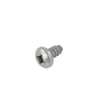
If the washer repeatedly fails to lock or unlock the door (especially after a reset), the door lock mechanism can be the root cause. For this model, the door catch 131763256 is a common related part to check when the door will not secure properly.
A hard reset clears temporary electronic faults, but it also helps you separate a one-time control glitch from a repeatable issue like a door lock problem, power supply problem, or an overheating motor condition.
Last updated: January 2026
How to unclog drain hose on Kenmore washer?
On Kenmore washer model 41744142400, a slow or no-drain problem is usually caused by a kinked or clogged drain hose or an incorrect standpipe setup. We recommend unplugging the washer, checking for kinks, then removing and flushing the hose; confirm proper routing using the 41744142400 installation guide.
- Unplug the washer.
- Turn off both water supply faucets.
- Keep towels and a shallow pan ready.
- If the tub is full, remove water with a wet/dry vac or bail it out before disconnecting hoses.
- Pull the washer forward and straighten sharp bends or pinches.
- Check the standpipe or laundry tub for a house-drain clog.
- Disconnect the drain hose from the standpipe/tub end first.
- If needed, access the rear to disconnect the hose at the pump outlet.
- Flush the hose with running water; push out debris with a flexible brush or small drain snake.
- Reinstall the hose and clamps; run a rinse/spin and check for leaks.
The installation setup for this washer uses a U-shape at the hose end and an air gap at the standpipe.
| Setup item | Correct result | What to avoid |
|---|---|---|
| Hose end shape | U-shape at the end | Straight drop into standpipe |
| Standpipe fit | Air gap around hose | Airtight, snug seal |
| Insertion depth | Only far enough to hold | Shoving hose deep down |
- Pump hums but drains slowly: check for restriction at the pump outlet and hose connection.
- No pump sound: check cycle selection and power; then inspect the pump circuit.
- Leaks during drain: check hose ends, clamp tightness, and cracks.
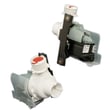
If the pump is the issue, use the model-matched washer drain pump 137108000.
A restricted drain hose leaves clothes too wet after spin, can stop the cycle mid-drain, and can cause leaks. Correct routing (U-shape plus air gap) also prevents siphoning that disrupts normal fill and drain.
Last updated: January 2026