Owner’s manual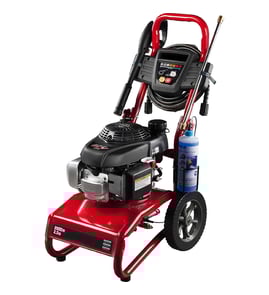



Can you put 87 gas in a pressure washer?
Yes. For the Craftsman pressure washer model 580752800, we recommend using fresh, clean regular unleaded gasoline, which is typically 87 octane. Avoid stale fuel and refuel only outdoors after the engine cools; see the fuel guidance in the 580752800 owner's manual.
Use regular unleaded automotive gasoline and focus on fuel freshness and safe handling.
- Use fresh, clean unleaded gasoline (regular 87 octane is appropriate)
- Do not use stale fuel left from last season or stored for long periods
- Fill the tank outdoors with the engine OFF and cooled (at least 2 minutes)
- Do not overfill; leave room for fuel expansion
- Wipe up spills before starting the engine
Old fuel is one of the most common causes of no-start and rough-running problems on small engines.
- Gasoline that smells sour or looks dark
- Fuel stored in an unapproved or dirty container
- Leaving fuel in the tank for long storage without proper prep
- Tipping the unit in a way that can spill fuel
| Fuel question | Best practice for 580752800 |
|---|---|
| Is 87 octane OK? | Yes, regular unleaded is recommended |
| Should fuel be “fresh”? | Yes, avoid last-season or long-stored gas |
| Safe refueling | Outdoors, engine off, cooled, don’t overfill |
Using the correct fuel and keeping it fresh helps your Briggs and Stratton engine start easier, run smoother under load, and reduces carburetor gumming during storage.
Last updated: January 2026
What PSI should my pressure washer be?
For the Craftsman pressure washer model 580752800, the rated pressure is 2,800 PSI. That is the PSI your unit is designed to produce under proper operating conditions (correct spray tip, adequate water supply, and engine at FAST). See the 580752800 owner's manual for the model specifications.
Your actual working pressure can feel lower depending on the spray tip, nozzle condition, and water supply. This is normal for gas pressure washers.
- Use the white 40° tip for gentle rinsing
- Use the yellow 15° or red 0° tip for heavier cleaning (use extra caution)
- Use the black tip for detergent application (low pressure)
- Keep the nozzle about 8 to 24 inches from the surface for effective cleaning
- Use cold water only; water supply temperature should be under 100°F
| Task | Typical PSI range | Tip to start with |
|---|---|---|
| Washing cars, patio furniture | 1,200 to 1,900 | 40° (white) |
| Decks, fences, siding | 1,800 to 2,500 | 40° then 15° |
| Driveways, concrete | 2,500 to 3,000 | 15° (yellow) |
If the spray is weak, pulses, or seems inconsistent, we recommend checking these items first:
- Verify you are using a high-pressure tip (not the black chemical tip)
- Clean the spray tip and the in-line filter screen in the nozzle extension
- Confirm the garden hose is not kinked and the inlet screen is clear
- Make sure the engine throttle is set to FAST
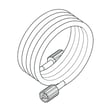
- Inspect the high-pressure hose for leaks; replace if damaged using the compatible hose 84006753
Matching PSI to the job helps you clean faster while reducing the risk of surface damage (paint, wood fibers, window seals) and helps prevent pump strain from restricted flow.
Last updated: January 2026
What is the most common problem with pressure washers?
On the Craftsman 580752800 gas pressure washer, the most common problem we see is weak or low pressure at the spray gun. In many cases, it is caused by a clogged spray tip or inlet screen, an air leak in the water supply, or a restriction in the high-pressure hose.
- Confirm you are using a high-pressure spray tip (white 40°, yellow 15°, or red 0°), not the black low-pressure chemical tip.
- Turn the water on fully and use only cold water (under 100°F).
- Purge air: squeeze the trigger until the water stream is steady before starting.
- Clean the water inlet screen and the in-line filter screen in the nozzle extension.
- Inspect the high-pressure hose for kinks, soft spots, or leaks.
| What you notice | Most likely cause | What to do next |
|---|---|---|
| Pressure pulses or “chattering” | Spray tip partially clogged | Clean the spray tip and back-flush the nozzle extension |
| Low pressure and low water volume | Inlet screen clogged or water supply restricted | Clean inlet screen; verify adequate flow and at least 20 PSI at the hose |
| Pressure drops when you pull the trigger | Hose leak or spray gun leak | Inspect connections; replace leaking components |
| Detergent will not draw | Wrong tip installed or clogged filter | Install black tip; clean tank filter and in-line filter |
If you find damage (not just a clog), replacement is often the reliable fix.
- Hose 84006753 (high-pressure hose): replace if it leaks, is kinked, or has internal restriction.
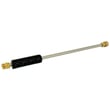
- Extension 207796GS (extension wand): inspect for a clogged screen, damaged O-ring sealing area, or cracked fitting.
Running the Craftsman 580752800 with restricted water flow or a clogged tip can make cleaning ineffective and can overheat the pump if the trigger is not pulled for several minutes. Following the start-up, spray tip, and maintenance steps in the 580752800 owner’s manual helps prevent repeat low-pressure issues.
Last updated: January 2026
Is it worth repairing a pressure washer?
Yes, repairing a pressure washer is often worth it when the fix is a normal wear item or a simple no-pressure issue, and the engine and pump on your Craftsman 580752800 are otherwise in good shape. If the pump head or engine has major internal damage, replacement is usually the better value.
- If the unit starts easily and runs smoothly, repairs are usually worthwhile.
- If pressure is low or erratic, start with spray tip and inlet screen checks before assuming pump failure.
- If the high-pressure hose is leaking or damaged, replacing it is typically cost-effective.
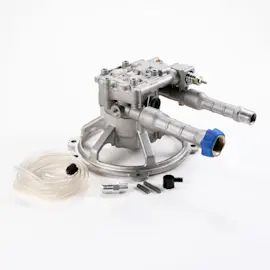
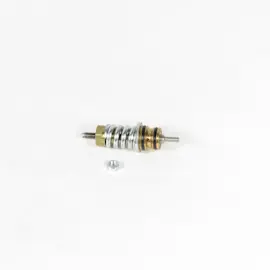
- If the pump needs service kits (unloader, check valves, seals), repair can still make sense if the engine is strong.
- If the engine has low power, won’t stay running, or has internal damage symptoms, replacement is often the smarter spend.
Your Craftsman 580752800 is a 2800 PSI, 2.5 GPM gas pressure washer with a 7.0 HP engine. That output level is high enough that many common repairs (hose, gun/wand issues, inlet restrictions, unloader problems) can restore full performance and extend useful life when maintenance is kept up. See the maintenance and troubleshooting sections in the 580752800 owner’s manual.
| Situation | Typical best choice | Why |
|---|---|---|
| No/low pressure but engine runs fine | Repair | Often caused by clogged tip, inlet screen, air in pump, or unloader/check valve issues |
| Hose leaks, bursts, or coupler damage | Repair | Fast fix; restores safe pressure delivery |
| Pump oil service overdue or contaminated | Repair | Prevents seal and piston damage |
| Engine runs rough, bogs badly under load, or won’t start consistently | Replace or major service | Engine work can exceed the value of the unit |
If your issue points to a straightforward external replacement, we usually recommend repairing:
- Hose 84006753 (leaks, bulges, damaged fittings)
- Extension 207796GS (wand damage, poor quick-connect fit)
- Pressure washer cap 190581GS (cap damage or loss on the pump)
A pressure washer that is losing pressure can waste time, overwork the pump, and lead to seal damage. Fixing the root cause early (especially water supply, spray tip, and hose issues) helps protect the pump and keeps your 580752800 performing closer to its rated PSI and GPM.
Last updated: January 2026
How much does it cost to get a pressure washer fixed?
For the Craftsman 580752800 gas pressure washer, the total repair cost depends on what failed (hose, spray gun, pump, or engine) and whether you do the work yourself or pay labor. The owner’s manual doesn’t list repair pricing, so the best approach is to estimate by diagnosis plus parts.
- Labor vs. DIY: shop labor often exceeds the cost of common wear parts
- Pump damage from running dry: can turn a small leak into a larger repair
- What’s actually failing: clogged tip and air in the pump are low-cost fixes; internal pump wear is more involved
- Parts needed: hose, spray gun, pump service kits, or engine tune-up parts
These are straight from normal operation and maintenance guidance for this model in the 580752800 owner’s manual:
- Verify a steady cold-water supply (manual specifies under 100°F)
- Clean the water inlet screen and the in-line filter screen
- Swap spray tips; a clogged tip can mimic pump failure
- Purge air by holding the trigger until flow is steady
- Inspect the high-pressure hose for cuts, bulges, or leaks (replace, don’t patch)
If you find a leak in the high-pressure line, replacing the hose is often a straightforward parts-only repair using the correct replacement for this model, such as hose 84006753.
| What you find | Likely next step | Cost driver |
|---|---|---|
| Leaking hose connection or burst hose | Replace hose, verify fittings | Parts only vs. labor |
| Weak spray but no leaks | Clean tip/filter, purge air | Time/diagnosis |
| Pressure surging or no pressure | Pump troubleshooting, possible pump service | Labor and parts complexity |
Accurate diagnosis keeps you from replacing major components when the real issue is a clogged spray tip, restricted inlet screen, or air trapped in the pump.
Last updated: January 2026