Installation guide
 Owner’s manual
 Error Codes






How to clean a KitchenAid gas cooktop?
For your KitchenAid KGCU483VSS01 gas cooktop, we recommend cleaning after the cooktop is completely cool: remove grates, burner caps, and burner heads; wash and dry them thoroughly; then wipe the stainless surface with a non-scratching cleaner so the burner ports and igniters stay clear for reliable lighting.
Safe prep (before you start)
- Turn all burner knobs to OFF.
- Let the cooktop cool completely.
- For extra safety, unplug the cooktop or disconnect power before working around igniters.
- Remove burner grates and set them on a protected surface.
- Keep water and cleaner out of burner openings and electrical areas.
Step-by-step cleaning (burners and surface)
- Grates: Wash with warm, soapy water; use a nylon brush for stuck-on residue; dry fully.
- Burner caps and burner heads: Soak in warm, soapy water; use a plastic scrubbing pad for buildup; rinse and dry completely.
- Burner ports: If ports are clogged, clear them gently with a pin or soft brush (do not enlarge the holes).
- Igniters: Wipe carefully with a damp cloth; avoid soaking. A clean, dry igniter helps the burner light quickly.
- Stainless top: Wipe with a mild, non-abrasive cleaner; follow the grain; buff dry to reduce streaks.
Reassembly checklist (to prevent clicking and uneven flames)
- Confirm burner heads sit flat and centered.
- Set burner caps squarely on the heads.
- Reinstall grates so they do not rock.
- Test each burner: a proper flame is steady blue and about 1/4 inch high.
Quick troubleshooting after cleaning
| Symptom | Most common cause | What to do |
|---|---|---|
| Burner clicks but will not light | Wet cap/head or wet igniter | Dry parts fully; retry |
| Flame is uneven or lifting | Clogged ports or misaligned cap | Clean ports; reseat cap |
| Weak flame | Debris in ports | Clean ports; verify cap placement |
Why it matters
Keeping burner caps, burner heads, and igniters clean helps your KGCU483VSS01 light faster, reduces constant sparking (clicking), and maintains a stable flame for consistent cooking performance.
For model-specific care notes and diagrams, follow the cleaning and burner component guidance in the KGCU483VSS01 installation guide. If you need replacement burner components or ignition parts, you can order them from the parts list for this model or search by model number on Sears PartsDirect.
Last updated: February 2026
How to read KitchenAid model numbers?
KitchenAid model numbers identify the exact product configuration (series, size, fuel type, and feature set) so you can match the right parts and installation specs. For your KitchenAid gas cooktop model KGCU483VSS01, use the full model number exactly as shown on the rating label.
Where to find the model number on this cooktop
For KitchenAid commercial-style gas cooktops like KGCU483VSS01, the model and serial numbers are located on the left front underside of the burner base. We recommend writing them down before any service or installation work; see the installation guide.
How to interpret a KitchenAid model number (practical breakdown)
KitchenAid model numbers are easiest to read as “chunks” that describe the appliance.
- Prefix: usually indicates the product line (for example, cooktop vs. range)
- Core letters: often point to the fuel type and style (gas, commercial-style)
- Size digits: commonly reflect width (for example, 48-inch class models)
- Finish code: often indicates color/material (for example, stainless)
- Suffix numbers: revision/version identifiers that matter for parts compatibility
Example using your model
| Model text | What it typically tells you | Why it matters |
|---|---|---|
| KGCU | Cooktop family identifier | Narrows you to cooktop-specific parts like valves and spark modules |
| 48 | 48-inch class | Helps match cutout and cabinet opening requirements |
| VSS | Stainless finish family | Helps match cosmetic parts (trim, tops, grates) |
| 01 | Version/revision | Ensures the correct part design for your exact build |
Why it matters for parts and installation
Using the complete model number prevents ordering the wrong ignition or gas-control components and helps you follow the correct cutout and clearance specs.
- Parts can change between revisions (the “01” matters)
- Gas components must match the exact valve/orifice setup
- Installation cutout dimensions vary by size and model family
- Wiring and spark ignition layouts are model-specific
Tips when ordering parts
- Match the model number exactly: KGCU483VSS01
- Use the parts list for this model first; then search by model on Sears PartsDirect
- If you are troubleshooting ignition, common related parts include the spark module W11601369 and module- sp WPW10475147
Last updated: February 2026
How to reset KitchenAid cooktop?
To reset your KitchenAid KGCU483VSS01 gas cooktop, we reset power to the electronic ignition system by turning the cooktop’s circuit breaker(s) OFF for 1 minute, then turning them back ON and confirming normal burner ignition. Use the KGCU483VSS01 installation guide for model-specific electrical and ignition details.
Quick reset steps (power cycle)
- Turn all burner knobs to OFF.
- Turn OFF the cooktop circuit breaker(s) for 60 seconds.
- Turn the breaker(s) ON.
- Test each burner by turning the knob to LITE and confirming it lights.
- Watch for about 1 minute to confirm the issue does not return.
If the burners click but do not light
Electronic ignition on this cooktop sparks when a knob is turned to any position; sparking continues until the flame lights or the knob is turned off. If ignition is inconsistent after a reset, focus on these common causes:
- Moisture or food residue around the burner head/cap
- Burner cap not seated correctly
- Weak or interrupted power to the spark system
- A failing spark module
- A gas supply issue (shutoff valve not fully open)
Helpful part check
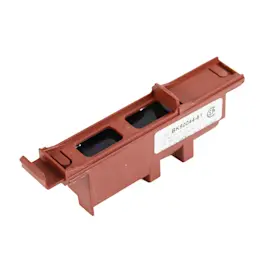
If multiple burners stop sparking at once (or none spark), the spark module is a common suspect. For this model, see the spark module W11601369.
What to expect after a reset
| What you see | What it usually means | What to do next |
|---|---|---|
| Normal clicking and burner lights quickly | System is operating normally | Keep using the cooktop |
| Clicking continues but no flame | Gas not lighting | Clean and reseat burner parts; retry |
| No clicking on any burner | Ignition power/module issue | Check breaker, then inspect spark module |
Why it matters
A reset clears temporary control or ignition glitches and restores power to the igniters. If ignition problems continue, addressing burner seating, cleaning, and the spark module prevents delayed ignition and uneven flame.
You can order replacement parts for your KGCU483VSS01 from the parts list for this model, or search by model number on Sears PartsDirect.
Last updated: February 2026
What is the life expectancy of a KitchenAid gas range?
A KitchenAid gas cooking appliance typically lasts 13 to 15 years with normal use and basic care. Higher-end units can reach 15 to 20 years when burners stay clean, ignition parts are maintained, and gas supply is set up correctly; see the owner's manual for care guidance specific to model KGCU483VSS01.
Typical lifespan by what fails first
Most “end of life” issues are repairable, but costs add up when multiple systems wear out.
- Ignition system: spark module, electrodes, wiring
- Gas control: burner valves, orifices, tubing connections
- Wear items: burner caps/heads, grates, knobs, grate pads
- Cosmetic/structural: cooktop trim, main top panels
What you can do to reach the high end of the range
These habits reduce misfires, uneven flames, and premature valve or ignition problems.
- Keep burner ports clear; clean spills promptly and dry parts fully before reassembly
- Avoid flooding the burner area with cleaner or water (moisture causes clicking and mis-ignition)
- Use cookware that fits the burner; oversized pans push heat onto knobs and trim
- If flames look weak or noisy, confirm the gas supply and regulator setup matches the installation requirements in the installation guide
- Fix small ignition issues early (a failing spark system can stress other components)
Common parts that extend service life
If your cooktop starts clicking constantly, won’t spark, or only lights intermittently, these model-compatible parts are common fixes:
| Symptom | Likely area | Example part for KGCU483VSS01 |
|---|---|---|
| No spark on multiple burners | Ignition control | Spark module W11601369 |
| Weak/intermittent spark | Ignition control | Module- sp WPW10475147 |
| Burner won’t adjust or won’t shut off smoothly | Gas control | Cooktop burner valve WPW10385582 |
You can order replacement parts from the parts list for KGCU483VSS01, or search by model on Sears PartsDirect.
Why it matters
A 48-inch professional-style gas cooktop has long-lasting metal components, but performance depends heavily on clean burner hardware and a stable gas supply. Keeping ignition and gas-control parts in good shape is what turns a 13-year cooktop into a 18-year cooktop.
Last updated: February 2026