Owner’s manual
 Error Codes



How to find GE refrigerator part number?
For your GE GTS18EBSARWW top-mount refrigerator, the fastest way to find the correct part number is to first confirm the full model number from the ID tag, then match the part by name and location using the parts diagram and the owner's manual. This prevents ordering a look-alike part that will not fit.
Step-by-step: find the right part number
- Locate the refrigerator model/serial tag (commonly inside the fresh food compartment on a side wall, ceiling area, or near the crisper frame; sometimes on the back).
- Write the model number exactly as shown: GTS18EBSARWW.
- Identify the part you need by function and location (for example: interior light, evaporator fan, condenser fan).
- Match the part on the parts list/diagram for your model, then confirm the part number and part ID.
- If you are replacing an electrical part, unplug the refrigerator before accessing wiring.
Common parts customers look up (with examples)
If you are not sure what the part is called, start with the symptom and the area of the refrigerator:
| Symptom | Likely area | Example part on this model |
|---|---|---|
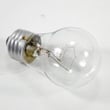
| No interior light | Fresh food compartment | GE appliance light bulb, 40-watt 40A15 |
| Warm refrigerator, freezer cold | Freezer rear panel (airflow) | Refrigerator evaporator fan motor WR60X31522 |
| Hot cabinet sides, poor cooling | Under unit (condenser area) | Refrigerator condenser fan motor WR60X10168 |
Why it matters
GE often uses multiple similar-looking parts across top-mount refrigerators. Matching by model number first, then by diagram position and part number, helps ensure proper fit, correct electrical ratings, and normal airflow and cooling performance.
Quick tips to avoid ordering the wrong part
- Do not order by appearance alone; confirm the part number/ID for GTS18EBSARWW.
- If a part has a revised replacement, use the updated listing shown for your model.
- For fan motors, match mounting style and connector type, not just the motor size.
Last updated: February 2026
How to order GE appliance parts?
For your GE GTS18EBSARWW top-mount refrigerator, we recommend ordering replacement parts by matching your full model number to the parts list and diagrams, then selecting the exact part ID you need; the GTS18EBSARWW owner's manual also explains how GE handles parts and accessories ordering.
How we recommend ordering parts for model GTS18EBSARWW
- Confirm the full model number (GTS18EBSARWW) from the rating label inside the fresh food section.
- Identify the symptom and the system involved (cooling, lighting, door seal, shelves).
- Use the parts diagrams to find the exact part name and part ID.
- Order the exact match; similar-looking refrigerator parts often do not interchange.
- Keep your proof of purchase and warranty paperwork with your records.
Common parts people order for this refrigerator
If you are troubleshooting a specific issue, these are frequently replaced items for this model:
| Problem you notice | Part to check first | Example part on this page |
|---|---|---|
| No interior light | Light bulb | GE appliance light bulb, 40-watt 40A15 |
| Warm fridge or freezer, fan not running | Evaporator fan motor | Refrigerator evaporator fan motor WR60X31522 |
| Poor airflow, noisy fan area | Fan motor grommet | Refrigerator evaporator fan motor grommet WR02X10098 |
| Warm cabinet, condenser area noisy | Condenser fan motor or blade | Refrigerator condenser fan motor WR60X10168 and refrigerator condenser fan blade WR60X10207 |
| Frost buildup, not defrosting well | Defrost heater | Refrigerator defrost heater WR51X10038 |
Why it matters
Ordering by exact model number and part ID helps you avoid fit issues, repeat repairs, and cooling problems caused by incorrect electrical parts (like a fan motor, capacitor, or start relay).
Quick safety and fit checks before you buy
- Unplug the refrigerator before inspecting wiring or motors.
- Compare the old part’s label and connector style to the replacement listing.
- For door sealing issues, inspect for gaps and torn gasket areas before replacing door-related parts.
Last updated: February 2026
What is the most common problem with a GE refrigerator?
The most common problem we see with GE refrigerators like model GTS18EBSARWW is a cooling complaint (fresh food too warm, freezer not cold enough, or temperatures that swing). In many cases, the root cause is restricted airflow or a fan issue, not the sealed system.
Most common causes behind “not cooling right”
- Dirty condenser coils reducing heat removal
- Blocked air vents from overpacked shelves
- Evaporator fan not moving cold air through the freezer and into the refrigerator section
- Condenser fan problems causing poor heat rejection at the back/bottom of the unit
- Frost buildup from a defrost problem (air cannot pass through the evaporator area)
Quick checks you can do first (before replacing parts)
- Confirm the controls are set to normal operating temps (freezer colder than fresh food).
- Make sure vents are not blocked by food packages.
- Clean dust from the condenser area and verify the unit has breathing room.
- Listen for the evaporator fan (freezer) and condenser fan (near compressor) running.
- If you have an icemaker and have not connected water yet, keep the icemaker turned off to avoid issues.
Parts that commonly fix cooling and airflow symptoms
| Symptom | What it often points to | Example part for this model |
|---|---|---|
| Freezer cold, fridge warm | Weak/no airflow from freezer | Refrigerator evaporator fan motor WR60X31522 |
| Unit runs hot, poor cooling | No airflow across condenser | Refrigerator condenser fan motor WR60X10168 or refrigerator condenser fan blade WR60X10207 |
| Heavy frost, airflow blocked | Defrost system not clearing frost | Refrigerator defrost heater WR51X10038 |
Why it matters
Cooling problems usually get worse over time. Restoring proper airflow protects food, reduces run time, and helps prevent extra strain on the compressor and start components.
For model-specific operating guidance and installation clearances, use the owner's manual.
Last updated: February 2026
Which is better, top mount or bottom mount refrigerator?
A top-mount refrigerator like the GE GTS18EBSARWW is usually the better choice when you want simple, reliable cooling with strong energy efficiency and a lower purchase and repair cost. A bottom-mount is better when you want fresh-food items at eye level and easier access to the refrigerator section.
Quick comparison: top mount vs bottom mount
| Feature | Top mount (freezer on top) | Bottom mount (freezer on bottom) |
|---|---|---|
| Everyday access | Freezer is easiest to reach | Fresh-food section is easiest to reach |
| Typical cost | Lower | Higher |
| Repair complexity | Usually simpler | Often more complex (drawers, rails, ice features) |
| Organization | Straightforward shelves and bins | Often better fridge organization, more drawers |
| Energy use | Often very efficient | Varies by design and features |
How to choose for your kitchen and habits
- If you use the freezer daily, a top mount keeps frozen food at a comfortable height.
- If you cook often and reach into the refrigerator many times a day, a bottom mount reduces bending.
- If you want fewer moving parts and simpler service, a top mount is typically the easier platform.
- If you need wide refrigerator drawers for produce and meal prep, bottom mounts often win.
- If your space is tight, check door swing and clearances before deciding (your manual lists recommended clearances).
What matters for performance (either style)
Even the “better” layout will disappoint if installation and airflow are wrong. For the GE GTS18EBSARWW, we recommend following the placement, clearance, and leveling guidance in the owner's manual.
- Keep proper air circulation clearances around the cabinet.
- Level the refrigerator so doors close easily and seal consistently.
- Use a properly grounded outlet and avoid damaged cords.
Why it matters
Choosing the right mount style affects daily comfort (how often you bend), food organization, and long-term ownership cost. Top mounts tend to be the best value and simplest to maintain; bottom mounts tend to be the most convenient for fresh-food access.
Last updated: February 2026