Owner’s manual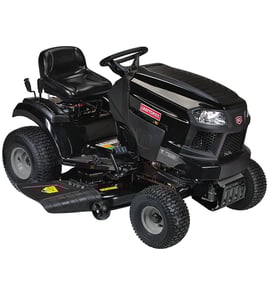

Is the Cub Cadet engine a good engine?
Yes. On the Cub Cadet 13WX91AT056 front-engine lawn tractor, the engine is designed for dependable mowing when it’s maintained on schedule; most “good engine” outcomes come down to correct oil changes, clean cooling fins, and a solid fuel and ignition tune-up per the owner's manual.
What “good” means for this tractor’s engine
A good engine on a riding mower is one that starts easily, holds steady power under load, runs at proper operating temperature, and does not consume oil or fuel abnormally.
Common signs your engine is performing well:
- Starts within a few seconds (cold or warm)
- Runs smoothly at full throttle with minimal surging
- Maintains blade speed in thicker grass
- No excessive smoke, fuel smell, or backfiring
- Normal operating temperature (no overheating)
Maintenance that most affects engine reliability
Your manual notes that engine maintenance procedures are handled through the engine manufacturer’s instructions, and it also highlights routine items like cleaning cooling fins and checking the spark plug.
Focus on these high-impact tasks:
- Change engine oil on schedule; replace the oil filter at each oil change
- Clean engine cooling fins regularly to prevent overheating
- Check spark plug condition and gap; replace if fouled
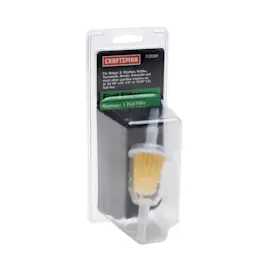
- Replace the fuel filter at the recommended interval
- Use fresh, clean fuel and keep the tank/cap area clean
Quick troubleshooting guide (symptom to likely cause)
| Symptom | Most common cause | First check |
|---|---|---|
| Hard starting | Weak spark or stale fuel | Spark plug, fuel quality |
| Surging at idle | Fuel restriction or air leak | Fuel filter, fuel lines |
| Power loss in tall grass | Dull blades or clogged deck | Deck condition, blade sharpness |
| Overheating smell | Dirty cooling fins | Cooling fins and debris buildup |
Why it matters
A riding mower engine can feel “bad” even when it’s healthy if airflow is restricted, oil is overdue, or fuel delivery is partially blocked. Keeping the cooling system clean and the oil and fuel systems serviced is the fastest way to protect power and extend engine life.
Last updated: February 2026
How many hours does a Cub Cadet usually last?
A Cub Cadet riding mower like model 13WX91AT056 typically lasts 500 to 1,000 operating hours in normal residential use. With consistent maintenance (oil changes, clean cooling fins, sharp blades, and proper belt care), many tractors reach the upper end of that range.
Typical lifespan ranges (what most owners see)
Hours vary most by maintenance, terrain (hills, dust), mowing frequency, and how hard the tractor is worked (towing, bagging, snow attachments).
- Light residential use: ~500 to 700 hours
- Average residential use: ~700 to 1,000 hours
- Heavy use or poor maintenance: often under ~500 hours
- Well-maintained, lighter loads: commonly near or above ~1,000 hours
| What drives hours up or down | Shortens life | Extends life |
|---|---|---|
| Maintenance | skipped oil/air filter service | on-schedule service and inspections |
| Operating conditions | steep slopes, dusty mowing | flat lawns, clean storage |
| Workload | frequent towing, heavy attachments | mowing only, moderate pace |
| Storage | outdoors, moisture exposure | dry, covered storage |
A model-specific clue from the manual
Your 13WX91AT056 documentation uses operating hours as a key benchmark for coverage and upkeep. For example, the limited warranty references 3 years or 120 operating hours (whichever comes first) for general coverage, and 5 years or 500 hours (whichever comes first) for the frame and front axle. Use the hour meter as your maintenance clock and follow the service intervals in the owner's manual.
How to get the most hours out of your tractor
- Change engine oil and filter on schedule; use the correct oil grade for your temperatures.
- Keep the air filter clean; dusty mowing is hard on engines.
- Clean grass buildup from the deck and around cooling areas to prevent overheating.
- Keep blades sharp and the deck level; it reduces strain on belts and spindles.
- Check belt condition and tension; replace worn belts before they slip and overheat.
- Avoid overloading when towing; use low speed and smooth starts.
Why it matters
Operating hours are the best way to judge remaining life and plan repairs. A tractor with 300 hours and strong maintenance history is usually a better bet than one with 150 hours and neglected service.
Last updated: February 2026
What Kohler engine is in the Cub Cadet?
For Cub Cadet model 13WX91AT056, the operator’s manual indicates this tractor uses a Kohler engine, but it does not specify the exact Kohler engine family (such as 7000 Series) or the exact engine model number in the sections provided. Use the engine ID label on the engine to match the correct Kohler engine manual and service parts.
How to identify the exact Kohler engine on 13WX91AT056
Look for the engine identification label (usually on the blower housing, valve cover area, or near the starter). Record:
- Engine model (for example, CV, SV, KT, or similar Kohler model prefix)
- Spec number (often the most important for parts matching)
- Serial number
- Type (if shown)
Once you have those numbers, you can use them to confirm the correct tune-up parts (spark plug, air filter, fuel filter) and the correct Kohler engine Owner’s/Operator’s Manual referenced by Cub Cadet.
Where the manual points you for engine details
The Cub Cadet documentation for this tractor explains that the engine manufacturer is responsible for engine-related specifications and service information, and it directs you to the separate Kohler engine manual that came with the tractor. For model-wide maintenance intervals and tractor procedures, use the owner's manual.
Quick checklist: what to verify before ordering engine parts
- Confirm the tractor model number is 13WX91AT056 (from the frame tag)
- Confirm the Kohler engine model and spec from the engine label
- Match maintenance items to your interval (oil change, oil filter, spark plug, fuel filter)
- Verify whether your tractor has any optional equipment that changes fit (muffler, air intake, wiring)
Common outcomes once you have the engine model/spec
| What you find on the engine label | What it tells you | What you can do next |
|---|---|---|
| Engine model only | General engine family | Narrow down the correct Kohler manual |
| Model + spec number | Exact configuration | Match the correct filters, plug, and carb parts |
| Serial number | Build sequence | Helps confirm revisions when parts changed |
Why it matters
Kohler engines can look similar across Cub Cadet tractors, but the spec number can change the correct air filter, fuel system parts, and even charging components. Using the engine label prevents wrong-part returns and gets you the right maintenance parts the first time.
Last updated: February 2026