



What is the life expectancy of a York HVAC system?
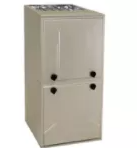
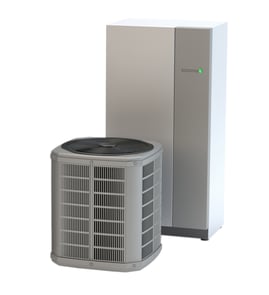
A York HVAC system like model D3CG090N13025 typically lasts 15 years. With correct installation, clean airflow (filters and coils), and regular service, many units reach 12 to 20 years before major components like the compressor, blower motor, or coils drive replacement.
Typical lifespan by component
These ranges help explain why the whole system often gets replaced even if some parts still work.
- Compressor: 10 to 20 years
- Outdoor fan motor: 10 to 15 years
- Indoor blower motor: 10 to 20 years
- Capacitor/contactor: 5 to 10 years
- Evaporator or condenser coil: 10 to 20 years (shorter with corrosion or poor airflow)
| What you’re looking at | Typical lifespan | What usually ends it |
|---|---|---|
| Whole HVAC system | 15 years | Major repair cost vs. age |
| Electrical start/run parts | 5 to 10 years | Heat, power surges, wear |
| Motors and compressor | 10 to 20 years | Overheating, hard starts, refrigerant issues |
Signs your York system is near end of life
If your D3CG090N13025 shows several of these at once, planning for repair or replacement makes sense.
- Frequent breakdowns during peak heating or cooling season
- Rising electric bills with no change in usage
- Uneven temperatures, weak airflow, or long run times
- Loud starts, humming, or repeated clicking at startup
- Refrigerant leaks or coil damage
- Repairs are stacking up year after year
Why it matters
Once a system is around the 15-year mark, reliability and efficiency usually drop. A single failure in a high-cost component (compressor, coil, or motor) can cost enough that replacement becomes the better long-term value.
Parts that commonly affect starting and reliability
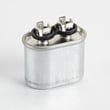
If your unit struggles to start, trips breakers, or the fan hums without spinning, the run capacitor is a common suspect. For this model, we list the capacitor 12907 (part number 024-20045-700) as an in-stock replacement option.
Last updated: February 2026
What is the most common problem with heat pumps?
The most common heat pump problem is reduced heating capacity during very cold weather, which can make the system run longer and rely more on backup heat (if equipped). The next most common issues are airflow restrictions, refrigerant problems, and electrical component failures in systems like the York D3CG090N13025.
Most common issues we see (and what they look like)
- Low heat output in cold weather: supply air feels lukewarm; long run times.
- Airflow restriction: dirty filter, blocked return, or duct issues; can cause icing and poor comfort.
- Refrigerant leak or incorrect charge: weak heating/cooling, ice buildup, or hissing; often leads to coil freeze-ups.
- Defrost system problems: outdoor coil stays iced over; heat drops during winter operation.
- Electrical failures: weak start, intermittent operation, or tripped breaker; capacitors and contactors are common culprits.
Quick checks you can do safely
- Set the thermostat to Heat and raise the setpoint 2 to 3 degrees; confirm the indoor blower runs.
- Replace or clean the air filter; confirm supply and return vents are open.
- Check the outdoor unit for heavy ice buildup (a light frost is normal in heating mode).
- Listen for repeated clicking, humming, or hard starts (often points to a capacitor or motor issue).
- If a breaker trips repeatedly, stop resetting it and have the system checked.
Common symptoms and likely causes
| Symptom | Likely cause | What to do next |
|---|---|---|
| Runs constantly, still cold | Cold-weather capacity limits, airflow restriction | Check filter, vents, ducts; verify thermostat settings |
| Outdoor coil is a solid block of ice | Defrost problem, airflow issue, low refrigerant | Clear airflow; schedule service for defrost/refrigerant |
| Hums but will not start | Weak capacitor, motor issue | Test capacitor; replace if out of spec |
| Breaker trips | Electrical short, failing motor/compressor, wiring issue | Stop operation; inspect wiring and components |
Parts that commonly contribute to “won’t start” or weak performance
A failing run capacitor can cause hard starting, humming, or intermittent operation. If testing confirms it is weak or open, replace it with the exact match listed for your unit: capacitor 12907.
Why it matters
Heat pumps depend on correct airflow, refrigerant charge, and healthy electrical components to move heat efficiently. Small issues (like a clogged filter or weak capacitor) can quickly turn into comfort problems, icing, and higher energy use.
Last updated: February 2026
How do I find the model number on my D3CG090N13025?
Your York heating and cooling combined unit’s model number is printed on the unit’s rating plate (data tag). For model D3CG090N13025, check the cabinet panels near the electrical/control compartment or the burner/blower area; the tag lists the model and serial number.
Where to look on the unit
On packaged heating and cooling units, the rating plate is usually in one of these spots:
- Inside the main access panel (the panel you remove for service)
- Near the control box or electrical compartment cover
- On the blower compartment panel
- On an interior side wall just behind an access door
- Occasionally on the exterior cabinet near the refrigerant service area
What the model number tag looks like
The tag is typically a silver or white label or metal plate. It commonly includes:
- Model number (for example, D3CG090N13025)
- Serial number
- Electrical ratings (voltage, phase, MCA, MOP)
- Fuel type and input ratings (for gas models)
- Refrigerant type and factory charge information
Tips to make sure you have the right number
Use these checks so you do not confuse the model with other codes:
- Copy the model number exactly, including letters and numbers
- Ignore patent numbers and barcode-only strings
- If you see multiple labels, use the one that lists electrical ratings and serial number
- Take a clear photo before ordering parts
| Item | What it’s used for | Example format |
|---|---|---|
| Model number | Identifies the exact unit configuration for parts | D3CG090N13025 |
| Serial number | Identifies production run and date coding | Letters and numbers |
Why it matters
York packaged units can look similar across series, but parts like a run capacitor, contactor, or control components can vary by model. Using the exact model number helps us match the correct replacement, such as the capacitor 12907.
Last updated: March 2026