View engine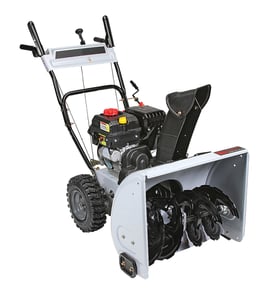



Is it cheaper to repair or replace a snowblower?
For a Craftsman 536886160 6-hp snow thrower, it’s usually cheaper to repair when the problem is a normal wear item (belt, cable, chute hardware) and the total repair cost stays well below the price of a comparable new snowblower. Replacement makes more sense when the engine or drive system needs multiple major parts and the repair total approaches about half the cost of a new unit.
Quick decision checklist
- Repair if the issue is isolated (one symptom, one system).
- Repair if the machine starts and runs well but won’t move or won’t throw snow.
- Repair if you can fix it with common wear parts like an auger belt 37X120MA or snowblower drive belt 1733324SM.
- Replace if the engine has low compression, heavy smoking, or persistent starting problems after basic tune-up.
- Replace if the auger/impeller housing is badly damaged or multiple assemblies are worn at once.
- Replace if you need repeated repairs every season and reliability matters more than cost.
Typical repair cost vs. replacement (rule of thumb)
| Scenario | What it usually involves | Best value |
|---|---|---|
| Won’t move forward | Ground drive belt, pulley, friction drive adjustment | Repair |
| Auger won’t spin | Auger belt, cable, clutch linkage | Repair |
| Chute won’t rotate smoothly | Chute ring, worm gear, hardware | Repair |
| Engine runs poorly | Carb cleaning, spark plug, fuel line, primer issues | Repair first |
| Engine failure | Internal engine work or engine replacement | Often replace |
Why it matters
A snowblower like the Craftsman 536886160 often fails in predictable, serviceable ways (belts stretching, cables going out of adjustment, chute parts wearing). Fixing those restores performance for far less than buying a new machine, while major engine or multiple-system failures can turn into a high-cost repair with less long-term payoff.
Money-saving tips before you decide
- Add up parts plus labor; compare that total to a similar new 2-stage unit.
- Prioritize “no-throw” and “no-drive” problems first; they are commonly belt-related.
- Inspect belts for glazing, cracking, or slack before replacing bigger assemblies.
- If you DIY, take photos of belt routing and linkage positions before disassembly.
Last updated: February 2026
How many years should a snowblower last?
Most gas snowblowers, including the Craftsman 536886160 6-hp snow thrower, typically last 10 to 20 years with normal residential use and consistent maintenance; units that are stored dry, serviced yearly, and repaired promptly often reach the high end of that range.
Typical lifespan by use and care
A snowblower’s life is usually limited by wear items (belts, bearings, friction drive parts) and corrosion from moisture and salt.
- Light use (small driveway, dry storage): 15 to 20 years
- Average use (regular storms, basic upkeep): 10 to 15 years
- Heavy use (wet snow, long run times, minimal upkeep): 7 to 10 years
- Best-case with proactive repairs: 20+ years
What to maintain to hit 15+ years
These are the most common maintenance actions that extend life on a 2-stage gas snowblower:
- Change engine oil on schedule and check oil level before each season
- Use fresh fuel and stabilize fuel before storage
- Keep the auger housing and chute clean; remove packed snow after use
- Inspect and replace worn belts (ground drive and auger drive)
- Check cable tension and engagement so the auger and drive do not slip
- Store indoors or under a breathable cover; keep it off wet concrete when possible
Parts that commonly determine “end of life”
If the machine still starts and the engine is healthy, replacing wear parts is usually what keeps it going.
| Symptom | Common wear area | Example part for model 536886160 |
|---|---|---|
| Won’t move or slips under load | Ground drive belt | Snowblower drive belt 1733324SM |
| Auger stops or won’t throw well | Auger belt | Auger belt 37X120MA |
| Chute won’t rotate smoothly | Chute worm/retainer wear | Worm 585196MA |
Why it matters
A snowblower that is maintained and repaired early costs less over time because belts and chute-drive parts are inexpensive compared to major drivetrain or impeller damage caused by running with slipping, misadjusted, or broken components.
Last updated: February 2026
Should I spray my snowblower with WD-40?
Yes; for a Craftsman model 536886160 6-hp snow thrower, we recommend using a light, targeted spray on the chute and discharge surfaces to help snow slide and reduce clogging. Keep spray off belts, friction-drive parts, and hot engine areas so you do not create slipping or a fire risk.
Where WD-40 helps (and where it causes problems)
Use it only on surfaces where you want snow to shed, not where you need traction.
- Good places: inside the chute, chute deflector, discharge opening, auger housing surfaces (light coat)
- Avoid: drive belt, auger belt, pulleys, friction disc area, tires, handles and controls
- Avoid: muffler, cylinder head, and any hot engine surfaces
- Avoid: electrical connections and starter cord insulation (sprays can attract dirt)
If your machine is not moving or the auger stops under load, check for belt wear or glazing; the snowblower drive belt 1733324SM and auger belt 37X120MA are common wear items on this model.
Best practice: quick application steps
- Shut the engine off and let it cool completely.
- Brush off packed snow and wipe the chute area dry.
- Apply a thin coat to the chute and discharge surfaces.
- Run the machine briefly to confirm nothing is slipping.
Quick do and do not table
| Area | Spray? | Why |
|---|---|---|
| Chute interior | Yes | Reduces sticking and clogging |
| Auger housing surfaces | Yes (light) | Helps snow flow |
| Belts and pulleys | No | Causes slipping and premature belt wear |
| Friction drive area | No | Loss of traction and poor drive performance |
| Hot engine/muffler | No | Flammable residue risk |
Why it matters
A snowblower throws best when the chute stays slick and the drive system stays dry and grippy. Overspray on belts or friction components can turn a simple anti-stick step into a “won’t move” or “auger won’t spin” problem.
Last updated: February 2026
What are common Craftsman snowblower problems?
Common problems on the Craftsman 536886160 6-hp snow thrower are no-start or rough running, the auger not turning or not throwing snow well, and the unit not driving or slipping in gear. Most fixes come down to fresh fuel and ignition checks, clearing jams, and replacing worn belts such as the snowblower drive belt 1733324SM or auger belt 37X120MA.
Most common symptoms and what usually causes them
- Won’t start / starts then dies: stale fuel, clogged carburetor jets, dirty fuel line, fouled spark plug
- Runs rough / surges: partially clogged carburetor, water in fuel, restricted fuel cap vent
- Auger won’t turn: broken or loose auger belt, jammed auger/impeller, cable out of adjustment
- Throws snow poorly: worn auger belt, chute packed with snow, impeller area clogged
- Won’t drive / wheels slip: worn drive belt, traction drive adjustment issue, friction drive wear
- Chute won’t rotate smoothly: worn chute components or binding in the chute rotation mechanism
Quick checks we recommend (fastest to slowest)
- Shut the engine off and remove the spark plug wire before touching the auger or belts.
- Confirm fresh fuel (gasoline stored more than 30 days commonly causes starting issues).
- Check the spark plug condition and gap; replace if fouled.
- Inspect belts for glazing, cracking, or slack; replace if worn.
- Look for packed snow or debris in the auger housing and chute.
- Verify control cables move freely and return fully.
Parts that commonly solve “no drive” or “no auger” complaints
| Symptom | Most likely wear item | Example part for model 536886160 |
|---|---|---|
| Unit won’t move or slips | Ground drive belt | Snowblower drive belt (1733324SM) |
| Auger won’t engage | Auger drive belt | Auger belt (37X120MA) |
| Chute binds or feels loose | Chute retainer ring | Inner ring (337227MA) or outer ring (585193MA) |
Why it matters
A slipping belt or a partially clogged fuel system can make a snowblower feel “weak” even when the engine is fine. Catching belt wear early helps prevent loss of drive or auger function in the middle of a storm.
Last updated: February 2026
How to tell year of Craftsman snowblower by serial number?
For Craftsman snow thrower model 536886160, the most reliable way to determine the build year is to use the model number plus the full serial number from the ID tag and match that information to the correct parts breakdown for your production run. Craftsman serial formats vary by manufacturer, so there is not one universal “character 5 equals year” rule.
Where to find the model and serial tag
On most Craftsman 6-hp snow throwers, the ID tag is typically found in one of these spots:
- Rear frame near the handles
- Side of the auger housing
- Chassis near the wheels
- Near the engine mounting area
How to narrow down the year using what you can verify
Use these checks to pin down the correct era without guessing at a serial-number code:
- Engine make and model (Briggs & Stratton, Tecumseh, etc.) and the engine’s own date code
- Control panel and chute control style (crank, worm gear, cable routing)
- Parts consistency when you compare common wear items to the diagrams
- Decals and safety labels (design changes often track production periods)
Practical “match the run” method (works best for parts accuracy)
- Write down the full model number (536886160) and the entire serial number.
- Compare your machine’s configuration to the parts diagrams (chute style, drive system, auger engagement).
- Confirm by checking a high-wear part that must match your setup, such as the snowblower drive belt 1733324SM.
| What you compare | What it tells you |
|---|---|
| Engine model and date code | Approximate production era |
| Chute mechanism parts | Which design generation you have |
| Drive belt and pulley setup | Which parts list matches your unit |
Why it matters
Getting the correct production run prevents ordering the wrong belt length, pulley, chute hardware, or cable routing parts, which is especially important when troubleshooting drive or auger problems.
Last updated: February 2026