Owner’s manual
 Error Codes

How to tell if a Kenmore refrigerator compressor is bad?
On the Kenmore Elite refrigerator model 59675524400, a “bad compressor” usually shows up as poor or no cooling along with repeated clicking (overload cycling) or unusual compressor noise. Before condemning the compressor, we confirm the unit is not simply in a normal defrost pause and that airflow and power checks pass (see the owner's manual).
Quick signs that point to a compressor problem
- Refrigerator and freezer temperatures keep rising even though the unit has power
- You hear a repeated click every few minutes and the compressor never stays running
- The compressor is extremely hot to the touch and then shuts off (overload protection)
- The evaporator fan runs, but there is little to no cooling
- You hear loud buzzing, grinding, or knocking from the compressor area
Rule out common look-alikes first (fast checks)
The manual notes that the compressor may be off during normal operation; if the lights are on but the compressor is not operating, wait about 40 minutes to see if it restarts. After that, check these basics:
- Make sure the temperature controls are set correctly
- Verify the condenser area is not packed with dust and the unit has airflow
- Confirm the refrigerator is plugged in and the breaker is not tripped
- Listen for the evaporator fan; no airflow can mimic a sealed-system issue
- If you recently moved the refrigerator, let it sit upright before powering on
What the clicking often means (and the part that commonly fails)
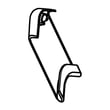
A clicking sound with a compressor that will not start is often the compressor overload device opening to protect the motor. On this model, a common related part is the refrigerator overload release W10613606.
| Symptom | Most likely area | What we do next |
|---|---|---|
| Clicks, compressor won’t run | Start/overload device | Inspect/replace overload, then retest |
| Runs but won’t cool | Sealed system (compressor/refrigerant) | Sealed-system diagnosis by a technician |
| Hums briefly then stops | Start circuit or compressor | Electrical tests, amp draw checks |
Why it matters
Replacing a compressor is a sealed-system repair and is handled differently than typical DIY parts like a fan blade or light switch. Doing the quick checks first prevents unnecessary parts replacement and gets you to the right fix faster.
Last updated: February 2026
What are the common problems with Kenmore 59675524400 refrigerators?
Common problems we see with the Kenmore Elite 59675524400 bottom-mount refrigerator include weak or warm cooling, ice maker or water dispenser issues, water leaks, and unusual noises. Many of these trace back to dirty condenser coils, airflow blockages, door sealing problems, or a defrost-system fault; the owner's manual covers several of these checks.
Most common symptoms and what they usually mean
- Not cooling or temperature swings: dirty condenser coils, controls set incorrectly, blocked rear air grille, door not closing fully
- Ice maker not making ice: low water pressure, frozen fill path, or an ice maker failure
- Slow water flow or small/hollow cubes: low household water pressure (reverse osmosis systems commonly cause this)
- Water under the refrigerator: defrost drain issue, loose water line connection, or condensation overflow
- Noisy operation: fan blade interference, fan motor wear, or the unit not level
Quick checks we recommend first (no parts required)
- Confirm power and controls: make sure the refrigerator is plugged in and the control is on; reset the breaker if needed.
- Clean condenser coils: dirty coils are a top cause of poor cooling.
- Check airflow: keep the rear air grille clear and avoid overpacking shelves.
- Inspect door sealing: look for gaps, torn gasket areas, or doors that do not close smoothly.
- Level the refrigerator: an unlevel cabinet can cause door sealing issues and noise.
Parts that commonly solve these problems
If troubleshooting points to a failed component, these are common fixes for this model:
| Symptom | Likely part area | Example part for this model |
|---|---|---|
| Ice maker not working | Ice maker assembly | Refrigerator ice maker D7824706Q |
| Slow water flow, bad taste/odor | Water filtration | Refrigerator water filter EDR4RXD1 |
| Warm fridge, fan noise, weak airflow | Evaporator airflow | Refrigerator evaporator fan blade WP2169142 |
| Intermittent cooling or odd behavior | Electronic control | Refrigerator control board WPW10503278 |
Why it matters
Cooling and ice/water problems often start as simple maintenance issues (coils, airflow, leveling, door seal). Fixing those early helps protect food temperatures, reduces run time, and prevents secondary failures in the defrost and airflow system.
For model-specific operating tips (control adjustments, leveling guidance, and troubleshooting charts), use the owner's manual.
Last updated: February 2026
What is the average lifespan of a Kenmore 59675524400 refrigerator?
A Kenmore Elite 59675524400 bottom-mount refrigerator typically lasts 10 to 15 years. Keeping the condenser coils clean, maintaining good door seals, and fixing cooling or ice maker issues early helps you reach the longer end of that range; see the care and maintenance guidance in the owner's manual.
Typical lifespan and what affects it
Most refrigerators in this class land in the same general window, but real-world life depends on a few big factors:
- Condenser coil cleanliness (dust buildup makes the compressor work harder)
- Door gasket condition (air leaks cause longer run times and temperature swings)
- Airflow inside the cabinet (overpacking blocks vents and stresses the cooling system)
- Water system health (clogged filters can reduce flow and affect ice and water performance)
- Room conditions (hot garages, tight built-ins, or poor ventilation shorten life)
Maintenance checklist that extends life
We recommend these habits for the Kenmore 59675524400:
- Vacuum and brush the condenser area regularly
- Keep doors closing squarely; avoid slamming and overloading door bins
- Clean and inspect gaskets; replace if torn, warped, or not sealing
- Replace the water filter on schedule; a common replacement is the refrigerator water filter EDR4RXD1
- Confirm freezer drawers and baskets slide freely so the door closes fully
Quick “repair vs. replace” guide
Use this as a practical rule of thumb when deciding what to do next.
| If your refrigerator is… | Usually makes sense to… | Why |
|---|---|---|
| Under ~8 years old | Repair | You are still early in the typical lifespan |
| 10 to 15 years old | Compare repair cost vs. value | You are in the average lifespan window |
| Over 15 years old | Replace if major sealed-system issue | Big repairs can exceed the unit’s value |
Why it matters
A refrigerator’s most expensive failures are usually in the sealed refrigeration system (compressor and refrigerant loop). Preventive maintenance reduces run time and heat load, which directly lowers wear on those components.
Last updated: February 2026
What does er 1f mean on Kenmore 59675524400 refrigerator?
On Kenmore model 59675524400, the ER 1F (sometimes shown as ER IF) code points to an ice fan problem in the freezer. The fan may be blocked by frost or ice, the fan motor may be failing, or the wiring/control may not be powering the fan correctly.
What to check first (fast, no parts)
- Power reset: unplug the refrigerator for 5 minutes, then restore power.
- Check for ice buildup around the freezer rear panel and ice maker area.
- Make sure freezer vents are not blocked by packages.
- Confirm the freezer door closes and seals fully.
- If the fan is noisy, intermittent, or not running, plan on a fan-related repair.
Likely causes and what they mean
| What you notice | Most likely cause | What to do |
|---|---|---|
| Fan noise changes, rattles, or stops | Ice/frost contacting the fan | Defrost the freezer and clear obstructions |
| Freezer warms, ice production drops | Fan not moving cold air | Inspect fan operation; repair as needed |
| Frost returns quickly after defrost | Defrost system issue | Check defrost components and airflow |
Parts that commonly relate to this symptom
If the freezer is frosting up or airflow is restricted, these parts are often involved:
- Refrigerator defrost bi-metal thermostat WP67003426 (helps control defrost cycling)
- Refrigerator defrost heater WP67002493 (melts frost off the evaporator)
- Refrigerator evaporator fan blade WP2169142 (moves air; replace if damaged or slipping)
For model-specific diagnostic steps and control settings, use the owner's manual.
Why it matters
The ice fan helps move cold air through the freezer and supports ice maker performance. When airflow drops, temperatures rise, frost builds faster, and the refrigerator can struggle to maintain stable cooling.
Last updated: February 2026