 Installation guide
 Owner’s manual
 Error Codes





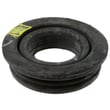

Can a clogged drain cause an FTD error?
Yes. On the GE GDF530PGM4WW dishwasher, an FTD (fail to drain) condition is commonly caused by a clog or restriction in the drain path, which prevents the drain pump from pushing water out of the tub. Clearing the blockage usually restores normal draining.
What to check first (most common drain clogs)
- Clean the air gap (if your sink setup has one); a plugged air gap can stop draining.
- Run the garbage disposer (if the dishwasher drains into it) to clear the inlet.
- Confirm the disposer knockout plug was removed during installation (new disposer installs are a frequent cause).
- Inspect the drain hose for kinks or crushing behind or under the dishwasher.
- Verify the sink drains normally; a slow kitchen drain can back up into the dishwasher.
Quick reset and drain test
Use this to force a drain and confirm whether the restriction is still present:
- Press and hold Start/Reset for about 3 seconds to cancel the cycle and start draining.
- Open the door after draining and confirm the tub water level dropped.
- If water remains, recheck the air gap, disposer connection, and drain hose routing.
For the exact button sequence and drain line checks, follow the steps in the GDF530PGM4WW installation guide.
Drain system checkpoints (symptom to likely cause)
| What you see | Most likely cause | What we do |
|---|---|---|
| Water standing in the bottom | Air gap clogged | Clean the air gap and retest |
| Hums but won’t drain | Drain path restricted | Check hose, disposer inlet, sink drain |
| Drains slowly | Kinked hose or partial clog | Straighten hose; clear restriction |
| Repeats drain attempts | Intermittent blockage | Clean filter area; check hose routing |
Why it matters
A clogged drain can trigger repeated drain attempts, leave dirty water in the tub, and reduce cleaning performance. Keeping the drain hose, air gap, and disposer connection clear helps prevent FTD-type drain failures.
For model-specific care steps like cleaning the air gap and filter assembly, use the GDF530PGM4WW owner’s manual.
You can also match the exact code behavior and related drain faults using GE electronic dishwasher error codes.
Last updated: January 2026
How do I find the model number on my GDF530PGM4WW?
The model number for your GE dishwasher is printed on the appliance’s rating label. On most GE built-in dishwashers like the GDF530PGM4WW, you’ll find that label on the tub frame around the door opening (often along the left or right side) when you open the door.
Where to look (fast checklist)
- Open the dishwasher door fully and look along the inner door frame
- Check the tub rim near the latch area
- Look on the left and right vertical edges of the tub opening
- Wipe the area with a damp cloth; labels can be hard to read through residue
- Write down the full model number and serial number exactly as shown
What the label looks like
The rating label is usually a small sticker or metal plate with:
- Model number (example: GDF530PGM4WW)
- Serial number
- Electrical ratings (volts/amps)
- Sometimes a manufacturing date code
Why it matters
Using the exact model number ensures we match the correct GE dishwasher parts, diagrams, and troubleshooting information for your specific build.
| If you see… | Do this |
|---|---|
| A model number that starts with GDF | Use the full number including the letters at the end |
| Multiple numbers | Choose the one labeled “Model” (not “Serial”) |
| A worn or smeared label | Take a photo and zoom in to confirm characters |
For a model-label diagram and other identification tips, use the [GDF530PGM4WW owner’s manual].
Last updated: March 2026
What is the average lifespan of GDF530PGM4WW?
The average lifespan of a GE dishwasher like the GDF530PGM4WW is 10 years. Keeping filters clean, using the right detergent, and fixing small leaks or drain issues quickly helps the wash system, pump, and heater last longer.
What affects dishwasher lifespan most
- Hard water buildup on the heater and internal passages
- Clogged filters or a blocked sump that strains the circulation pump
- Poor draining that leaves standing water and residue
- Door seal wear that leads to leaks
- Overloading that prevents spray arm rotation and increases cycle stress
Simple maintenance that adds years
- Clean the filter and sump area regularly (monthly is a good target)
- Run hot water at the sink before starting a cycle for better wash performance
- Use rinse aid to improve drying and reduce spotting
- Check and clear spray arm holes if dishes are coming out dirty
- Inspect the door gasket for tears, flattening, or debris
When replacement is more practical than repair
| Symptom | Common underlying issue | Typical decision |
|---|---|---|
| Not draining repeatedly | Drain path restriction or pump wear | Repair if caught early |
| Leaking from the door | Gasket or alignment issue | Repair usually makes sense |
| Not heating or poor drying | Heater circuit or control issue | Compare repair cost to age |
Why it matters
At around the 10-year mark, wear items (seals, pumps, racks, and controls) tend to stack up. Preventive cleaning reduces strain on key components and helps your GDF530PGM4WW reach its full service life.
For model-specific care steps and cycle guidance, follow the [GDF530PGM4WW owner’s manual].
Last updated: March 2026





