Error Codes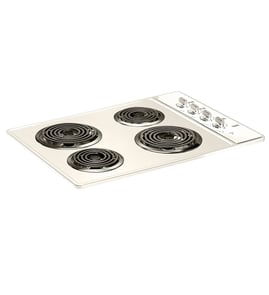



What is the difference between electric cooktop and induction cooktop?
An electric radiant cooktop like Kenmore model 91144002990 heats by sending electricity through a heating element under the glass, then the glass transfers heat to the pan. An induction cooktop heats the pan directly using a magnetic field, so it typically heats faster and the glass stays cooler.
Quick comparison
| Feature | Electric radiant cooktop | Induction cooktop |
|---|---|---|
| How it heats | Element heats glass, glass heats pan | Magnetic field heats pan directly |
| Cookware needed | Most flat-bottom pans work | Magnetic cookware required (cast iron, many stainless) |
| Speed and control | Good, but slower response | Very fast, very precise |
| Surface temperature | Glass gets very hot | Glass warms mostly from the hot pan |
| Cleaning | Spills can bake onto hot glass | Often easier since surface runs cooler |
How to tell what you have (and what to expect)
- If the cooktop has glowing red zones under the glass, it is radiant electric.
- If a burner seems to cycle on and off at lower settings, that is normal for radiant electric control.
- If a pan must be magnetic to work, that is induction.
- If you lift the pan and heating stops immediately, that is typically induction behavior.
Why it matters for parts and troubleshooting
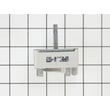
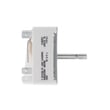
Radiant electric cooktops commonly use surface element control switches, indicator lights, and wiring connections to regulate heat. If a burner will not heat, heats only on high, or will not turn off, we focus on components like the control element WB23M8 and the wiring connections feeding the element.
Common symptoms and likely causes (radiant electric)
- Burner will not heat: loose/burned wire connection, failed element, failed switch
- Burner stuck on high: failed infinite switch (surface element control)
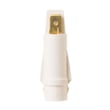
- Hot surface light stays on: failed indicator circuit or the cooktop indicator light WB25T10012
Safety notes before checking anything
- Turn off power at the breaker before removing the cooktop from the counter.
- Glass tops can crack if stressed; avoid prying.
- If you see melted wiring or arcing, stop and repair the wiring before replacing controls.
Last updated: January 2026
What is the standard size of an electric cooktop?
For electric cooktops, the most common standard widths are 30 inches and 36 inches. Your Kenmore cooktop model 91144002990 is a 30-inch radiant counter unit, so it typically fits a 30-inch cabinet opening with model-specific cutout dimensions.
Common electric cooktop sizes
Most electric radiant cooktops are sold in a few “standard” width classes:
- 30-inch: most common in many homes and remodels
- 36-inch: common upgrade size with more spacing and larger elements
- 15-inch to 24-inch: compact kitchens, apartments, or supplemental cooktops
- 45-inch to 48-inch: specialty and high-end installations
What to measure before you buy or replace
Cooktop “size” is usually the outside glass width, but installation depends on the cutout and clearance.
- Countertop cutout width and depth (opening in the counter)
- Overall glass top width and depth (the visible surface)
- Minimum clearance to cabinets, backsplash, and combustible surfaces
- Electrical supply requirements (typically 240V for radiant units)
- Location of the junction box and cable length
Quick reference: width vs typical use
| Nominal cooktop width | Typical use case |
|---|---|
| 30 in. | Standard replacement size for many kitchens |
| 36 in. | More workspace, larger element layouts |
| 15 to 24 in. | Small spaces or secondary cooking zone |
| 45 to 48 in. | Specialty, large cooking surfaces |
Why it matters
Choosing the right “standard size” prevents countertop rework and helps ensure safe clearances and proper wiring. Even within the same width class (like 30 inches), cutout dimensions can vary by model.
If you are reinstalling or servicing the cooktop, parts like the cooktop glass main top WB61T10044 and wire harness WB18T10102 are model-matched components that can affect fit and electrical connections.
Last updated: January 2026
How much is it to replace an electric stove top?
Replacing the “stove top” on a Kenmore 91144002990 30" radiant counter unit usually means replacing the glass cooktop surface; parts alone are often several hundred dollars, and total installed cost commonly lands in the mid-hundreds to over a thousand depending on labor rates and what else is damaged.
What you are actually replacing
On this model, the most common “stove top” replacement is the glass main top (the smooth glass surface). If the burners are not heating, you may only need an element or a control switch instead of the entire top.
Common replacements include:
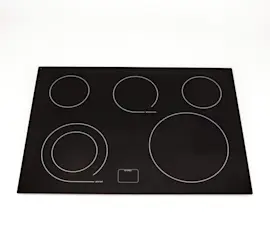
- Glass surface: cooktop glass main top WB61T10044
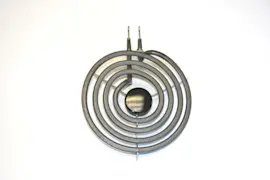
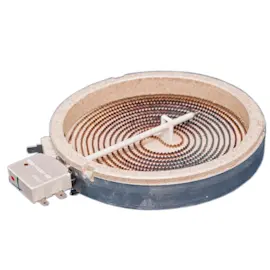
- Burner not heating: halogen element WB30T10099
- Burner stuck on or won’t regulate: control element WB23M8 or control element WB23M9
Typical cost ranges (parts and labor)
Actual pricing varies by region and access, but these ranges are typical for a 30-inch radiant cooktop repair.
| Repair scenario | Typical parts cost | Typical labor cost | Notes |
|---|---|---|---|
| Replace glass cooktop surface | $400 to $700 | $200 to $600 | Often chosen after cracks, chips, or deep scratches |
| Replace one surface element | $80 to $200 | $150 to $350 | Good option when only one burner fails |
| Replace one infinite switch | $80 to $150 | $150 to $350 | Common when heat is erratic or stuck on |
Quick checks before you buy a cooktop top
These steps help confirm whether you need the glass top, an element, or a control.
- If the glass is cracked or shattered, replace the glass top (do not use the cooktop).
- If one burner does not heat but others work, suspect the surface element or its wiring.
- If a burner cycles wildly, won’t turn off, or only works on “high,” suspect the control switch.
- If multiple burners are dead, check the power supply (cooktops typically require 240V).
- Look for overheated or loose connections at the element and switch terminals.
For electrical troubleshooting basics, use how to use a multimeter to test electrical parts video.
Why it matters
Replacing only the failed part (element, control switch, indicator light, or wire harness) often restores safe, even heating at a much lower cost than replacing the entire glass cooktop surface.
Last updated: January 2026
Do electric cooktops use 110 or 220?
Most electric cooktops, including the Kenmore 91144002990 30" radiant counter unit, are designed for a 240-volt (often called 220/230/240V) circuit, not a standard 120-volt (110V) outlet. The exact requirement depends on how the cooktop is wired and the home’s electrical supply.
What voltage you should expect
In most U.S. homes, built-in electric cooktops use a dedicated 240V circuit because the surface elements need higher wattage to heat properly.
- Typical cooktop supply: 240V (two hot legs)
- Typical breaker size: 30A to 50A (varies by model and total wattage)
- Typical wiring: 3-wire or 4-wire connection (depends on home wiring and local code)
- Not typical: Plugging into a standard 120V receptacle
Quick check: what you have at the cooktop junction box
Turn power off at the breaker before inspecting any wiring.
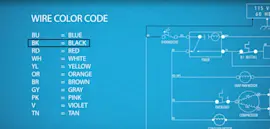
- If you see two hot wires (often black and red) plus ground (and sometimes neutral), it’s set up for 240V.
- If you see one hot wire (often black) plus neutral and ground, it’s 120V, which is uncommon for radiant cooktops.
- If the cooktop heats slowly or not at all after an electrical change, a miswired supply is a common cause.
Why it matters
Using the wrong voltage can cause weak heating, nuisance breaker trips, or damage to electrical components like the surface element controls and wiring connections.
Parts that can be affected by power or wiring issues
If you are troubleshooting heating problems after confirming correct supply voltage, these model-matched parts are commonly involved:
| Symptom | Common electrical suspect | Example model-matched part |
|---|---|---|
| One element won’t regulate heat | Infinite switch/control | Control element WB23M8 |
| Indicator light not working | Hot surface/indicator lamp | Cooktop indicator light WB25T10012 |
| Intermittent operation | Loose/burned connector | Wire harness WB18T10102 |
Recommended next steps
- Verify the breaker is a 2-pole breaker sized appropriately for an electric cooktop.
- Confirm tight, clean connections in the junction box (no heat damage or discoloration).
- If an element stays on high or won’t turn on, test the control switch using a meter; see how to use a multimeter to test electrical parts video.
Last updated: January 2026