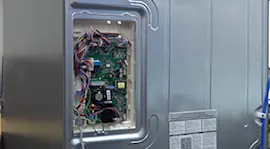
Error Codes




Where to find model number on a GE washer?
On a GE washer like model GFW510SCV0WW, the model number is printed on a rating label attached to the cabinet. On front-load washers, it’s most often visible when you open the door and look around the door opening.
Most common places to check (front-load)
- Open the washer door and check the door jamb (the cabinet frame around the opening)
- Look behind the door on the cabinet front
- Check the inside edge of the door itself
- Look along the front panel near the lower corners
- If needed, check the back of the control panel area
What the label looks like
The label usually includes:
- Model number (example: GFW510SCV0WW)
- Serial number
- Electrical ratings (voltage/amps)
- Sometimes a barcode
| Location | How to access it | Best for |
|---|---|---|
| Door jamb / door opening | Open the door | Quick model and serial lookup |
| Behind the door | Open the door, look at cabinet front | Confirming exact model suffix |
| Back of control panel area | Look from the rear/top | When front label is worn |
Why it matters
We use the exact model number to match the right GE washer parts and diagrams. Even small model suffix differences can change which parts fit, especially door components like the GE washer door lock WH01X29528.
Last updated: February 2026
What is the most common problem with GE washers?
The most common problem we see with GE washers, including the GE GFW510SCV0WW front-load washer, is a drain or spin issue. It’s usually caused by a restriction in the drain path (hose or pump area), a door not locking properly, or a control-related fault that stops the cycle before high-speed spin.
Most common symptoms customers notice
- Water left in the tub at the end of the cycle
- Washer stops mid-cycle or won’t advance to spin
- Door stays locked or won’t lock to start
- Clothes come out wetter than normal
- Humming sound with little or no draining
Quick checks we recommend first (no parts needed)
- Unplug the washer for 2 minutes, then restore power (clears some temporary control glitches).
- Confirm the drain hose isn’t kinked, crushed, or pushed too far down the standpipe.
- Run a Drain/Spin cycle with the tub empty to see if it drains strongly.
- Reduce load size and avoid washing one heavy item alone (helps prevent out-of-balance spin stops).
- Check that the door closes firmly and nothing is caught in the door boot.
Parts that commonly relate to “won’t start”, “won’t spin”, or “won’t drain”
If the washer won’t lock the door or stops before spinning, these model-specific parts are common suspects:
| Symptom | What it points to | Model-matched part to check |
|---|---|---|
| Won’t start, door won’t lock | Door lock/strike issue | GE washer door lock WH01X29528 |
| Clicks but won’t latch consistently | Latch mechanism problem | Door latch WH01X32580 |
| Fills slowly or won’t fill correctly | Water inlet valve issue | Water valve WH23X29541 |
Why it matters
Drain and spin problems are the “root cause” behind several complaints: wet clothes, odors from standing water, and repeated cycle interruptions. Fixing the drain path or door-locking issue early helps prevent extra wear on the motor, inverter, and suspension.
Helpful troubleshooting reference
For fault codes that can stop draining or spinning, use our GE gfw front load washer error codes guide.
Last updated: February 2026
How to rebalance a GE washer?
To rebalance a GE GFW510SCV0WW washer, we focus on fixing the root causes of vibration: an unlevel cabinet, an uneven load, or worn suspension and door-boot hardware. Start by redistributing the load and leveling the washer; then run a Spin/Drain cycle to confirm the shake is gone.
Quick rebalance steps (most effective first)
- Pause the cycle and redistribute items evenly (mix large and small pieces).
- Remove a few items if the drum is tightly packed or one heavy item dominates.
- Level the washer: adjust all four leveling legs so the cabinet does not rock.
- Confirm the washer sits firmly on the floor (no shims, no soft flooring flex).
- Run a Spin/Drain cycle empty; then test with a medium mixed load.
What to check if it still shakes
If leveling and load size do not fix it, we check common front-load vibration sources:
| Symptom | Most likely cause | What we do next |
|---|---|---|
| Banging during spin | Load out of balance | Reduce load, redistribute, avoid single heavy items |
| Walking/rocking | Washer not level | Re-level, tighten lock nuts on legs |
| Thumping even with small loads | Suspension issue | Inspect suspension components and mounting points |
| Vibration plus door-area rubbing/leaks | Door boot not seated/clamped | Inspect boot and clamps for fit and tension |
Parts that can contribute to vibration (model-specific)
These parts are on the GE GFW510SCV0WW platform and are worth inspecting when vibration is persistent:
- Suspension spring WH03X29511 (supports tub movement during spin)
- Accelerometer WH03X37841 (helps the control detect out-of-balance conditions)
- Washer door boot spring clamp WH05X29663 (helps keep the door boot seated so it does not rub)
Why it matters
A front-load washer that is out of balance can over-stress the tub suspension, loosen fasteners, and cause premature wear on components like the drive system and tub-to-pump hose. Getting the cabinet level and the load balanced protects the washer and reduces noise.
Last updated: February 2026
How many years should a GE washing machine last?
A GE washing machine typically lasts 10 to 14 years. For your GE GFW510SCV0WW front-load washer, lifespan depends most on load size, detergent use (HE), installation (leveling), and routine cleaning that prevents odor, vibration, and premature wear.
Typical lifespan and what affects it
Front-load washers like the GE GFW510SCV0WW usually land in the same 10 to 14 year range, but these factors move the needle:
- Load habits: frequent overloading shortens bearing, suspension, and motor life
- Detergent choice: too much detergent causes residue, odor, and extra rinsing stress
- Water quality: hard water increases scale and valve wear
- Leveling and vibration: constant shaking stresses the tub, springs, and electronics
- Moisture control: leaving the door closed traps humidity and promotes mold
Maintenance that helps you reach the high end of the range
Use these habits to reduce common front-load failures (drain issues, door lock problems, leaks, and vibration):
- Run a monthly cleaning cycle; wipe the door boot dry afterward
- Leave the door and dispenser slightly open between loads
- Use HE detergent and measure carefully
- Check pockets; coins and screws can damage the pump path
- Keep the washer level to prevent excessive movement
Quick “symptom to check” guide
| Symptom | What it often points to | What we check first |
|---|---|---|
| Door will not lock or start | Door lock or latch issue | GE washer door lock WH01X29528 and door alignment |
| Leaks at the door | Door boot or clamp issue | Boot seating and clamps |
| Loud banging or walking | Suspension or leveling issue | Leveling feet, suspension spring WH03X29511 |
| Won’t drain well | Hose restriction or pump path issue | Tub to pump hose WH41X29628 for clogs/kinks |
Why it matters
A washer that is kept clean, level, and not overloaded runs with less vibration and moisture buildup; that reduces stress on the tub, door lock system, and control boards, which are some of the most expensive repairs on modern GE front-load washers.
Last updated: February 2026
How much does it cost to replace a gasket on a GE washing machine?
On a GE GFW510SCV0WW front-load washer, replacing the door gasket (door boot) typically costs $170 to $450 total: about $120 to $220 for the part plus $150 to $250 for labor if you hire service. DIY replacement usually costs just the part.
What you will likely pay (parts vs. labor)
The gasket itself is the rubber seal around the door opening. On this model, the related seal part is the washer door boot WH05X29521.
- DIY (parts only): typically $120 to $220
- Professional repair: typically $170 to $450 total
- Extra parts sometimes needed: clamps or related door hardware
- Time estimate: 45 to 120 minutes for an experienced DIYer
- Best practice: replace any stretched or corroded clamps during the job
Common add-on parts that affect total cost
If the gasket is leaking because it is not clamped evenly, or if clamps deform during removal, you may also need clamp hardware.
| Item | When it is needed | Typical impact on cost |
|---|---|---|
| Door boot (gasket) | Torn, moldy, warped, or leaking | Main cost driver |
| Outer spring clamp | Clamp is stretched, rusted, or won’t reseat | Small add-on |
| Inner clamp | Inner clamp is bent or won’t tighten evenly | Small add-on |
| Door lock or latch parts | Door won’t lock, gasket gets pulled/misaligned | Moderate add-on |
How to tell the gasket is the real problem
Before buying parts, we recommend checking for these gasket-specific symptoms:
- Water dripping from the front bottom of the door during fill or tumble
- Visible tears, pinholes, or deformation in the rubber folds
- Persistent mildew odor even after cleaning
- Leaks only with large loads (gasket flexes more)
- Gasket lip not sitting flat against the front panel
Why it matters
A leaking door gasket can let water reach the front panel area and wiring, and it often gets worse quickly once the rubber tears. Replacing the gasket early helps prevent repeat leaks and reduces the chance of secondary damage.
Helpful DIY guidance
For cleaning and prevention (and to reduce repeat gasket issues), use how to keep a washer odor free.
Last updated: February 2026
Where is the filter on my GE Deep Fill washing machine?
On the GE GFW510SCV0WW front-load washer, the drain pump filter is typically behind the small access panel at the lower front of the cabinet. You open that panel, place a towel or shallow pan under it, then slowly loosen the filter cap to drain water before removing debris.
How to find and clean the pump filter
- Unplug the washer (or switch off the breaker) for safety.
- Locate the small lower-front access door (often near the bottom right or center).
- Put towels down and use a shallow pan to catch water.
- Turn the filter cap slowly to let water drain first.
- Remove the filter and clear lint, coins, buttons, and small socks.
- Reinstall the filter cap snugly, then run a quick rinse and drain to check for leaks.
What if your washer is labeled “Deep Fill”
“Deep Fill” is a cycle option more common on top-load washers. Your model GFW510SCV0WW is a GE front-load washer, so the most relevant “filter” customers mean is the drain pump cleanout (not a removable lint screen like many top-load designs).
Parts that are commonly involved when draining problems look like a “clogged filter”
If cleaning the pump filter area does not fix slow draining, leaks, or door-unlock issues, these model-matched parts are often checked next:
| Symptom | Common area to inspect | Model-matched part option |
|---|---|---|
| Won’t drain or drains slowly | Tub-to-pump path | Tub to pump hose WH41X29628 |
| Water leaks at the door | Door seal and clamps | Washer door boot WH05X29521 and washer door boot spring clamp WH05X29663 |
| Door stays locked after cycle | Door lock and latch system | GE washer door lock WH01X29528 or door latch WH01X32580 |
Why it matters
A blocked pump filter or restricted drain path can cause long cycle times, poor spinning, standing water, and door lock complaints. Keeping the cleanout area clear also helps protect the drain pump from damage.
For code-related drain or lock problems, use our GE gfw front load washer error codes reference to match the displayed code to the most likely cause.
Last updated: February 2026
Is there a lint trap in GE washer dryer combo?
GE washer dryer combos typically do have a lint filter, but it is not usually a removable “lint screen” like a traditional dryer. On the GE GFW510SCV0WW washer, lint is more often managed through the drain system and internal filtering, so regular cleaning and checking for drain restrictions matters.
Where lint is handled on this type of machine
On front-load GE laundry designs, lint commonly ends up in the drain path (pump area, hoses, and tub-to-pump routing) rather than collecting on a big screen.
- Check for slow draining, standing water, or wet loads after spin
- Watch for musty odors that can trap lint and residue
- Inspect the door boot folds for lint buildup and debris
- If you see leaks near the front, check clamps and the boot seating
- If draining is noisy, a restriction in the drain path is likely
Parts that relate to lint, draining, and airflow restrictions
If lint is causing poor draining or water left in the tub, these model-specific parts are commonly involved:
- Tub to pump hose WH41X29628 (can clog with lint, coins, small items)
- Washer door boot WH05X29521 (lint and residue collect in folds; can also leak)
- Washer door boot spring clamp WH05X29663 (helps keep the boot sealed so linty water does not seep)
Quick symptom-to-area guide
| Symptom | Most likely area to check | What to do first |
|---|---|---|
| Clothes come out with lint | Door boot folds, overdosing detergent | Wipe boot, reduce HE detergent |
| Washer will not drain well | Drain path, hose restriction | Inspect drain hose routing and clogs |
| Musty smell plus lint residue | Door boot, tub residue | Run cleaning cycle and wipe boot dry |
| Water at front of washer | Door boot, clamps | Inspect boot seating and clamp tension |
Why it matters
Lint that stays in the washer can restrict draining, leave residue on clothes, and contribute to odor and mildew. Keeping the drain path clear and the door boot clean helps the GFW510SCV0WW wash and spin correctly.
For odor-related lint and residue prevention, we recommend following the steps in how to keep a washer odor free.
Last updated: February 2026
Why is my GE front load washer leaking from the bottom?
A bottom leak on your GE GFW510SCV0WW front load washer almost always comes from a loose or split drain path (hose, pump area), an overfill issue, or a door boot leak that runs down the cabinet and drips underneath. Start by pinpointing when it leaks: fill, wash/agitate, drain, or spin.
Quick checks that find most bottom leaks
- Unplug the washer and turn off both water supply valves.
- Pull the washer forward and look for a wet trail: front-center, left, right, or rear.
- Run a Rinse/Drain & Spin with the back panel area visible (use a flashlight).
- Check the drain hose connection points for looseness or rubbing.
- Look for water running down from the door opening area (often the door boot).
Most common causes (and what to inspect)
| When you see water | Most likely area | What to look for |
|---|---|---|
| During fill | Water valve or dispenser plumbing | Drips at the inlet valve, cracked fill hose, overspray into cabinet |
| During wash/tumble | Door boot or tub seam area | Tears, pinholes, or a gap where the boot meets the front panel |
| During drain | Tub-to-pump hose or pump area | Split hose, loose clamp, leak at pump housing |
| Mostly during spin | Door boot or drain path vibration | Hose rubbing, clamp loosening, water slinging past a damaged boot |
Parts that commonly fix bottom leaks on this model
If your inspection points to one of these areas, these are common replacements for GFW510SCV0WW:
- Tub to pump hose WH41X29628 (leaks during drain, wet near pump)
- Water valve WH23X29541 (leaks during fill, dripping at rear inlet area)
- Washer door boot WH05X29521 (water tracks from door opening down to the base)
- Washer door boot spring clamp WH05X29663 (boot not sealing evenly at the front lip)
Why it matters
A bottom leak can damage flooring and can also lead to electrical issues if water reaches wiring or the main control area. Catching a small hose seep or door boot tear early prevents bigger repairs.
Last updated: February 2026