Owner’s manual
 Error Codes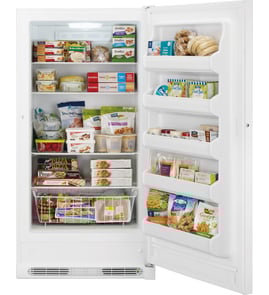


How many cubic feet is a Kenmore freezer model 2539287213?
The exact cubic-foot capacity for Kenmore upright freezer model 2539287213 is listed on the model’s specifications section in the 2539287213 owner's manual. If you are estimating space for food loading, we recommend using the manual’s “pounds per cubic foot” guidance once you confirm the capacity.
How to find the capacity (fast)
We use these reliable places to confirm cubic feet for model 2539287213:
- Check the specifications section in the 2539287213 owner's manual
- Look for the model and serial number plate inside the cabinet (often on the upper left wall on upright models)
- If you still need a working estimate, measure the interior and calculate volume (see below)
Quick estimate method (if you need a number today)
If you can measure the interior, you can estimate cubic feet:
- Measure interior width, depth, and height in inches
- Multiply: width × depth × height = cubic inches
- Divide by 1,728 to convert to cubic feet
- Subtract a little for shelves, bins, and the evaporator cover (usable space is always less than raw volume)
| What you’re calculating | Formula | Notes |
|---|---|---|
| Interior volume (cu ft) | (W × D × H) ÷ 1,728 | Uses inches |
| Practical usable space | Interior volume minus obstructions | Shelves and liners reduce space |
Why it matters
Capacity affects how much fresh food you can freeze at one time. The manual guidance for many upright freezers is to freeze about 3 pounds of fresh food per cubic foot at once, so knowing the true cubic feet helps prevent long run times and warm-up.
Last updated: January 2026
What are the most common issues with 2539287213?
For the Kenmore 2539287213 upright freezer, the most common problems we see are warm temperatures, heavy frost buildup, unusual noises, water/ice around the bottom, and door sealing issues. These symptoms usually trace back to airflow, defrost-system, or temperature-control components listed in the owner's manual.
Most common symptoms and what they usually point to
- Freezer not cold enough or warming up: dirty condenser area, weak evaporator fan, or a failing temperature control
- Frost or ice building up on the back wall: defrost heater, defrost thermostat, or defrost timer issue
- Clicking or humming with no cooling: start relay problem at the compressor
- Water/ice on the floor of the freezer: drain restriction or drain pan issues
- Door won’t seal or frost around the door: worn or torn door gasket
Parts that commonly fix these issues (for model 2539287213)
If your symptom matches, these model-matched parts are common repair solutions:
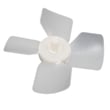
- Evaporator fan motor 5304442620 for weak/no airflow inside the cabinet
- Upright freezer defrost timer 5304518034 when the unit is not cycling through defrost
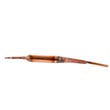
- Refrigeration appliance defrost heater 216608500 when frost never melts off the evaporator
- Universal/multiflex (frigidaire) refrigerator defrost bi-metal thermostat 5303917954 when defrost heat is not being regulated correctly
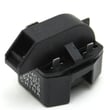
- Freezer compressor start relay 216594300 when the compressor struggles to start
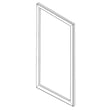
- Freezer door gasket 5304507200 when the door seal leaks air
Quick checks we recommend before replacing parts
- Confirm the control is set to a normal mid-range setting; allow 24 hours for temperature to stabilize after changes.
- Make sure vents and the air baffle are not blocked by packages.
- Clean dust from the condenser area and verify the freezer has proper clearance for airflow.
- Check the door closes squarely and seals all the way around.
- Listen for the evaporator fan; it should run when the compressor is running (door switch may need to be held closed).
Symptom-to-part guide
| Symptom | Most likely system | Common part to check |
|---|---|---|
| Warm freezer | Airflow/control | Evaporator fan motor, temperature control thermostat |
| Heavy frost | Defrost system | Defrost timer, defrost heater, defrost thermostat |
| Clicking, no start | Start components | Compressor start relay |
| Frost at door edge | Door seal | Door gasket |
Why it matters
Catching airflow and defrost problems early prevents ice from choking the evaporator coil and keeps the compressor from running nonstop, which protects food quality and reduces wear on major components.
Last updated: March 2026
What is the average lifespan of an upright freezer?
Most upright freezers last 10 to 20 years, and a well-maintained Kenmore upright freezer like model 2539287213 commonly lands in the 12 to 15 year range. Lifespan depends most on heat exposure, door-seal condition, frost control, and keeping airflow and temperatures stable (see the 2539287213 owner's manual).
Typical lifespan and what changes it
Here are the biggest factors that shorten or extend upright freezer life:
- Room conditions: heat, direct sunlight, and poor ventilation make the compressor run longer.
- Door seal health: a leaking gasket causes warm, moist air to enter and increases run time.
- Frost management: heavy frost buildup reduces efficiency and stresses the system.
- Loading habits: frequent door openings and overloading increase run time.
- Basic upkeep: cleaning and keeping airflow paths clear helps the freezer run cooler and longer.
Maintenance habits that help you reach the high end (15 to 20 years)
The manual guidance for efficient operation lines up with what we see in real-world longevity. Focus on these habits:
- Place the freezer in a cool area, away from heat sources and direct sunlight.
- Limit door openings; organize food so you can grab items quickly.
- Let hot foods cool to room temperature before loading.
- Keep packages wrapped and dry to reduce frost buildup.
- Defrost and clean when frost reaches about 1/4 to 1/2 inch (for non-frost-free operation).
Quick reference: lifespan expectations
| Upright freezer condition | What to expect | What it usually means |
|---|---|---|
| Light use, cool location, good seals | 15 to 20 years | Lower compressor run time and less moisture intrusion |
| Average household use | 12 to 15 years | Typical wear on compressor, controls, and door gasket |
| Hot garage, frequent openings, heavy frost | 8 to 12 years | Higher run time and faster component fatigue |
Why it matters
A freezer that runs longer than normal to hold temperature uses more electricity and puts extra wear on the sealed system. Keeping frost under control and the door sealing tightly helps protect the compressor and keeps food storage temperatures more consistent.
Last updated: January 2026