Owner’s manual
 Error Codes





How to read GE appliance model numbers?
GE model numbers identify the appliance type and key design series; the serial number is what you use to determine the manufacturing date. On GE top-freezer refrigerators like model GIE18GSHGRSS, we use the model and serial from the ID label inside the fresh food compartment to decode age and order the correct parts.
Where to find the model and serial number
For GIE18GSHGRSS, the ID label is typically on the left side, near the middle of the refrigerator compartment. Use the GIE18GSHGRSS owner's manual to confirm the exact label location and the correct way to record the numbers.
- Open the fresh food (refrigerator) door
- Look along the left interior wall near mid-height
- Write down the model number and serial number exactly as shown
- Take a clear photo of the label for reference
- Use the full model number when searching parts (example: GIE18GSHGRSS)
How GE model numbers vs. serial numbers work
Model number (what it tells you)
The model number is mainly for identifying the exact product configuration so you get the right diagrams and replacement parts.
Serial number (what it tells you)
The serial number is what you use to determine the manufacture date. GE serial numbers commonly include a date code (often the first one or two characters) that maps to a month and year using a GE date code chart.
Quick decoding checklist
| You have | Use it for | Example outcome |
|---|---|---|
| Model number | Correct parts lookup and compatibility | Matches the right GE parts list for GIE18GSHGRSS |
| Serial number | Manufacturing date (month/year) | Confirms the unit’s production timeframe |
Why it matters
Reading the model and serial correctly prevents ordering the wrong GE refrigerator parts (like a door gasket, evaporator fan, or ice maker kit) and helps a technician quickly identify the right service information.
Last updated: February 2026
What is the average lifespan of a GE refrigerator?
Most GE refrigerators, including the GE GIE18GSHGRSS top-mount style, typically last 12 to 15 years with normal use. Regular maintenance (cleaning condenser coils, keeping door gaskets sealing, and ensuring good airflow) is what most often determines whether you land on the low or high end of that range.
Typical lifespan and what affects it
A refrigerator’s life is mainly driven by compressor run time, heat removal, and how hard the doors and seals have to work.
- Maintenance habits: coil cleaning and keeping vents clear reduce compressor strain
- Door seal condition: worn gaskets leak cold air and increase run time
- Room conditions: hot garages and tight enclosures shorten life
- Usage patterns: frequent door openings and overpacking reduce efficiency
- Power quality: repeated outages or surges can stress electronics
For model-specific care and cleaning guidance, follow the GIE18GSHGRSS owner's manual.
Quick maintenance checklist (best ROI)
- Vacuum or brush condenser coils regularly (more often with pets)
- Confirm doors close fully and the gasket grips paper all the way around
- Keep food from blocking interior air vents
- Set temps to typical targets: 37°F fresh food, 0°F freezer
- Level the cabinet so doors self-close and don’t drift open
Common wear items vs. major repairs
| Item | What it impacts | Typical symptom |
|---|---|---|
| Door gasket | Efficiency, frost control | Warm temps, sweating, frost |
| Evaporator fan | Cooling circulation | Warm fridge, noisy freezer |
| Compressor | Core cooling system | No cooling, clicking, overheating |
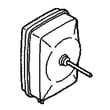
If you’re troubleshooting cooling performance on this model, the refrigerator evaporator fan WR60X31522 is a common component involved in airflow-related issues.
Why it matters
A refrigerator that is running longer than it should uses more electricity and wears out sealed-system components faster. Simple upkeep often adds years of service life and helps prevent temperature swings that spoil food.
Last updated: February 2026
What is the most common problem with a GE refrigerator?
The most common GE refrigerator problem is a cooling complaint: the fresh food section gets warm, temperatures swing, or the freezer cools but the refrigerator does not. On the GE GIE18GSHGRSS, this is often tied to restricted airflow (blocked vents, overpacked shelves) or a fan issue that prevents proper circulation.
Quick checks we recommend first
- Make sure air vents in the freezer and refrigerator are not blocked by food packages.
- Avoid overstuffing; leave space for air to circulate.
- Keep food covered; uncovered containers add moisture and can increase frost buildup.
- Confirm the doors close fully and seal all the way around.
- If you have an ice maker, remember it only makes ice after the water line is connected and the ice maker is turned on.
For model-specific operating tips and troubleshooting charts, use the GIE18GSHGRSS owner's manual.
Common symptoms and likely causes
| Symptom | What it usually points to | What to do next |
|---|---|---|
| Refrigerator warm, freezer OK | Airflow restriction or evaporator fan not moving air | Check vents and listen for fan noise; inspect the evaporator fan |
| Both sections warm | Dirty condenser area, condenser fan issue, or sealed system problem | Clean condenser area; check condenser fan operation |
| Frost buildup, weak airflow | Door left ajar, moisture load, airflow blocked | Improve airflow, cover food, verify door closure |
| Ice maker not producing | Not connected to water, ice maker switched off, freezer not cold enough | Connect water, turn ice maker on, verify freezer is cold |
Parts that commonly relate to cooling and airflow problems
If airflow checks out but temperatures still drift, these model-compatible parts are common suspects:
- Refrigerator evaporator fan WR60X31522 (moves cold air through the compartments)
- Refrigerator condenser fan motor assembly WR17X24348 (helps remove heat at the condenser)
- Refrigerator defrost heater WR09X21107 (helps prevent heavy frost that blocks airflow)
Why it matters
Cooling problems usually get worse over time. Restoring airflow and proper fan operation helps protect food, reduces frost load, and keeps the compressor from running excessively.
Last updated: February 2026