 Owner’s manual


What is the life expectancy of a GE washing machine?
A GE washing machine like model GTW460ASJ9WW typically lasts 10 to 14 years with normal household use. Consistent care (proper loading, correct detergent, and basic cleaning) is what most often determines whether it lands closer to 10 years or pushes beyond it.
What affects lifespan the most
- Load habits: Overloading strains the drive system and suspension.
- Detergent use: Too much detergent can cause oversudsing and residue buildup.
- Water supply hoses: Replace hoses about every 5 years to reduce leak risk.
- Leveling and vibration: An unlevel washer can wear out suspension parts faster.
- Routine cleaning: Keeping the basket and dispensers clean helps prevent odors and buildup.
Maintenance checklist for GTW460ASJ9WW
Use these habits to help your washer reach the upper end of its expected life:
- Load items loosely and distribute them evenly around the basket.
- Use HE detergent and measure carefully.
- Leave the lid open after cycles to let moisture evaporate.
- Clean the fabric softener dispenser periodically.
- Check fill hoses for bulges, cracking, or seepage.
For model-specific care and cleaning steps, follow the GTW460ASJ9WW owner’s manual.
Quick guide: what “normal aging” looks like
| What you notice | Often normal | Often needs attention |
|---|---|---|
| Slightly louder operation over time | Yes | If it becomes grinding, banging, or squealing |
| Longer cycle times with load sensing | Yes | If it will not complete cycles |
| Occasional out-of-balance loads | Yes | If it happens frequently with normal loads |
Why it matters
Knowing the typical 10 to 14 year lifespan helps you decide when maintenance is worth doing versus when repeated breakdowns (drain, spin, or agitation issues) may signal end-of-life wear on major components.
Last updated: January 2026
What is the capacity of GTW460ASJWW?
The GE GTW460ASJ9WW washer has a 4.2 cu. ft. capacity. This is the tub capacity used to describe how much laundry the basket is designed to handle in a typical load; actual usable space can vary with bulky items and cycle selection.
How to confirm you have the right model
GE model numbers can look very similar, so we recommend matching the full model number from the washer’s label (under the lid) to ensure you are using the correct specs and parts.
- Open the lid and look for the model/serial label
- Confirm the model is GTW460ASJ9WW (not a close variant)
- Use the same model number when ordering parts like a lid lock, drain pump, or drive belt
For additional model identification and operating details, use the GTW460ASJ9WW owner’s manual.
Capacity vs. load size settings (why they are different)
Even with a 4.2 cu. ft. washer, the control settings manage water level and agitation based on the load.
| Term | What it means on GTW460ASJ9WW | What you control |
|---|---|---|
| Capacity (cu. ft.) | Basket volume rating | You do not change this |
| Load size / Precise Fill | Water level strategy | You select load size or let it sense |
| Deep Fill option | Adds extra water for special loads | You can turn this on when needed |
Why it matters
Using the washer within its intended capacity helps prevent poor cleaning, out-of-balance spinning, and extra wear on suspension and drive components.
Tips for best results in a 4.2 cu. ft. top-load washer
- Load items loosely around the agitator, not packed down
- Keep items below the top row of basket holes when possible
- Wash bulky items using the Bulky Items cycle when available
- Use HE detergent to reduce oversudsing
- If loads finish too wet, redistribute and run Drain & Spin
Last updated: January 2026
What is the most common problem with GE washers?
On the GE GTW460ASJ9WW washer, we can’t identify a single “most common” failure from model-specific documentation alone. That said, the issues customers most often troubleshoot on this style of GE top-load washer are draining/spinning complaints, out-of-balance vibration, and fill problems; the GTW460ASJ9WW owner’s manual is the best model-specific starting point.
Common problems you can troubleshoot first
These are frequent symptom categories on high-efficiency top-load washers like the GTW460ASJ9WW:
- Won’t drain or drains slowly
- Won’t spin or clothes are too wet
- Excessive vibration or banging in spin
- Won’t fill or fills slowly
- Leaks at hoses or during drain
Quick checks that solve many complaints
Before replacing parts, we recommend these basics:
- Confirm both water supply valves are fully open
- Clean inlet hose screens if fill is weak
- Check drain hose for kinks; keep proper standpipe height and avoid pushing the hose too far down the pipe
- Redistribute the load; run Drain & Spin if the Spin light is blinking
- Level the washer and make sure all legs are firmly on the floor
Symptom-to-part examples for GTW460ASJ9WW
If the quick checks don’t help, these parts are commonly involved in the matching symptom (examples only):
| Symptom | What to inspect | Example part for this model |
|---|---|---|
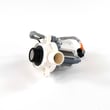
| Won’t drain | Drain path, pump operation, hose routing | Washer drain pump assembly WH23X28418 |
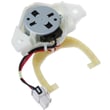
| Won’t spin / lid won’t lock | Lid lock sensing and wiring | Washer lid lock WH08X37938 |
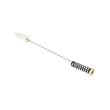
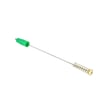
| Banging or walking | Suspension rods and springs | Washer suspension rod and spring assembly WH16X26911 |
| Weak agitation or spin | Belt condition and pulley drive | Washer drive belt WH01X27538 |
Why it matters
Many “washer is broken” complaints are caused by installation, load balance, or hose routing issues. Fixing those first can prevent unnecessary part replacement and get the GTW460ASJ9WW back to normal operation faster.
Last updated: January 2026


