Owner’s manual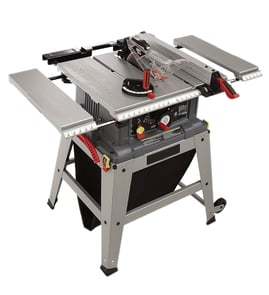

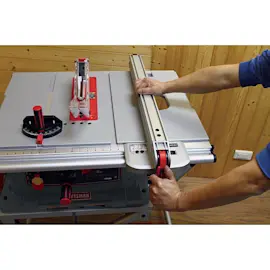
What size blade is a craftsman 137218030 table saw?
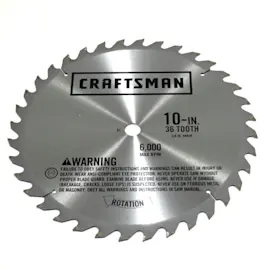
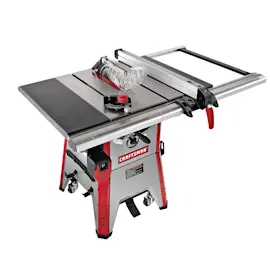
The Craftsman table saw model 137218030 is designed for a 10-inch table saw blade. For the safest fit and correct guard and splitter alignment, we recommend confirming the blade type and installation steps in the owner's manual.
What “10-inch blade” means for this saw
A 10-inch blade size refers to the blade’s outside diameter. On a 10-inch table saw like the Craftsman 137218030, using the correct diameter helps the blade guard, splitter, and height adjustment work as intended.
- Use a 10-inch diameter blade
- Choose the blade style for your cut (rip, crosscut, combination)
- Keep the blade sharp and clean to reduce burning and slow cutting
- Recheck alignment after blade changes (fence, miter slot, splitter)
Quick blade selection guide
| What you’re cutting | Recommended blade type | Typical tooth count |
|---|---|---|
| Plywood, fine finish cuts | Crosscut or plywood blade | 60 to 80T |
| General purpose | Combination blade | 40 to 50T |
| Thick hardwood ripping | Rip blade | 24 to 30T |
Why it matters
A blade that matches the saw’s intended size helps maintain proper cutting geometry and safety clearances. It also reduces strain on the drive motor and improves cut quality.
Related how-to help
If you’re swapping blades or troubleshooting cut quality, these guides match common table saw tasks:
Last updated: February 2026
What not to do with a table saw?
For the Craftsman 137218030 table saw, do not cut freehand, reach over or behind the blade, stand in line with the blade path, or pull a workpiece backward during a cut; these actions greatly increase kickback and blade-contact risk. Follow the safety rules in the owner's manual.
Never do these high-risk actions
- Never pull the workpiece backward while the blade is running (this can cause kickback).
- Never reach behind or over the cutting tool for any reason.
- Never stand (or place any part of your body) in line with the blade path.
- Never rip lumber that is warped, twisted, or bowed, or that lacks a straight edge against the fence.
- Never use the rip fence as a cut-off gauge when crosscutting; remove the rip fence when crosscutting.
- Never try to free a stalled blade until you turn the saw OFF.
Common “don’ts” by task
| Task | Do not do this | Do this instead |
|---|---|---|
| Ripping | Use the miter gauge while ripping | Use the rip fence only; keep it parallel to the blade |
| Crosscutting | Leave the rip fence installed as a stop | Remove the rip fence; use the miter gauge |
| Any cut | Reverse out of a cut with the blade running | Shut the saw off; wait for the blade to stop |
| Narrow rips | Put your hand between fence and blade | Use one or more push sticks; rip a larger piece first |
Quick pre-cut safety check (takes 30 seconds)
- Confirm the blade is tight on the arbor.
- Confirm the bevel angle lock knob is tight.
- If ripping, confirm the fence lock is tight and the fence is parallel to the blade.
- Confirm the blade guard is installed and working properly.
- Wear safety glasses.
Why it matters
Most table saw injuries and “bad surprises” come from kickback and loss of control. Actions like pulling stock backward, cutting warped boards, or standing in the blade line put your body where the workpiece will go if it kicks.
Last updated: February 2026
How to reset overload on table saw?
On the Craftsman table saw model 137218030, reset the overload by turning the switch OFF, unplugging the saw, letting the motor cool for about 10 minutes, then pressing the overload reset button and restarting the saw. See the switch and overload details in the 137218030 owner's manual.
Where the overload reset is and what it does
The overload reset switch protects the motor if it overheats, is overloaded, or sees low voltage.
- The reset is a button on the saw (shown as the overload reset switch in the controls diagram).
- It resets the overload relay so the motor can run again.
- If it trips repeatedly, the saw is still under strain or power is unstable.
Step-by-step: reset the overload safely
- Turn the ON/OFF switch to OFF.
- Remove the safety key (so the saw cannot start unexpectedly).
- Unplug the power cord.
- Wait about 10 minutes for the motor to cool.
- Press the reset button firmly.
- Reinsert the safety key, plug the saw back in, then switch ON.
If it trips again right away (common causes)
Overheating and overload trips are usually caused by setup, cutting load, or power delivery.
| What to check | What to do | Why it matters |
|---|---|---|
| Dull or dirty blade | Clean the blade or replace it | Reduces motor load and heat buildup |
| Blade binding or misalignment | Verify blade alignment and fence setup | Prevents drag that overheats the motor |
| Extension cord too long or too light | Use a shorter, heavier-duty cord | Low voltage can trigger overload |
| Sawdust buildup | Clean sawdust from cabinet and motor area | Improves cooling and performance |
Why it matters
The overload reset is a motor protection feature. Resetting it without fixing the cause can lead to repeated shutdowns, poor cut quality, and extra wear on the motor and drive components.
For related troubleshooting, use our DIY symptom guide: table saw overload trips.
Last updated: February 2026
Can you use an 8 inch blade on a 10 inch table saw?
Yes, you can physically mount a smaller blade on a 10-inch table saw, but on the Craftsman 137218030 you should only use blade sizes and accessories that match the saw’s design limits. A smaller blade reduces maximum cut depth and can create fit and safety issues if the arbor hole, flange, or insert clearance is wrong; confirm the approved blade diameter and arbor size in the owner's manual.
What changes when you use a smaller blade
- Less cutting depth: an 8-inch blade cuts shallower than a 10-inch blade.
- Guard and splitter alignment: the blade may sit lower relative to the guard and splitter/riving setup.
- Insert opening clearance: the blade must clear the throat plate (insert) without contact.
- Cut quality: a smaller blade can change feed feel and may increase burning if the blade is dull or the fence is misaligned.
What our Craftsman 137218030 manual calls out (important)
The manual focuses on correct blade installation and insert use:
- Install the blade with teeth pointing toward the front (direction of rotation).
- Tighten the arbor nut correctly while holding the arbor flats.
- Never run the saw without the proper insert installed.
It also gives specific guidance for dado work: only stackable dado blades are allowed, and the saw uses a separate dado insert for dado cuts.
Quick compatibility checklist (before you try an 8-inch blade)
| Check | What to verify | Why it matters |
|---|---|---|
| Arbor hole size | Blade bore matches the saw arbor | Prevents wobble and unsafe mounting |
| Blade diameter | Diameter is approved for the saw | Avoids guard/insert interference |
| Blade kerf | Works with your splitter/guard setup | Reduces binding and kickback risk |
| Throat plate | Correct insert installed and secured | Prevents workpiece drop and blade contact |
Why it matters
Using the wrong blade or insert can lead to binding, kickback, or the blade contacting the insert or guard. Staying within the Craftsman 137218030 specifications keeps cuts accurate and the safety features working as intended.
Related help: how to replace a table saw blade
Last updated: February 2026
How much is a craftsman professional table saw 137218030?
A Craftsman table saw model 137.218030 is typically priced based on condition and what is included (stand, rip fence, miter gauge, blade guard). For a used, working saw with the stand, most listings land in the $200 to $500 range; new-in-box units (if found) usually cost more.
What changes the price most
- Condition: smooth height/tilt adjustment, no excessive vibration, flat tabletop
- Completeness: rip fence, miter gauge, blade guard/splitter, throat plate (insert), wrenches
- Motor health: starts quickly, holds speed under load, no burning smell
- Stand and hardware: stable stand, no missing fasteners or bent legs
- Local demand: prices vary by region and season
Quick value checklist for model 137.218030
Use this to estimate where your saw fits in the range.
| What you have | Typical impact on value | What to look for |
|---|---|---|
| Runs strong, cuts square | Higher | Blade reaches full speed fast, no bogging |
| Fence locks parallel | Higher | Fence stays aligned to miter slot |
| Missing guard/splitter | Lower | Safety parts often reduce buyer interest |
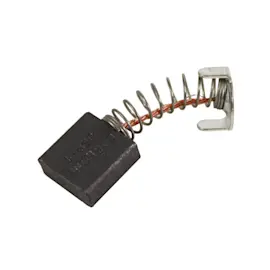
| Worn brushes or slow spin | Lower | Slower blade speed, sparking at motor |
How we recommend verifying condition (fast)
- Unplug the saw and inspect the blade, arbor area, and insert for damage.
- Check that the height regulating wheel and bevel controls move smoothly.
- Confirm the fence can be aligned to the miter slot (alignment is called out in the owner's manual).
- Make a test cut and check for burning, wandering, or bad angle cuts.
Why it matters
Table saw pricing is driven less by the model number and more by accuracy, safety components, and motor performance. A complete, well-aligned 10-inch saw with stand is worth significantly more than an incomplete saw that needs adjustment or motor service.
Related help: table saw common question, table saw bad angle cuts
Last updated: February 2026