Owner’s manual
 Error Codes



How do I reset my Frigidaire upright freezer?
To reset your Frigidaire upright freezer model LFFH2067DW2, we recommend doing a simple power reset: unplug the freezer, wait about 1 minute, then plug it back in and let it run for several hours to stabilize temperatures.
Power reset steps
- Turn the temperature control to OFF (if your control has an OFF position).
- Unplug the freezer from the wall outlet.
- Wait 60 seconds so the control can fully power down.
- Plug the freezer back in.
- Set the temperature control back to your normal setting.
- Allow at least 4 hours for the freezer to pull down to a safe freezing temperature.
What to check after the reset
If the freezer restarts but performance still seems off, check these common items first:
- Door closes freely and seals all the way around (no gaps)
- Freezer is level so the door aligns correctly
- Airflow space is maintained around the cabinet (about 3 inches on all sides is typical for this design)
- Temp alarm status (some models ship with the temp alarm turned OFF)
- Frost buildup that could indicate a defrost or door-seal issue
Quick reference: reset vs. defrost
| Task | What it does | When to use it |
|---|---|---|
| Power reset | Reboots the control by removing power | After a power event, alarm, or odd operation |
| Manual defrost/clean | Removes frost and restores airflow | When frost reaches about 1/4 to 1/2 inch |
Why it matters
A power reset clears minor control glitches, but it does not fix airflow, leveling, or sealing problems. If the door is misaligned or the gasket is leaking, warm moist air can enter and cause frost, temperature swings, and alarms.
For model-specific control and feature details, follow the steps in the LFFH2067DW2 owner's manual.
Last updated: January 2026
What is the life expectancy of a Frigidaire upright freezer?
A Frigidaire upright freezer like model LFFH2067DW2 typically lasts 10 to 15 years. Keeping airflow around the cabinet, maintaining a steady temperature setting, and defrosting and cleaning as recommended helps the sealed system and controls run longer.
Typical lifespan and what affects it
Most upright freezers reach their full service life when they can reject heat properly and the door seals tightly.
- Keep 3 inches of air space on all sides for ventilation.
- Avoid frequent door openings that add warm, moist air.
- Defrost and clean when frost reaches 1/4 to 1/2 inch (for non-frost-free operation).
- Let the freezer cool down 4 hours before loading unfrozen food.
- Do not overload with fresh food; freeze about 3 lb per cubic foot at one time.
Maintenance checklist that extends life
Use these habits to reduce compressor run time and frost buildup (both shorten component life).
| Task | How often | Why it helps |
|---|---|---|
| Verify ventilation clearance | At setup and after moving | Prevents overheating and long run times |
| Defrost and wipe interior | When frost is 1/4 to 1/2 inch | Improves airflow and efficiency |
| Keep temperature adjustments gradual | As needed | Prevents wide temperature swings |
| Keep door sealing well | Monthly quick check | Reduces moisture entry and frost |
Why it matters
A freezer that runs hotter than normal or builds heavy frost makes the compressor and defrost system work harder. That extra runtime is a common reason freezers fail earlier than the typical 10 to 15 year range.
Where to confirm care and operating details
For model-specific guidance on ventilation, cool-down time, and defrosting safety steps, follow the LFFH2067DW2 owner's manual.
Last updated: January 2026
Why is my Frigidaire upright freezer not freezing?
If your Frigidaire LFFH2067DW2 upright freezer isn’t freezing, the most common causes are an incorrect temperature control setting, poor airflow around the cabinet, frost buildup restricting cooling, or a failed cooling/defrost component such as the evaporator fan motor or defrost heater. Use the checks below and confirm operating guidance in the LFFH2067DW2 owner's manual.
Quick checks we recommend first
- Make sure the temperature control is set colder and then wait several hours for temperatures to stabilize.
- Allow proper ventilation: keep about 3 inches of clearance on all sides for airflow.
- Confirm the freezer had enough time to cool down: allow about 4 hours after startup before loading unfrozen food.
- Check for heavy frost (about 1/4 to 1/2 inch); excessive frost can block airflow and reduce freezing.
- Verify the freezer is level so the door closes and seals correctly.
What to inspect next (common failure points)
If the quick checks look good, these parts are frequent culprits when an upright freezer runs but won’t freeze:
- Evaporator fan: if the fan isn’t moving air, the freezer won’t cool evenly.
- Defrost system: a defrost failure can cause the evaporator to ice over and stop airflow.
- Door sealing: warm, moist air leaks in and creates frost and poor freezing.
| Symptom | Most likely area | What you’ll usually notice |
|---|---|---|
| Runs a lot, weak cooling | Airflow/dirty condenser area | Cabinet feels warm, cooling is slow |
| Heavy frost on back wall | Defrost system | Frost buildup, reduced airflow |
| Warm temps, little air movement | Evaporator fan | Quiet interior, no fan sound |
Parts that often fix “not freezing” on this model
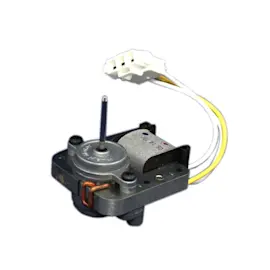
- Motor 297309000 (evaporator fan motor)
- Blade 5308000010 (evaporator fan blade)
- Freezer defrost heater 216730700 (defrost heater)
- Thermostat 297216600 (defrost bi-metal thermostat)
- Freezer door gasket 5304507199 (door gasket)
Why it matters
A freezer that is not freezing can spoil food quickly and can also force the compressor to run longer than normal. Catching airflow, frost, and door-seal problems early helps restore proper temperatures and reduces energy use.
Last updated: January 2026