Error Codes


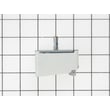
How to fix F7 error code ge oven?
On the GE JBP79WB4WW electric range, an F7 error code indicates a problem with the oven temperature sensor circuit (most often a shorted sensor or wiring issue). We fix it by resetting power, inspecting the sensor wiring, and replacing the oven temperature sensor if it tests out of range.
What to do first (safe, quick steps)
- Turn off power at the breaker for 1 minute, then restore power and see if F7 returns.
- If F7 comes back, shut off power again before accessing any wiring.
- Check for obvious damage: pinched wires, melted insulation, or a loose connector at the sensor.
- If the oven recently had a spill or heavy cleaning, make sure the sensor area is dry and free of residue.
The most common fix: test and replace the temperature sensor
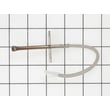
The oven temperature sensor is a probe inside the oven cavity that tells the control board the oven temperature. When it shorts or its wiring shorts, the control triggers F7.
Use a multimeter to check sensor resistance at room temperature (power off and sensor unplugged). Most GE-style oven sensors read around 1,080 ohms at room temperature; a reading near 0 ohms indicates a short.
| Check | What you’re looking for | What it means |
|---|---|---|
| Sensor resistance | Around 1,080 ohms at room temp | Sensor is likely OK |
| Very low resistance | Near 0 ohms | Sensor or wiring is shorted |
| Wiring/connector | Burn marks, loose fit, damaged insulation | Repair wiring/connection |
If the sensor is shorted or damaged, replace it with the correct part for your range, such as the wall oven temperature sensor WB23X5340 (verify fit by model before ordering).
Why it matters
A bad temperature sensor can prevent the oven from heating correctly, cause overheating, or stop baking and broiling entirely. Fixing the sensor circuit restores accurate temperature control and reliable cooking.
Last updated: February 2026
How do I find the model number on my JBP79WB4WW?
The model number for your GE electric range is printed on the appliance’s rating label; on model JBP79WB4WW it’s typically found around the oven door frame area or on the storage drawer frame. Match the full model number exactly before ordering parts.
Where to look on a GE electric range
Check these common label locations (use a flashlight and look for a silver or white sticker/plate):
- Along the oven door frame (open the oven door and look on the front frame)
- On the lower front frame behind the storage drawer (pull the drawer out)
- On the side trim just inside the door opening
- Occasionally on the back panel (if the range is accessible)
What to write down (so parts fit)
Record the information exactly as shown on the label:
- Model number (for example, JBP79WB4WW)
- Serial number
- Any revision or suffix characters
Quick check table
| Label item | Why it matters |
|---|---|
| Model number | Ensures diagrams and parts match your exact range |
| Serial number | Helps confirm production run details for some parts |
| Full suffix (letters/numbers) | Prevents ordering a similar but incompatible part |
Why it matters
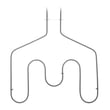
GE ranges often share similar designs across model families; one character difference can change the correct bake element, surface element switch, or oven sensor. Once you confirm the model number, you can confidently choose parts like the range bake element WB44T10011 or wall oven temperature sensor WB21X22134 for repairs.
Last updated: March 2026
What is the average lifespan of JBP79WB4WW?
The average lifespan of a GE electric range like model JBP79WB4WW is 13 to 15 years with normal household use and basic maintenance. Replacing wear items as they fail (elements, switches, gaskets) often keeps the range cooking reliably for its full service life.
What affects lifespan the most
These factors have the biggest impact on how long an electric range lasts:
- Heat stress from frequent high-temperature baking or broiling
- Spills and boilovers that seep under the cooktop and damage wiring
- Door seal condition (heat loss makes components work harder)
- Power quality (loose outlet, burned terminal block, or voltage issues)
- Cleaning habits (avoiding harsh scraping on glass/trim and keeping vents clear)
Common parts that extend usable life
If performance drops, these are typical repair points on an electric range:
- Oven not heating evenly: bake or broil element
- Temperature swings: oven temperature sensor
- Burner won’t regulate: surface element control switch
- Heat leaking or long preheat: oven door gasket
Examples of model-matched parts
| Symptom | Part example for JBP79WB4WW |
|---|---|
| Weak or no bake heat | Range bake element WB44T10011 |
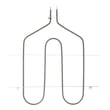
| Poor broil performance | Range broil element WB44T10009 |
| Oven temperature inaccurate | Wall oven temperature sensor WB23X5340 |
| Heat leaking around door | Range oven door gasket WB04T10086 |
Why it matters
Knowing the expected 13 to 15 year lifespan helps you decide between repair and replacement. If the range is heating inconsistently or taking longer to cook, targeted part replacement is often the most cost-effective way to restore normal baking and broiling.
Last updated: March 2026