


How many tons is a 48000 BTU AC unit?
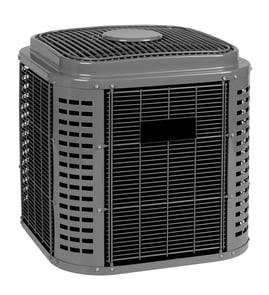
A 48,000 BTU air conditioner is 4 tons of cooling capacity (because 1 ton equals 12,000 BTU per hour). For an Amana RCC48A2A central air conditioner, “48,000 BTU” and “4-ton” are two ways of describing the same size class.
Quick conversion (BTU to tons)
Use this simple formula:
- Tons = BTU/hr ÷ 12,000
- 48,000 ÷ 12,000 = 4 tons
- This is a capacity rating, not the unit’s electrical power draw
| Cooling capacity | Equivalent tons | Common name |
|---|---|---|
| 36,000 BTU/hr | 3 tons | 3-ton unit |
| 48,000 BTU/hr | 4 tons | 4-ton unit |
| 60,000 BTU/hr | 5 tons | 5-ton unit |
Why it matters for your Amana RCC48A2A
Correct tonnage helps the system cool efficiently and control humidity. A mismatched size can cause comfort problems and higher operating costs.
- Oversized systems can short-cycle (turn on and off too often)
- Undersized systems can run constantly and still not keep up
- Proper sizing also depends on ductwork, insulation, windows, and local climate
Related repair note (when capacity seems “low”)
If your 4-ton system is not cooling like a 4-ton unit, the issue is usually not the tonnage rating. Common causes include:
- Dirty condenser coil or blocked outdoor airflow
- Weak indoor airflow (dirty filter, blower issue, duct restriction)
- Electrical problems such as a failing run capacitor
- Refrigerant charge issues (handled by a licensed HVAC technician)
If you are troubleshooting a no-start or hard-start condition, the outdoor unit run capacitor is a common wear item; see the capacitor CAP050800440RTP.
Why it matters
Knowing that 48,000 BTU = 4 tons keeps you from ordering the wrong parts, comparing the wrong equipment, or misdiagnosing performance problems that are actually airflow or electrical related.
Last updated: January 2026
How to look up AC model number?
To look up your Amana central air conditioner model number, find the unit’s data tag and copy the model exactly as printed. For this parts page, the model number format you’re matching is RCC48A2A; using the exact model number helps ensure the parts list fits your outdoor condensing unit.
Where to find the model number on a central AC
On most outdoor condensing units, the model number is on a rating plate or label. Check these common spots:
- Outside of the cabinet on a side panel near the refrigerant line connections
- Behind the service access panel (power must be off before opening)
- Near the electrical compartment cover
- On the inside edge of a removable panel
- Occasionally on the back side of the unit where it faces the house
How to use the model number to get the right parts
Once you find the tag, use these steps so you get an exact match:
- Write down the model number and serial number exactly (letters, numbers, and dashes)
- Match the model number to the parts listing for RCC48A2A
- If the tag shows a longer number string, use the full model as printed on the label
- Use the model number first, then confirm the part by description and location in the unit
Quick checklist: model number vs. serial number
| Item | What it’s used for | Example format |
|---|---|---|
| Model number | Identifies the design and correct replacement parts | RCC48A2A |
| Serial number | Identifies the production run and date information | Varies by brand |
Why it matters
Central air conditioner parts like a run capacitor, contactor, or fasteners can look similar across Amana units, but electrical ratings and mounting details vary by model. Using the exact model number reduces wrong-part returns and prevents repeat breakdowns.
Related DIY help
If you’re tracing a label diagram or checking electrical components, we use these guides often:
- How to use a multimeter to test electrical parts video
- How to find your appliance model number (and what it means for parts)
Last updated: January 2026
How do I reset an Amana air conditioner?
For an Amana RCC48A2A central air conditioner (outdoor condensing unit), there is no single universal “reset button”; the practical reset is a safe power-cycle at the disconnect or breaker, then verifying the control circuit is calling for cooling.
Safe reset steps (power-cycle)
- Set the thermostat to OFF.
- Turn OFF power to the outdoor unit at the service disconnect (or the correct breaker).
- Wait 5 minutes (this lets pressures equalize and clears many lockouts).
- Turn power ON.
- Set the thermostat to COOL and lower the setpoint 3 to 5 degrees.
- Wait 10 minutes for the outdoor unit to start (many systems have a built-in delay).
If it still will not start
These checks help separate a control issue from a failed component.
- Confirm the indoor blower runs when cooling is requested.
- Check the outdoor disconnect is fully seated and fuses (if used) are good.
- Listen for the contactor pulling in; if it does not, the issue is often 24V control power (thermostat, float switch, transformer, wiring).
- If the contactor pulls in but the compressor or fan will not run, a weak or failed run capacitor is common.
- Inspect wiring for burned terminals or loose spade connectors.
Parts that commonly relate to “won’t start” symptoms
| Symptom | Common cause | Example part on this model page |
|---|---|---|
| Hums, hard-starts, fan slow | Weak run capacitor | Capacitor CAP050800440RTP |
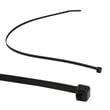
| Intermittent operation | Loose wiring harness | Tie WPW10339879 |
| Rattling panels, loose electrical cover | Missing fastener | Screw WP90767 |
Why it matters
A proper reset prevents short-cycling and protects the compressor. If the unit repeatedly needs resetting, that usually points to an electrical problem (capacitor, wiring, control voltage) that should be corrected instead of repeatedly power-cycling.
Last updated: January 2026
What are the main parts of a central air conditioner?
A central air conditioner system is built around four core refrigeration components: the evaporator coil (indoor), condenser coil (outdoor), compressor (outdoor), and a metering device (expansion valve or fixed orifice). For the Amana RCC48A2A condensing unit, the outdoor section centers on the compressor, condenser coil, and electrical start/run parts.
Main components and what they do
- Evaporator coil (indoor coil): Absorbs heat from indoor air; refrigerant boils inside the coil.
- Condenser coil (outdoor coil): Rejects heat outdoors; refrigerant condenses back to a liquid.
- Compressor: Pumps refrigerant through the system and creates the pressure difference needed for heat transfer.
- Metering device (expansion valve or fixed orifice): Drops refrigerant pressure and controls flow into the evaporator.
- Blower and ductwork (indoor air handler/furnace): Moves air across the evaporator and through the home.
- Controls and safety devices: Thermostat, contactor/relay, pressure switches, and wiring that manage operation.
Parts you will commonly service on the outdoor unit
On an outdoor condensing unit like the Amana RCC48A2A, electrical and mounting hardware are frequent service items.
- Run capacitor: Helps the compressor and fan motor start and run efficiently (see capacitor CAP050800440RTP).
- Wiring management: Secures and protects wiring from vibration and rubbing (see tie WPW10339879).
- Fasteners: Used for panels, brackets, and component mounting (see screw WP90767 and keps nut WP488130).
Quick “indoor vs outdoor” breakdown
| Location | What you typically find | What it affects |
|---|---|---|
| Indoor (air handler/furnace) | Evaporator coil, blower, air filter, drain | Cooling performance, humidity removal, airflow |
| Outdoor (condensing unit) | Compressor, condenser coil, fan, capacitor, controls | Heat rejection, system pressures, starting/running |
Why it matters
Knowing which parts are indoor vs outdoor helps you troubleshoot faster. For example, weak cooling with normal airflow often points to refrigeration-side issues, while hard-starting or humming at the outdoor unit often points to electrical components like a run capacitor.
Last updated: January 2026