Owner’s manual
 Error Codes





Does a fridge need a 15 or 20 amp outlet?
For a KitchenAid KBRS22KWMS6 bottom-mount refrigerator, we recommend a dedicated 120-volt circuit that can handle compressor start-up surges; a 20-amp circuit is the best practice, even though the refrigerator’s normal running draw is typically much lower.
- Use a dedicated 120 V branch circuit for the refrigerator (no other major loads on the same circuit).
- A 20-amp circuit is preferred to handle brief start-up spikes.
- A 15-amp circuit often works for day-to-day running, but nuisance trips are more likely if anything else shares the circuit.
- Use a properly grounded, 3-prong outlet; avoid extension cords.
| If your setup is... | What we recommend | Why |
|---|---|---|
| New install or remodel | 20 A dedicated circuit | Best protection against start-up surges |
| Existing 15 A dedicated circuit | Keep it if it’s stable | Many refrigerators run fine on 15 A when dedicated |
| 15 A shared with microwave/toaster/space heater | Move fridge to dedicated circuit | Shared loads cause breaker trips and voltage drop |
Refrigerators cycle on and off all day. When the compressor starts, it can briefly pull more current than it does while running. A dedicated 20-amp circuit reduces breaker trips and helps the electronic controls run more reliably.
- Unplug other appliances on the same circuit and test the refrigerator alone.
- Check the outlet for heat damage or a loose fit.
- Clean condenser coils and make sure the condenser fan area is clear.
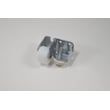
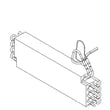
- If the compressor struggles to start (clicking, repeated attempts), a failed start component can be involved; for this model, common start-related parts include the start device WP2320150 and the refrigerator run capacitor WPW10662129.
For electrical requirements and grounding details specific to your unit, follow the KBRS22KWMS6 owner's manual.
Last updated: February 2026
What's the average lifespan of a KitchenAid refrigerator?
KitchenAid refrigerators typically last 12 to 15 years on average, and 10 to 17 years is a normal real-world range. For your KitchenAid KBRS22KWMS6 bottom-mount refrigerator, regular cleaning, good airflow, and fixing small issues early are what most often determine whether you land on the high end of that range.
Most refrigerators fail early from heat stress, poor airflow, or neglected maintenance. These factors have the biggest impact:
- Condenser cleanliness (dust buildup makes the compressor run hotter and longer)
- Door seal condition (air leaks cause long run times and temperature swings)
- Fan performance (evaporator and condenser fans keep heat moving out of the system)
- Defrost system health (prevents frost that blocks airflow)
- Stable temperatures (fresh food about 37°F, freezer about 0°F)
Use this simple schedule to extend service life:
- Every 3 to 6 months: vacuum the condenser area and clear lint from vents
- Monthly: check doors close fully; clean and dry gasket surfaces
- Anytime you hear new noise: inspect for fan rubbing or ice buildup
- After power outages: confirm temps return to normal within 24 hours
If cooling gets weak, temperatures swing, or you hear unusual fan noise, these parts are often involved:
| Symptom | Common cause | Example part for KBRS22KWMS6 |
|---|---|---|
| Warm fridge, freezer OK | Poor airflow at evaporator | Refrigerator evaporator fan motor WPW10128551 |
| Frost buildup, warm temps | Defrost failure | Refrigerator defrost heater WP12729128 |
| Door not sealing, moisture | Worn gasket | Whirlpool refrigerator door gasket (gray) W10443316 |
A refrigerator that runs longer to hold temperature uses more energy and puts extra heat load on the sealed system. Keeping airflow strong and doors sealing well is the most reliable way to push lifespan toward the 15+ year mark.
For model-specific care steps and cleaning guidance, follow the KBRS22KWMS6 owner's manual.
Last updated: February 2026
Is KitchenAid considered high-end?
Yes. KitchenAid is widely considered a premium (upper-mid-range) appliance brand; it typically offers higher-end design, materials, and features than entry-level brands, without being positioned as ultra-luxury. For your KitchenAid KBRS22KWMS6 bottom-mount refrigerator, that usually translates to stronger fit-and-finish and more serviceable, long-life components.
KitchenAid is “high-end” when you compare it to basic, value-focused refrigerators. In day-to-day ownership, we see the difference most often in:
- More refined temperature management and controls
- Heavier-duty door hardware and interior shelving systems
- Quieter operation (when fans and airflow parts are in good condition)
- Better overall parts support for repairs over the life of the refrigerator
Even premium refrigerators can act “cheap” when airflow, defrost, or door sealing issues start. These steps keep performance consistent:
- Keep condenser area clean so heat can dissipate efficiently
- Confirm doors close and seal fully; fix gaps before frost and moisture build up
- Avoid overpacking; blocked vents cause warm spots and poor circulation
- If you hear fan noise or warming, inspect the evaporator area for ice buildup
- Use the settings and care guidance in the owner's manual
When symptoms show up, these are some of the most common repair directions for this model:
| Symptom | Common cause | Example part on this model page |
|---|---|---|
| Warm fridge, freezer OK | Weak/no evaporator airflow | Refrigerator evaporator fan motor WPW10128551 |
| Frost buildup, warming over time | Defrost system issue | Refrigerator defrost heater WP12729128 |
| Clicking, won’t start cooling | Start components failing | Start device WP2320150 |
| Temps inconsistent or controls unresponsive | Control issue | Refrigerator electronic control WPW10503278 |
Calling KitchenAid “high-end” is useful because it sets expectations: the KBRS22KWMS6 is built to be repaired, not treated as disposable. When cooling, airflow, or defrost problems are handled early, you typically restore quiet operation, stable temperatures, and food preservation.
Last updated: February 2026
What to avoid when buying a refrigerator?
Avoid buying a refrigerator without measuring your opening and delivery path first, and avoid paying extra for features you will not use. For a KitchenAid bottom-mount style like model KBRS22KWMS6, prioritize fit, usable capacity, and serviceable core cooling parts over flashy add-ons; then confirm setup and care details in the owner's manual.
- Skipping measurements (width, height, depth, and door swing clearance).
- Ignoring ventilation needs; tight installs can run hotter and shorten component life.
- Choosing “smart” features as the main decision factor; they add complexity and cost.
- Overlooking freezer layout; bottom-mount baskets and rails must match how you actually store food.
- Buying a unit with hard-to-maintain seals; a poor door seal wastes energy and causes frost.
| What to check | What “good” looks like | What to avoid |
|---|---|---|
| Fit and access | Measured opening plus clearance for doors | “It should fit” guesses |
| Cooling system basics | Simple, proven design; easy airflow | Blocked vents, cramped alcoves |
| Door seal quality | Even contact all around | Gaps, warped doors, frequent condensation |
| Parts support | Common wear parts available | Unusual parts that are hard to source |
Most refrigerator headaches come from installation fit issues, airflow restrictions, and door sealing problems, not from the cabinet finish. A good fit and a tight seal help the compressor run less, keep temperatures stable, and reduce frost and odor issues.
If you already own a KBRS22KWMS6 and are comparing repair versus replace, these are common “core” items that affect performance:
- Whirlpool refrigerator door gasket (gray) W10443316 (air leaks, frost, warm temps)
- Refrigerator electronic control WPW10503278 (temperature regulation)
- Refrigerator evaporator fan motor WPW10128551 (air circulation)
Last updated: February 2026