Owner’s manual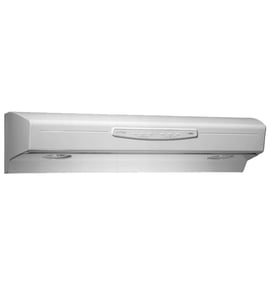



How do I know what model range hood I have?
To identify your Kenmore range hood model, find the model/serial label on the hood and match the full model number exactly (for example, 23352445590). On many hoods, the label is on the top, the underside, or behind the grease filter; our 23352445590 owner's manual also points you to the product specification label.
Where to look for the model number label
Check these common spots on a Kenmore range hood:
- On the top of the hood (often easiest to see from inside a cabinet)
- On the underside of the hood near the light area
- Behind or next to the grease filter (remove the filter to inspect)
- Near the wiring cover area (power off first)
- On the inside wall of the hood housing
How to read the label correctly
Model labels can include several numbers; use these tips so you capture the right one:
- Write down the model number and serial number exactly as printed
- Include all digits and any letters; do not shorten the number
- If you see multiple numbers, the model number is usually labeled “Model”
- Take a clear photo so you can zoom in and avoid transposed digits
| What you see on the label | What to do with it |
|---|---|
| Model number (example: 23352445590) | Use it to look up parts diagrams and compatible parts |
| Serial number | Use it to confirm production details when ordering or servicing |
| Electrical ratings (volts/amps) | Use it to match wiring and replacement electrical parts |
Why it matters
Using the exact model number ensures you get the correct Kenmore range hood parts (such as a grease filter, control panel, or motor) and follow the right service and installation information for your specific hood.
Last updated: January 2026
Can you put a 30 hood over a 36 cooktop?
We don’t recommend installing a 30-inch range hood over a 36-inch cooktop because it won’t capture smoke, grease, and odors as effectively at the outer burners. For best performance, match the hood width to the cooktop width (36 inches over a 36-inch cooktop).
What we recommend for best ventilation
- Choose a hood that is at least as wide as the cooktop (36-inch hood for a 36-inch cooktop).
- Mount the hood so the top of the hood is about 24 to 30 inches above the cooking surface (per the Kenmore 23352445590 guidance).
- Use the correct ducting layout and size for your installation (vertical or horizontal) to reduce airflow restriction.
- Keep filters clean so airflow stays strong.
- If you are installing non-ducted (recirculating), use the correct non-ducted filter setup described in the 23352445590 owner's manual.
What happens if you use a 30-inch hood anyway
A 30-inch hood can work in a limited way, but these are the common tradeoffs:
- More smoke and steam escape at the left and right edges.
- Grease buildup increases on nearby cabinets and backsplash.
- Odors linger longer, especially when using front or outer burners.
- You may run the fan on higher speeds more often (more noise).
Quick sizing guide
| Cooktop width | Recommended hood width | Best use case |
|---|---|---|
| 30 inches | 30 inches | Standard coverage |
| 36 inches | 36 inches | Full edge-to-edge capture |
| 36 inches | 42 inches (optional) | Heavy cooking, high heat, frequent frying |
Why it matters
Range hoods work best when the capture area covers the full cooking surface. When the hood is narrower than the cooktop, the “capture zone” misses the outer burners, so performance drops even if the motor is working correctly.
Last updated: January 2026
Is it worth repairing a range hood?
Yes, repairing a Kenmore range hood model 23352445590 is usually worth it when the problem is a common wear item (filter, knob, wiring, control) or a single failed component; those fixes typically cost far less than replacing the entire hood and keep your kitchen ventilation working as designed.
When repair is the better choice
Repair makes sense when the hood still fits your kitchen and the issue is isolated.
- The fan runs but airflow is weak (often a clogged grease filter or blocked duct)
- The fan is noisy but the housing is solid (motor or retainer components may be the cause)
- Lights or fan controls are intermittent (control board, harness, or control panel issues)
- The hood is properly installed at the recommended height (typically 24 to 30 inches above the cooking surface)
- You can restore performance with routine cleaning (grease buildup on the fan or filter is a common culprit)
Helpful starting point: check the safety, cleaning, and installation guidance in the 23352445590 owner's manual.
When replacement is the better choice
Replacement is usually the smarter move when multiple major systems are failing or the hood no longer meets your needs.
- The hood has repeated electrical problems (multiple components failing over time)
- The cabinet layout or venting plan is changing (remodel, duct reroute, new cooktop)
- The hood is heavily corroded, damaged, or the mounting is no longer secure
- You want a meaningful upgrade in ventilation performance (higher CFM, quieter operation)
Quick cost and effort comparison
Use this as a practical decision guide.
| Situation | Typical best move | Why |
|---|---|---|
| One part failed (knob, harness, control) | Repair | Targeted fix, lower cost |
| Airflow issue from grease or duct restriction | Repair/maintenance | Cleaning and duct checks restore performance |
| Motor failure plus other issues | Compare repair vs replace | Motor is a higher-cost repair |
Parts that commonly make repair worthwhile
For this model, these are common repair paths we see.
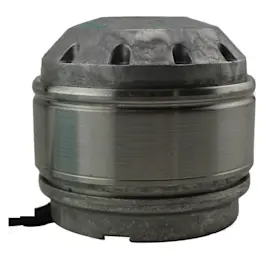
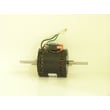
- Motor S97010736 (fan will not run, hums, or is loud)
- Range hood wire harness S97007682 (intermittent fan or lights)
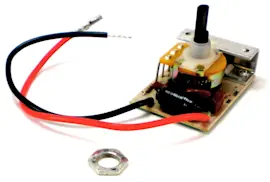
- Control board S97011801 (erratic operation, fan turns on/off unexpectedly)
- Cook top side trim kit range hood grease filter, 2-pack S97007894 (poor capture, grease buildup)
Why it matters
A working range hood helps remove smoke, grease, and cooking odors. Keeping filters clean and the duct path clear also reduces grease accumulation on the fan and improves overall ventilation performance.
Last updated: January 2026
How to calculate range hood size?
For Kenmore range hood model 23352445590, we size the hood by matching (or slightly exceeding) your cooktop width, then confirming the correct mounting height and venting plan. A hood that is at least as wide as the cooking surface captures smoke and grease more effectively.
Step 1: Choose the right hood width
Measure the cooktop or range surface left-to-right (not the cabinet opening). Then select a hood width that covers the full cooking area.
- Choose a hood at least as wide as the cooktop.
- For better capture, go up to 6 inches wider total when space allows.
- Common widths are 24, 30, and 36 inches.
- If cabinets flank the range, the cabinet opening can limit maximum hood width.
- Wider coverage matters most if you frequently sear, stir-fry, or use high heat.
| Cooktop width | Recommended hood width | Best practice |
|---|---|---|
| 24 in | 24 in (or 30 in if space allows) | Wider improves capture at the front burners |
| 30 in | 30 in (or 36 in if space allows) | Common upgrade for heavy cooking |
| 36 in | 36 in (or larger if available) | Match full surface coverage |
Step 2: Confirm mounting height for this model
Mounting height affects how well the fan captures heat, smoke, and grease. For model 23352445590, follow the clearance and mounting-height guidance in the 23352445590 owner's manual.
- Use the manual’s specified clearance range for safe operation.
- Keep the hood level and centered over the cooktop.
- If you change height, expect performance to change (higher usually captures less).
Step 3: Make sure the venting plan supports performance
Even a correctly sized hood can underperform if the ducting is restrictive.
- Decide on vertical, horizontal, or non-ducted discharge.
- For ducted setups, vent to the outdoors and use metal ductwork.
- Minimize elbows and transitions to reduce airflow loss.
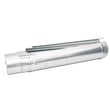
- If you need a 6-inch duct component, match your setup to a compatible part such as the range hood vent duct, 6-in 406.
Why it matters
Correct width plus correct mounting height and ducting reduces lingering odors, limits grease buildup on cabinets, and improves overall kitchen ventilation.
Last updated: January 2026