Error Codes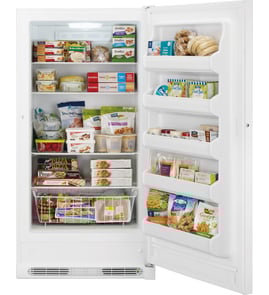



How to tell cubic feet of Kenmore refrigerator by model number?
For Kenmore model 2539269011, the model number by itself does not reliably tell cubic feet. The dependable way is to look up the capacity in the model’s specs, or calculate it from the interior measurements (inches) and convert to cubic feet.
- Look up the model specs using the full model number 2539269011.
- Measure the usable interior space (not the outside cabinet).
- Calculate cubic feet using the formula below.
- If you only need a quick estimate, measure the main compartment and subtract obvious non-storage areas (evaporator cover, fan housing, thick insulation intrusions).
- Measure interior height, interior width, and interior depth in inches.
- Multiply:
H × W × D = cubic inches. - Convert:
cubic inches ÷ 1728 = cubic feet.
| Interior volume | Calculation | Result |
|---|---|---|
| Cubic inches to cubic feet | cubic inches ÷ 1728 | cubic feet |
| 34,560 cubic inches | 34,560 ÷ 1728 | 20.0 cu ft |
Kenmore model numbers can be shared across similar platforms, and capacity can vary by configuration (shelves, evaporator layout, liner design). Measuring the interior or checking the model’s published specs gives the correct cubic feet.
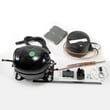
Capacity is about interior volume, but cooling performance depends on sealed-system and airflow parts. If you are troubleshooting cooling while checking size, these model-matched parts are commonly involved:
Knowing cubic feet helps you compare storage space, plan food organization, and estimate energy use. Measuring the interior gives a practical, real-world capacity based on usable space.
Last updated: February 2026
What's the average lifespan of a Kenmore refrigerator?
Kenmore refrigerators typically last 12 to 15 years. With good airflow, clean condenser coils, and tight door seals, many run closer to 15 years; heavy use, poor ventilation, and worn gaskets often shorten life.
Kenmore is a brand used across multiple manufacturers, so lifespan varies by design and usage. Here are practical averages we see most often:
| Appliance type | Typical lifespan | Notes |
|---|---|---|
| Top-freezer refrigerator | 12 to 15 years | Usually simplest, often longest-running |
| Side-by-side refrigerator | 10 to 14 years | More fans and controls to maintain |
| French-door refrigerator | 10 to 13 years | More doors, seals, and features |
| Upright freezer (like Kenmore 2539269011) | 12 to 16 years | Fewer warm-air openings than a fridge |
- Keep condenser coils clean (dust buildup raises compressor heat)
- Leave ventilation space around the cabinet (especially behind and above)
- Keep door seals clean and closing tightly
- Avoid overpacking so air can circulate
- Set stable temperatures (avoid frequent warm-ups)
- Runs constantly or struggles to hold temperature
- Loud clicking, buzzing, or repeated start attempts
- Frost buildup that returns quickly after defrosting
- Water leaks or sweating around the door
- Food spoils faster even after temperature adjustments
Once cooling performance drops, the compressor and sealed system work harder, which increases energy use and can lead to more expensive repairs. Catching airflow and sealing problems early often adds years of service.
If you are troubleshooting cooling issues on your Kenmore 2539269011 upright freezer, common repair paths include checking the sealed-system components and start circuit parts such as the overload protector 216100113.
Last updated: February 2026
Where is the model number on a Kenmore upright freezer?
On a Kenmore upright freezer like model 2539269011, the model number is printed on a rating label inside the cabinet or on the exterior cabinet. The most common spots are just inside the door opening, on an interior side wall, or near the top (ceiling) of the freezer compartment.
- Inside the freezer on a side wall (often near the front edge)
- Inside the freezer near the top liner (ceiling area)
- On the door frame around the opening (hinge side or latch side)
- Behind the lower front kick plate or toe grille (if your unit has one)
- On the back exterior panel of the cabinet
The label usually includes the model number and serial number. For parts lookup and ordering, we recommend recording:
- Model number (example: 2539269011)
- Serial number
- Any revision or production code listed near the model
If you find multiple numbers, use this guide:
| Label item | What it’s used for | Example |
|---|---|---|
| Model number | Identifies the exact freezer design for parts | 2539269011 |
| Serial number | Identifies production run and date coding | Varies |
| Part number | Identifies a replacement part, not the freezer | Varies |
Kenmore model numbers can look similar across different upright freezers, but small design changes affect shelves, door parts, and sealed-system components. Using the exact model number helps match the correct parts list and diagrams the first time.
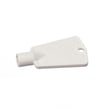
If you’re replacing a door lock key, this model’s parts list includes the key 297147700.
Last updated: February 2026
How to clean coils on Kenmore upright freezer?
To clean the coils on your Kenmore 2539269011 upright freezer, we unplug the freezer, expose the condenser area, then gently brush and vacuum dust off the coils and surrounding air passages. Clean coils help the compressor run cooler and maintain steady freezing.
- Unplug the freezer (or switch off the breaker) before cleaning.
- Protect floors with a towel or cardboard if you need to pull the freezer out.
- Use a soft coil brush and a vacuum with a crevice tool; avoid sharp tools.
- If you see oily residue, heavy corrosion, or damaged tubing, stop and have the sealed system checked.
- Move the freezer for access: Pull it straight out from the wall a few inches to a couple feet, depending on where the coils are located.
- Locate the condenser area: Many upright freezers have coils behind a lower rear cover or near the bottom rear.
- Dry brush first: Brush dust off the coil fins and the surrounding frame so it loosens.
- Vacuum thoroughly: Vacuum the loosened dust from the coils, floor area, and any air intake openings.
- Check airflow parts: Make sure nothing blocks the condenser fan area (if your design uses one).
- Restore power and monitor: Plug back in and confirm the freezer returns to normal operation.
| Home environment | Coil cleaning interval |
|---|---|
| Typical home | Every 6 months |
| Pets, dusty area, garage | Every 3 months |
| Visible dust buildup | Clean now, then set a schedule |
Dirty condenser coils trap heat, which makes the compressor work longer and hotter. That can cause warmer cabinet temperatures, higher energy use, and more wear on cooling components like the compressor and condenser.
If cleaning helps only briefly, we often check for airflow or cooling-system issues. For this model, parts on the list that relate to cooling include the air condenser 5303304537 and compressor 5304443412.
Last updated: February 2026
What causes an upright freezer to stop freezing?
An upright freezer like Kenmore 2539269011 usually stops freezing because airflow is blocked by frost, the door is leaking warm air, or the sealed-system or compressor circuit is not starting reliably. Start with simple checks (power, settings, door seal) before testing electrical parts.
- Confirm the freezer has power and the outlet is working (try a lamp in the same outlet).
- Make sure the temperature control is set colder and was not bumped.
- Check the door closes fully and the gasket is sealing all the way around.
- Look for heavy frost on the inside back wall; that often points to an airflow or defrost problem.
- Listen for the compressor: a steady hum is normal; repeated clicking can indicate a start issue.
| What’s happening | Common cause | Typical symptom |
|---|---|---|
| Warm freezer, compressor runs a lot | Dirty condenser area or poor airflow | Cabinet feels warm on sides, slow freezing |
| Compressor clicks on and off | Start device/overload issue | Click every few minutes, little or no cooling |
| Frost packed on back wall | Defrost system issue or door leak | Fan noise changes, reduced airflow |
| No cooling and little compressor run time | Control/thermostat issue | Unit seems “off” even though powered |
| Runs but never gets cold | Sealed-system problem (refrigerant restriction/leak) | Long run time, weak cooling |
If you confirm the compressor is trying to start (hums, then clicks off), the compressor protection circuit is a key area to inspect. A failed overload can shut the compressor down to prevent damage.
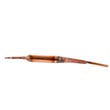
If cooling is weak and a technician confirms a sealed-system restriction, the filter drier is one component used in sealed-system service.
When an upright freezer stops freezing, food safety and compressor health are both at risk. Catching a door-seal leak or frost blockage early can prevent long run times, overheating, and more expensive repairs.
Last updated: February 2026