Error Codes




How do I know my GE fridge model?
To identify your GE refrigerator model, we look for the model and serial tag inside the fresh food (refrigerator) compartment; on many GE French door and bottom-mount units like model CFE28TP2MHS1, it’s typically on a side wall near the top or on the ceiling area.
Where to check first (fastest spots)
Check these locations in order; the tag is usually a sticker or metal plate with MODEL and SERIAL:
- Inside the fresh food compartment on the upper left wall
- Inside the fresh food compartment on the ceiling/top liner
- On a side wall near the crisper or deli area (still inside the refrigerator section)
- Along the door frame area (open the doors and look around the inner frame)
- Behind the crisper drawers (remove drawers for a clearer view)
What the tag should look like
Most GE tags include a model number similar to CFE28TP2MHS1 plus a serial number. Write both down; the serial number helps match production details when selecting parts.
| What you’ll see | Why it matters | Example |
|---|---|---|
| Model number | Ensures parts fit your exact refrigerator | CFE28TP2MHS1 |
| Serial number | Helps confirm version and production run | (varies) |
| Brand | Confirms you’re in the right parts family | GE |
Why it matters for parts and troubleshooting
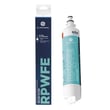
Using the exact model number prevents ordering the wrong component, especially for model-specific items like an ice maker WR30X28731, refrigerator main control board WR55X46805, or GE refrigerator water filter RPWFE.
Quick tip if the label is hard to read
- Take a clear photo with your phone (no flash glare)
- Wipe gently with a damp cloth (do not soak the label)
- Copy the model number exactly, including all letters and numbers
Last updated: February 2026
Why is the bottom freezer refrigerator not popular?
Bottom-freezer refrigerators (including the GE CFE28TP2MHS1 bottom-mount style) are less popular mainly because many people prefer eye-level access to fresh food and a simpler layout; the freezer drawer can feel less convenient, and repairs can be more involved when cooling or ice issues show up.
The most common reasons shoppers avoid bottom-mount designs
- Fresh-food access is not always “best”: French-door and side-by-side layouts often feel easier for daily grabbing.
- Freezer drawer ergonomics: Bending to reach baskets, digging for items, and lifting heavy frozen foods can be annoying.
- Organization tradeoffs: Deep drawers can hide items; baskets help, but some users still prefer shelves.
- Ice and water complexity: Dispensers and ice makers add components that can need service over time.
- Perceived repair cost: When cooling performance is off, troubleshooting can involve sensors, fans, or controls.
Reliability and efficiency: what’s true in practice
Bottom-mount refrigerators are not “automatically” the least reliable or least efficient. Like any modern refrigerator, reliability depends more on the specific design (ice maker, dispenser, electronics) and maintenance than on freezer location.
Here is a practical way to think about it:
| Topic | What customers often notice | What usually drives it |
|---|---|---|
| Cooling consistency | Warm fridge, soft ice, temp swings | Airflow restrictions, dirty coils, sensor issues |
| Noise | Fan or buzzing sounds | Evaporator/condenser fan, compressor start components |
| Ice production | Slow or no ice | Water filter restriction, ice maker faults, dispenser issues |
If popularity is tied to “problems,” check these first
- Replace the water filter on schedule; a clogged filter can reduce water flow to the ice maker and dispenser (see GE refrigerator water filter RPWFE).
- Keep vents clear inside the fresh-food section and freezer drawer.
- Clean dust from the condenser area to help heat release.
- If temperatures seem inaccurate, a failed sensor can mislead the control board (see refrigerator temperature sensor WR55X10025).
- Use our DIY help for common symptoms and fixes: common refrigerator ice maker problems and solutions.
Why it matters
Popularity is mostly about day-to-day convenience and layout preference, not a universal performance flaw. If your GE CFE28TP2MHS1 is not cooling or making ice correctly, targeted maintenance and the right replacement parts usually solve the issue faster than changing refrigerator styles.
Last updated: February 2026
What is the most common problem with GE profile refrigerators?
The most common service complaint we see on GE Profile refrigerators like model CFE28TP2MHS1 is not cooling properly (fresh food warm, freezer warming, or temperatures swinging). Cooling issues often trace back to airflow, temperature sensing, or control problems rather than a single “one size fits all” failure.
Most common symptoms customers report
- Fresh food section is warm but freezer seems OK
- Freezer is warm and ice cream is soft
- Temperature fluctuates (too warm, then too cold)
- Unit runs constantly or seems to short-cycle
- Frost buildup on the back wall or around vents
Quick checks we recommend first (before replacing parts)
- Confirm settings: freezer near 0°F, fresh food near 37°F
- Make sure vents are not blocked by food packages
- Check door closure and gaskets; a small air leak can cause long run times
- Clean condenser area (dust buildup reduces heat removal)
- Power reset: unplug for 2 minutes, then restore power and recheck temps after several hours
Parts that commonly relate to “not cooling” on this model
If the basics look good, these model-matched parts are common suspects depending on the exact symptom:
| Symptom | What it often points to | Model-matched part to consider |
|---|---|---|
| Temps read wrong or swing | Bad sensor feedback | Refrigerator temperature sensor WR55X10025 |
| Random cooling behavior, dead display, odd operation | Control logic issue | Refrigerator main control board WR55X46805 |
| Compressor hums but struggles to start | Start/run component issue | Refrigerator run capacitor WR55X24064 |
Why it matters
A refrigerator that is even 5 to 10 degrees too warm can spoil food quickly and also overwork the compressor. Catching airflow, sensor, or control issues early helps prevent bigger cooling-system damage.
Related GE troubleshooting help
Last updated: February 2026
What is the average life expectancy of a GE refrigerator?
Most GE refrigerators, including the GE CFE28TP2MHS1 bottom-mount style, typically last 12 to 15 years with normal household use and basic maintenance. Units that get regular cleaning and have stable temperatures often reach the upper end of that range.
What affects refrigerator lifespan most
A refrigerator’s life is usually determined by how hard the sealed system and airflow components have to work day to day.
- Keeping condenser coils clean so the compressor runs cooler and less often
- Maintaining good door sealing (less warm air and moisture entering)
- Avoiding overpacking that blocks vents and reduces airflow
- Replacing clogged water filters on schedule (helps dispenser and ice maker performance)
- Fixing small issues early (noisy fan, warm spots, frequent cycling)
Maintenance checklist that helps you reach 12 to 15 years
These are the highest-impact steps we recommend for GE French door and bottom-mount refrigerators.
- Vacuum and brush the condenser area every 6 to 12 months
- Keep freezer and fresh food vents clear of food packages
- Set stable temps (typical targets: 0°F freezer, 37°F fresh food)
- Replace the water filter regularly using the correct cartridge, such as the GE refrigerator water filter RPWFE
- If temps swing or food freezes in the fresh food section, test the refrigerator temperature sensor WR55X10025
Quick guide: “normal aging” vs “repair now” symptoms
| What you notice | Often normal over time | Usually needs repair soon |
|---|---|---|
| Run time | Longer run time in hot weather | Runs almost constantly, won’t reach set temp |
| Noise | Mild hum, occasional clicks | Loud buzzing, repeated clicking, grinding fan noise |
| Cooling | Slightly slower recovery after door openings | Warm fridge or thawing freezer, frost buildup, error codes |
| Ice/water | Slower fill with an old filter | No ice, no water, leaking, dispenser not responding |
Why it matters
Knowing the typical life expectancy helps you decide whether to maintain, repair, or plan a replacement. On a 12 to 15 year timeline, routine care (coils, airflow, filter changes) is the most cost-effective way to protect the compressor and control system.
Last updated: February 2026