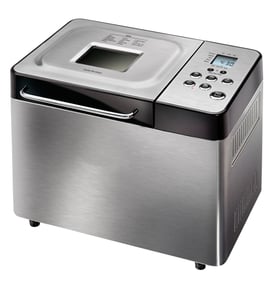

Is it cheaper to buy bread or make it in a bread machine?
Making bread in a bread machine like the Black & Decker B1600 is usually cheaper per loaf than buying comparable store-bought bread, especially for “artisan-style” loaves. The biggest savings come when you bake regularly and buy staples like flour and yeast in larger quantities.
Typical cost comparison (what most owners see)
Your exact cost depends on ingredients, loaf size, and local prices, but this is a practical way to compare.
| Option | Typical cost per loaf | Best for |
|---|---|---|
| Basic homemade (bread machine) | Lower | Everyday sandwich bread, frequent baking |
| Store-bought standard loaf | Low to medium | Convenience |
| Store-bought premium/artisan | Medium to high | Specialty breads, less frequent use |
What drives the savings
These factors usually decide whether the bread machine wins on cost.
- How often you bake: weekly (or more) recoups the machine cost faster.
- Ingredient buying habits: bulk flour and yeast reduce per-loaf cost.
- Recipe choices: add-ins (nuts, seeds, dried fruit) raise homemade cost.
- Waste control: baking smaller loaves or freezing slices prevents spoilage.
- Electricity use: typically a smaller factor than ingredient cost.
Quick “break-even” checklist
Use this to estimate payback without doing complicated math.
- Compare your usual store loaf price to your ingredient cost per loaf.
- Multiply the difference by loaves per month.
- Divide the bread machine purchase price by that monthly savings.
- If you bake 4 to 8 loaves per month, payback is commonly measured in months, not years.
Why it matters
If you already buy premium bread, a bread maker like the B1600 can cut your cost per loaf while giving you control over ingredients (salt, sugar, oils) and freshness. If you mostly buy the cheapest bread and bake only occasionally, the savings are smaller and convenience becomes the main benefit.
For more DIY help and tools that make small appliance repairs easier, see must have tools for appliance repair.
Last updated: February 2026
What is one drawback of using a bread machine?
One common drawback of using a bread machine (including the Black & Decker B1600) is reduced hands-on control: you are mostly locked into preset cycles, so fine-tuning kneading, rise time, crust, and loaf shape is harder than baking in an oven.
Common drawbacks you may notice
- Less flexibility than hand-kneading or stand-mixer dough followed by oven baking
- Loaf shape is often tall or square, not a traditional artisan shape
- A small hole or indentation can be left in the bottom from the kneading paddle
- Counter or cabinet space is needed for storage
- Cleanup can take longer (pan, paddle, lid area, and any baked-on residue)
What you can do to reduce the downside
- Use the machine for dough-only cycles, then shape and bake in your oven for better crust and shape
- Measure ingredients by weight when possible to improve consistency (especially flour and water)
- Keep yeast and salt separated until mixing starts to avoid weak rise
- Remove the paddle after the final knead (if your recipe timing allows) to reduce the bottom hole
Quick comparison: bread machine vs. oven baking
| Factor | Bread machine | Oven baking |
|---|---|---|
| Control over fermentation | Lower (preset) | Higher (you choose timing) |
| Loaf shape | Pan-shaped | Any shape (boule, batard, sandwich) |
| Convenience | High | Medium |
| Cleanup | Medium | Medium |
Why it matters
Bread quality is sensitive to temperature, ingredient ratios, and rise time. Preset programs are designed to work “well enough” in many kitchens, but they cannot perfectly match every flour type, humidity level, or recipe style.
For more DIY repair and maintenance basics that apply to small appliances like bread makers, use our are diy appliance repairs safe guide.
Last updated: February 2026
What's the best bread machine on the market?
The “best” bread machine depends on what you bake most often and how hands-off you want the process to be. For most households, we recommend choosing a reliable, well-reviewed machine with consistent kneading and baking performance, then matching features (loaf size, gluten-free, custom programs) to your routine.
How to choose the best bread machine (what matters most)
- Loaf size you actually use: 1 lb, 1.5 lb, or 2 lb capacity
- Kneading performance: strong motor, stable pan fit, consistent dough mixing
- Programs you will use: basic white, whole wheat, dough-only, quick bread, gluten-free
- Crust control: light/medium/dark settings
- Timer delay: useful for fresh bread in the morning (use food-safe ingredients)
- Pan and paddle design: easier release and simpler cleanup
Quick comparison: which “best” fits your needs
| If you want... | Look for... | Why it helps |
|---|---|---|
| The most consistent sandwich loaves | Larger capacity, strong knead cycle, stable temperature control | Better rise and even crumb |
| More customization | Custom program memory, mix-in dispenser, multiple dough cycles | More control over texture and add-ins |
| Best value | Proven reliability, simple controls, common loaf sizes | Fewer features, fewer headaches |
| Easiest cleanup | Nonstick pan, dishwasher-safe parts (if rated), simple paddle | Less sticking and scrubbing |
Where your Black & Decker B1600 fits in
The Black & Decker B1600 bread machine is a solid, practical choice when it is running correctly, especially for everyday loaves and dough cycles. If you are comparing “best on the market” options, use your B1600 experience as a baseline: noise level, loaf size, crust color consistency, and how often the paddle leaves a large hole.
Why it matters
Bread machines vary most in kneading strength and bake consistency. Those two factors determine whether you get a tall, even loaf or a dense, uneven result, even when you use the same recipe.
Helpful related DIY reading
If you are shopping or confirming you have the right model before ordering accessories or replacement items, use our guide: how to find your appliance model number (and what it means for parts).
Last updated: February 2026
Why are breadmakers no longer popular?
Bread makers became less popular because many people got inconsistent loaf results, didn’t want another single-purpose countertop appliance, and found it easier to buy fresh bread. With the Black & Decker B1600 bread machine, “brick” loaves are often tied to ingredient order and yeast-salt contact, not just the machine itself.
The biggest reasons popularity dropped
- Results varied: Dense loaves, pale crusts, or collapsed tops often came from recipe and loading mistakes.
- “Uni-tasker” fatigue: Counter space shifted to multi-function appliances.
- Convenience changed: Grocery bakeries and ready-to-eat options reduced the need to plan a bake cycle.
- Diet trends: Some households reduced bread intake or switched to specialty diets.
- Learning curve: Bread machines reward consistent measuring and correct ingredient placement.
B1600-SPECIFIC tip that prevents dense loaves
For this style of bread machine, the most common “no rise” problem happens when yeast touches liquid too early or salt contacts yeast directly.
Use this loading order (typical for the B1600 pan):
- Add liquids first (water, milk, oil).
- Add flour next to create a dry barrier.
- Put salt and sugar on the flour, away from where yeast will sit.
- Make a small well in the flour and add yeast last, keeping it dry until mixing starts.
Quick comparison: what causes “bad bread” most often
| Symptom | Common cause | What to change next time |
|---|---|---|
| Dense, heavy loaf | Yeast activated too early or salt hit yeast | Add yeast last; keep yeast dry and separate from salt |
| Pale crust | Too much liquid or wrong cycle | Reduce liquid slightly; choose a darker crust setting if available |
| Collapsed top | Too much yeast or too wet dough | Reduce yeast slightly; add 1 to 2 tbsp flour during knead |
Why it matters
Bread machines are consistent when the process is consistent. Correct ingredient order (especially keeping yeast dry until kneading) prevents the most frustrating failures and makes a bread maker useful again for sandwich loaves, dough, and basic recipes.
For general repair safety and expectations if you ever open the unit to check wiring or switches, use: are diy appliance repairs safe.
Last updated: February 2026