Owner’s manual
 Error Codes

What temperature should my Kenmore Elite freezer be set at?
For the Kenmore Elite freezer model 25326472100, we recommend setting the freezer temperature to 0°F (-18°C) for safe long-term food storage. After you change the setting, give the freezer several hours to stabilize before adjusting again (see the 25326472100 owner's manual).
Your 25326472100 uses an adjustable temperature control knob. For best results:
- Turn the control knob slightly toward colder for a lower temperature.
- Wait several hours between adjustments so the temperature can stabilize.
- Avoid frequent door openings while you are dialing in the setting.
- Keep the freezer in a location with good airflow around the cabinet.
| Goal | Recommended setting | Notes |
|---|---|---|
| Everyday frozen food storage | 0°F (-18°C) | Best balance of food safety and performance |
| Freezing a large load of unfrozen food | Slightly colder temporarily | Return to normal after items are frozen |
| Reducing frost and moisture issues | Keep near 0°F and ensure door seals | Check door closure and airflow |
A freezer set around 0°F keeps food solidly frozen, helps preserve texture and flavor, and reduces the risk of partial thawing that can lead to freezer burn and quality loss.
If your freezer struggles to hold temperature, these checks often help:
- Confirm the door closes and seals fully (no gaps, no torn gasket).
- Make sure air vents and shelves are not blocked by packages.
- Allow proper clearance around the cabinet for air circulation.
- Clean dust from condenser areas if accessible.
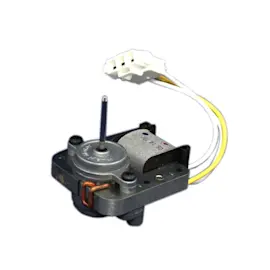
- If you hear the fan running but airflow seems weak, inspect the evaporator fan components such as the blade 5308000010 and motor 297309000.
Last updated: January 2026
Is there a reset button on a Kenmore upright freezer?
On the Kenmore Elite upright freezer model 25326472100, there typically is not a single dedicated “reset” button for the temperature control. Most resets are done by restoring power (unplugging briefly) or, on electronic models, using the ALARM RESET function to silence an alarm after a temperature or door issue.
- Unplug the freezer (or switch the breaker off) for 5 minutes.
- Plug it back in and let it run several hours before judging temperature changes.
- If the control is beeping or showing a high-temp condition, press ALARM RESET to stop the audible alarm.
- Confirm the door is fully closed and not blocked by baskets or packages.
- Avoid changing the temperature setting repeatedly; allow time for the cabinet temperature to stabilize.
The 25326472100 series can use either a knob-style (electromechanical) control or an electronic control located inside the cabinet. Use the 25326472100 owner's manual to match your control style and the correct button/knob behavior.
| Control type | What it looks like | “Reset” approach that works most often |
|---|---|---|
| Electromechanical | Dial/knob inside cabinet | Power cycle (unplug 5 minutes), then set dial and wait |
| Standard electronic | UP/DOWN buttons inside cabinet | Power cycle; use ALARM RESET if alarm is sounding |
| Deluxe electronic (some models) | Display with features like Quick Freeze | Use ALARM RESET for alarms; power cycle for control glitches |
These checks usually solve the root cause faster than repeated resets:
- Make sure the evaporator fan is running; a failed fan motor can stop airflow (see motor 297309000).
- If you see heavy frost on the back wall, the defrost system may need attention (common parts include the defrost thermostat and heater).
- Keep door openings short and confirm the door seals tightly.
A freezer that needs frequent “resets” usually has an airflow, defrost, or door-sealing issue. Resetting can silence alarms or clear a minor control glitch, but it will not correct a failed evaporator fan motor, iced-up evaporator, or a door that is not sealing.
Last updated: January 2026
Why is my Kenmore Elite freezer not freezing?
If your Kenmore Elite upright freezer model 25326472100 is not freezing, the most common causes are a temperature control set incorrectly, a door that is not sealing, or an airflow problem from frost buildup. Start with the basic checks in the 25326472100 owner's manual.
- Confirm the temperature control is not set to OFF.
- Make sure the freezer is plugged in firmly and the outlet has power.
- Check your home breaker or fuse if the freezer will not run.
- Limit door openings; frequent openings can prevent the cabinet from reaching a safe temperature.
- Verify the door closes easily and seals all the way around.
- If the red temperature alarm light is blinking and the buzzer sounds, press ALARM OFF to silence it while you troubleshoot.
A freezer that runs but will not freeze usually has one of these issues: restricted airflow, a defrost problem, or a sealed-system/compressor problem.
| What you notice | Likely area to check | Common next step |
|---|---|---|
| Freezer runs “too much” but still warm | Door seal, door alignment, warm room conditions | Level the cabinet, clean/inspect gasket, reduce door openings |
| Frost or ice buildup inside | Defrost system | Inspect defrost components; clear heavy frost after unplugging |
| No fan airflow sound inside | Evaporator fan area | Check fan blade and motor |
| Runs but never gets cold | Compressor or controls | Test components; service may be needed |
If your symptoms point to airflow or defrost trouble, these parts are commonly involved on model 25326472100:
- Motor 297309000 (evaporator fan motor): moves cold air through the cabinet.
- Blade 5308000010 (evaporator fan blade): a damaged blade can reduce airflow.
- Freezer defrost heater 5304496687: helps melt frost off the evaporator during defrost.
- Chest freezer defrost thermostat 297216600: monitors evaporator temperature for defrost cycling.
- Frigidaire freezer electronic control board 216979700: manages cooling and defrost functions.
When the door is slightly open, the freezer is out of level, or frost blocks airflow, the compressor can run longer without reaching a safe freezing temperature. Fixing sealing and airflow issues first prevents unnecessary part replacement and helps protect stored food.
Last updated: January 2026