Owner’s manual
 Error Codes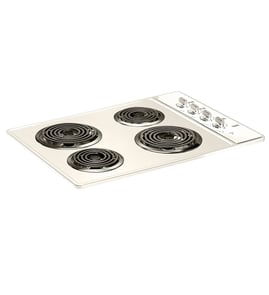




What are common problems with Jenn Air stoves?
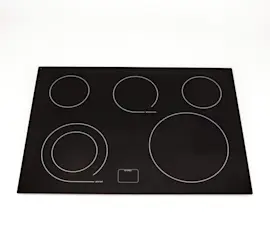
Common problems we see with Jenn-Air cooking appliances include surface elements not heating, controls that do not regulate heat correctly, and downdraft ventilation that is weak or noisy. For your Jenn-Air CVE3400B electric cooktop, the most frequent issues involve radiant element heating performance, control switches, and venting maintenance (filter and blower).
Most common symptoms and what they usually mean
- Surface element does not heat: failed radiant element, loose/burned wiring, or a bad infinite switch.
- Element heats only on high or cycles erratically: failing surface element control switch.
- One element works, another does not: problem isolated to that element or its switch.
- Downdraft vent is weak: greasy/blocked filter, dirty ventilation chamber, or ducting restriction.
- Vent is loud or rattles: blower wheel damage, debris, or mounting hardware loosened.
Quick checks you can do first (CVE3400B)
- Confirm the cooktop has power (check the breaker for a tripped condition).
- Let the glass cool; clean the surface and keep pan bottoms clean and dry (this helps heat transfer and prevents scratching).
- For downdraft models, remove and clean the vent area and filter; grease buildup reduces capture of smoke and steam.
- If ventilation is still poor, review ducting basics like duct size and elbow limits in the owner's manual.
Parts that commonly fix these problems
If troubleshooting points to a failed component, these are common replacements for CVE3400B:
| Problem | Likely part | Example part on this model page |
|---|---|---|
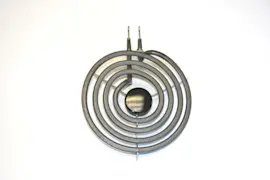
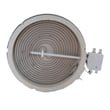
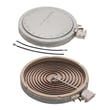
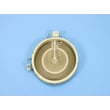
| Element won’t heat | Radiant surface element | Element (220 W10823707) |
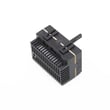
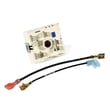
| Heat won’t regulate | Surface element control switch | Range surface element control switch W11088181 |
| Dual element not switching | Dual switch | Dual switch 12002125 |
| Weak venting | Greasy/blocked filter | Filter WPY706012 |
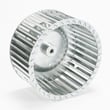
| Noisy vent | Damaged blower wheel | Blower wheel WPY707985 |
Why it matters
A cooktop that does not heat correctly can cause undercooking and inconsistent results; a poorly performing downdraft system lets smoke and grease linger. Keeping the glass-ceramic surface clean (and avoiding foil under any circumstances) also prevents permanent damage and improves day-to-day performance.
Last updated: February 2026
Why did my electric cooktop stop working?
If your Jenn-Air CVE3400B electric cooktop stopped working completely, the most common causes are a tripped breaker/blown fuse or a loose power connection at the household circuit. Start by confirming the cooktop has full power, then check for a failed control switch or wiring issue.
Quick checks first (no parts needed)
- Check your home’s main circuit breaker for a trip; reset it fully OFF then back ON.
- If your home uses fuses, check for a blown fuse and replace it with the correct type.
- Confirm the cooktop is properly connected to the household electrical circuit (a loose junction box connection can kill all power).
- If the downdraft fan and all elements are dead, treat it as a power supply issue first.
- If only one element is dead, skip to the “If only one burner stopped” section.
If only one burner stopped heating
A single dead element usually points to the surface element itself or its control switch.
Common part-related suspects for CVE3400B:
- Range surface element control switch W11088181 (infinite switch for a surface element)
- Dual switch 12002125 (for a dual radiant element position)
- Element (220 W10823707 (radiant surface element)
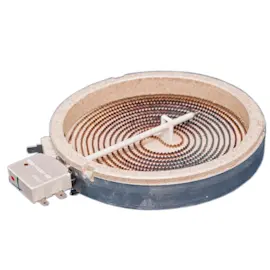
- Element, dua W10823709 (dual radiant surface element)
What to test and what the results mean
| What you observe | Most likely cause | What to do next |
|---|---|---|
| Nothing works (no heat anywhere) | House breaker/fuse, supply wiring, or internal power feed issue | Verify breaker/fuse and junction box connections; then inspect internal wiring per the manual |
| One element never heats | Failed radiant element or failed control switch | Swap-test controls (if identical) or test continuity; replace the failed part |
| Element heats only on high or is erratic | Worn infinite switch contacts | Replace the matching control switch |
Why it matters
A cooktop that is fully dead is usually an electrical supply problem, while a single non-heating burner is usually a surface element or infinite switch problem. Separating those two scenarios prevents unnecessary part replacement and gets you back to safe, reliable heating faster.
For model-specific “before you call” checks and safety guidance, follow the troubleshooting section in the owner's manual.
Last updated: February 2026
How long do Jenn Air cooktops last?
Most Jenn-Air electric cooktops last 15 years with normal use and basic maintenance; a practical overall range is 10 to 20 years. Keeping the glass-ceramic surface clean, preventing grease buildup, and fixing heating or venting issues early helps your CVE3400B reach the high end of that range.
Typical lifespan and what affects it
A cooktop’s life is usually limited by wear parts (surface elements, switches, knobs) and heat-related stress.
- Daily high-heat cooking shortens element and switch life
- Spills and baked-on residue can damage the glass-ceramic surface over time
- Grease buildup around the downdraft/vent area can reduce performance and strain the fan system
- Prompt repairs (like replacing a failing control switch) prevent secondary damage
- Gentle cleaning habits reduce scratches and surface wear
Maintenance that extends life (CVE3400B)
We recommend following the care and safety guidance in the owner's manual. Key habits include:
- Wipe the cooktop before each use; keep cookware bottoms clean and dry
- Avoid abrasive pads and harsh chemicals (bleach, ammonia, oven cleaners)
- Never use aluminum foil on the glass-ceramic surface
- Clean the ventilation chamber and keep the downdraft filter area free of grease
Quick do and don’t table
| Do | Don’t |
|---|---|
| Use cooktop-safe cleaner and a non-scratch pad | Use abrasive powders or metal scouring pads |
| Clean spills after the surface cools | Let grease accumulate near the vent/fan |
| Use flat-bottom cookware | Use foil or foil containers on the cooktop |
When a repair makes sense (common wear items)
If the cooktop still heats unevenly, cycles erratically, or a burner won’t regulate temperature, the control switch or radiant element is often the first place to check.
- For heat that won’t adjust or stays on one setting: consider the range surface element control switch W11088181
- For dual-element control problems: consider the dual switch 12002125
- For a burner that will not heat properly: a radiant element such as element (220 W10823707 may be involved
Why it matters
A cooktop that is cleaned correctly and repaired early typically avoids expensive secondary failures (damaged glass top, overheated wiring, or poor downdraft performance), which is what most often pushes replacement sooner.
Last updated: February 2026
Is it worth repairing a cooktop?
Yes, it’s worth repairing your Jenn-Air cooktop model CVE3400B when the problem is limited to a common, replaceable part (like a surface element or control switch) and the cooktop surface is not damaged. If the glass-ceramic top is broken, stop using it and plan on replacement or a major repair.
Quick decision checklist
- Repair makes sense when only one burner won’t heat, a knob won’t regulate heat, or the downdraft fan has a simple failure.
- Repair is usually a good value when the fix is well under half the cost of a comparable new cooktop.
- Replace when the glass-ceramic surface is cracked or broken (the manual warns not to cook on a broken surface due to shock hazard).
- Replace when multiple major symptoms stack up (several elements failing, repeated overheating, or extensive internal heat damage).
- If you smell burning insulation, see arcing, or the unit won’t shut off, keep switches OFF and have it serviced.
Common repairs that are often worth it (CVE3400B)
These are typical “high-impact” fixes for electric cooktops like this one:
- Surface element not heating: replace the radiant element (example: element (220 W10823707)
- Burner stuck on high or won’t cycle: replace the control switch (example: range surface element control switch W11088181)
- Dual element not switching sizes: replace the dual switch (example: dual switch 12002125)
- Downdraft performance issues: check the filter and blower wheel (examples: filter WPY706012, blower wheel WPY707985)
Repair vs replace: simple comparison
| Situation | Best choice | Why |
|---|---|---|
| One element won’t heat | Repair | Usually a single-part fix (element or switch) |
| Knob won’t control heat | Repair | Control switch failure is common and straightforward |
| Glass-ceramic top is cracked/broken | Replace or major repair | Manual warns not to cook on a broken surface (shock hazard) |
| Multiple elements and controls failing | Replace | Repair cost and downtime add up |
Why it matters
A cooktop that will not regulate heat or has a damaged glass-ceramic surface can create burn and shock risks. The CVE3400B manual also stresses safe use around hot surfaces and keeping switches OFF when not in use, which becomes especially important when a control is failing.
What we recommend before you decide
- Confirm the symptom (one burner vs all burners, stuck on high vs dead).
- Inspect for obvious damage (cracks, melted material, heavy scorching under the glass).
- Use the cleaning and safety guidance in the owner's manual so you do not mistake residue or spillover damage for a failed part.
Last updated: February 2026